
Free Boiler Replacement Quote — Holcombe
Properties in conservation areas or with listed status add an extra layer to boiler replacement quote, particularly around flue positions and anything visible from the street. We factor planning sensitivity into the survey rather than leaving it to be discovered after the quote. Gas Safe registered, OFTEC registered and a Worcester Bosch Accredited Installer, working from 24 Bristol Road, Radstock BA3 3EE, we'll flag where sign-off or a discreet routing is likely to matter. Nearest neighbours on our round are Stratton-on-the-Fosse, Chilcompton, Coleford. Water here is very hard limestone water, so scale protection is specified accordingly. In Holcombe itself (BA3, Somerset) that usually means stone village homes and modern estates, roughly 3 miles from the workshop.
Boiler Replacement Quote — what you actually get
- Free written specification
- Conversions (regular → combi) costed honestly
- Smart controls (Nest, Hive, Tado) priced in
- Clean, tidy, dust-sheeted installs
Village lanes around here are sometimes narrow enough that arranging a specific arrival time matters more than it would on a wider suburban road, particularly if a new boiler, cylinder or radiators need to be carried some distance from where a van can park. We ask about this when scheduling the survey so the job itself isn't held up by something that could have been sorted in advance. Our van runs the A367 to reach you, 3 miles out from the Radstock workshop. Nearest neighbours on our round are Stratton-on-the-Fosse, Chilcompton, Coleford. Boiler replacements in Holcombe are shaped by the property stock here — stone village homes and modern estates. We plan flue, condensate and controls around the building before we put a number on the page.
How Somerset building stock shapes the spec
Village lanes around here are sometimes narrow enough that arranging a specific arrival time matters more than it would on a wider suburban road, particularly if a new boiler, cylinder or radiators need to be carried some distance from where a van can park. We ask about this when scheduling the survey so the job itself isn't held up by something that could have been sorted in advance. Our van runs the A367 to reach you, 3 miles out from the Radstock workshop. Nearest neighbours on our round are Stratton-on-the-Fosse, Chilcompton, Coleford. Boiler replacements in Holcombe are shaped by the property stock here — stone village homes and modern estates. We plan flue, condensate and controls around the building before we put a number on the page.
Why we visit before quoting — Holcombe
- Confirm gas supply pipe size to the meter
- Plan flue route within building regs
- Check radiator sizing for the heat load
- Look at hot-water demand vs combi capacity
- Spot anything that'll affect the day-of price
Where else we work near Holcombe
We cover Holcombe alongside Stratton-on-the-Fosse (BA3), Chilcompton (BA3), Coleford (BA3), Kilmersdon (BA3) — so spares, follow-ups and annual visits are easy to schedule together.
Qualifications behind the work
We don't ask for money up front. Pay on completion when the system is signed off.
We're 24 Bristol Rd, Radstock — you'll deal with the same team for any aftercare.
Free, no-pressure 20-minute visit — measured up properly so the price is fixed, not estimated.
Boiler, controls, flue, warranty terms, flush spec — all in writing before you commit.
Holcombe questions we get asked
- Is it worth upgrading the heating controls when we replace the boiler?
- Where the existing controls are an old mechanical timer and single room thermostat, replacing them alongside the boiler with weather compensation or a modern programmable thermostat usually improves comfort and efficiency more than the boiler swap alone. It's not compulsory, but it's often the single best-value addition to a new install.
- What does "commissioning" a boiler actually involve?
- Commissioning is setting the boiler up correctly for the property rather than just switching it on: checking gas or oil pressure and flow rates, setting flow temperatures, testing safety devices, balancing the system, and completing the manufacturer's Benchmark checklist. Skipping this properly is one of the most common reasons warranty claims get refused later.
- Where can a new boiler actually be sited in the property?
- A combi is usually fitted in a kitchen cupboard, utility room, loft, or garage as long as flue clearances to windows, doors, and boundaries are met. A system or regular boiler with a cylinder needs a bit more room and usually stays close to its current position unless you're relocating the whole system, which is a bigger job.
- Could we switch from oil to mains gas if it's nearby?
- It depends entirely on whether a gas main actually runs past the property — some parts of the Somerset patch we cover have gas on one side of the road and none on the other. We can check with the network on request; if it's there, a conversion is a bigger job than a swap but often worthwhile long-term.
- What paperwork do I get once the job's finished?
- You'll get a Benchmark commissioning checklist for the boiler, a building notice or Building Control completion certificate for notifiable work, manufacturer warranty registration confirmation, and a Gas Safe (or OFTEC) record of the work. Keep these together — they're what a future buyer's solicitor or a warranty claim will ask for.
- What's actually checked during an annual boiler service?
- A service includes a visual and functional check of the boiler's casing and controls, flue gas analysis to confirm safe and efficient combustion, checking the flame picture and pressure, inspecting seals and condensate, and testing safety devices. It's a safety check as much as a performance one, and it's what keeps most manufacturer warranties valid.
The factual picture in Holcombe
- County
- Somerset
- Postcode district
- BA3
- Settlement type
- village
- Nearest classified road
- A367
- Distance from our base
- 3 miles (Radstock, BA3)
- Typical building stock
- stone village homes and modern estates
- Water hardness
- very hard limestone water
- Fuel availability
- mains gas with off-grid pockets
- Customer mix
- homes alongside small commercial and agricultural premises
- Nearby areas covered
- Stratton-on-the-Fosse, Chilcompton, Coleford, Kilmersdon
Detail that matters in Holcombe
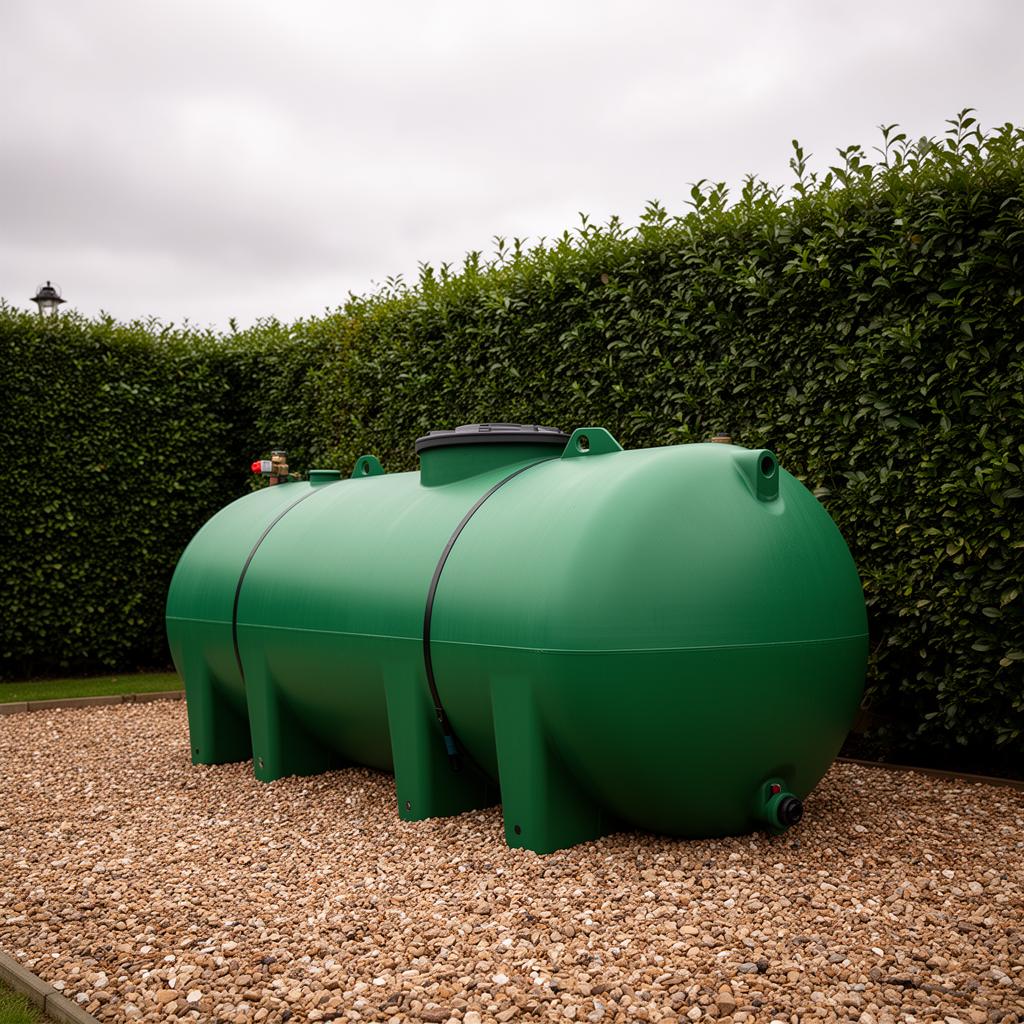
Oil tank de-sludging: why it's not optional
Oil sitting in a tank for years accumulates water from condensation and fine sediment that settles at the bottom, and over time this forms a sludge layer that can be drawn into the fuel line, particularly when the tank is nearly empty and the outlet pulls from lower in the tank than usual. Sludge blocks fine oil filters and burner nozzles, which shows up as burner lockouts or a boiler that won't fire cleanly rather than as an obvious tank problem. De-sludging drains and cleans the tank base without necessarily removing the whole tank, and it's worth doing when a tank is inherited with a property, before switching to a new boiler, or if lockouts recur despite the filter and nozzle being replaced. It's a preventative job that's cheaper done on schedule than after a burner failure it caused.
Village lane access and van positioning for larger jobs
Village lanes around Holcombe are often single-track or tight two-way roads without dedicated off-street loading space, which affects how a larger job like a full system installation or an oil tank replacement is planned — the van needs somewhere to park close enough for repeated trips carrying equipment without blocking the lane for through traffic or farm vehicles. On a job involving a full radiator or pipework replacement, materials sometimes need staging over more than one visit rather than delivered all at once if there's nowhere secure to leave them on-site between visits. We check lane width and passing places when scheduling larger jobs in village locations, and plan van access and parking as part of the job rather than as an afterthought on the day.
Condensate pipe freezing on exposed elevations
Properties on the higher ground around Holcombe catch more wind chill than the valley floor, and an external condensate pipe on a north or east-facing wall is the most common cause of a boiler lockout in a cold snap. The pipe carries mildly acidic waste water from the flue; if it's routed externally in 21.5mm pipe rather than run internally and lagged, or dropped into an internal soil stack, it freezes solid and the boiler senses a blockage and shuts down for safety. Building Regulations guidance favours an internal run with a trapped connection to the waste system wherever the layout allows it. Where an external run is unavoidable we use 32mm insulated pipe with a minimal fall, which resists freezing far better than the standard diameter.
Radiator sizing after lowering the flow temperature
Running a boiler at a lower flow temperature — typically 55°C or below rather than the old default of 70-80°C — improves condensing efficiency measurably, but it also reduces the heat output of every radiator in the house, because a radiator's output falls roughly with the square of the temperature difference to the room. Radiators sized correctly for a 75°C flow can end up unable to heat the room properly at 55°C unless they're upsized or supplemented. We check each radiator against the lower design flow temperature before recommending it, and where a room falls short we look at whether a larger single panel, a double panel, or an additional radiator on that circuit closes the gap, rather than pushing the flow temperature back up and giving away the efficiency gain.
Wood-burning stoves with a back boiler alongside a main boiler
Some older rural properties around Holcombe run a wood-burning stove with a back boiler feeding heat into the same central heating circuit as an oil or gas boiler, usually through a thermal store or a cylinder with two coils. Getting this combination to work safely means the stove's back boiler circuit has its own means of dissipating heat if the pump fails or a valve closes while the stove is still burning — a stove can't simply be switched off the way a boiler can if its heat has nowhere to go, so a gravity-fed safety circuit or heat leak radiator is normally required. It's a more involved design than a single-boiler system and needs planning at the point either appliance is replaced, not treated as an afterthought once the new boiler is already fitted.
Low-loss headers on larger or multi-zone systems
On a system with several heating zones or a boiler oversized relative to any single zone's flow requirement, a low-loss header hydraulically separates the boiler's primary circuit from the secondary zone circuits, so each side can run its own pump and flow rate without one interfering with the other. Without it, a zone valve closing on a multi-zone system can starve the boiler of flow or force excessive pump pressure through the remaining open zones. It's most relevant on larger properties or ones with commercial premises attached, where several distinct heating circuits — perhaps a shop unit and a flat above — share one heat source. Getting the header sized to the boiler's actual flow rate, not just fitted as standard, is what makes it work rather than just adding another connection.
Signs a boiler repair is no longer the right call
A boiler that's failing repeatedly, needing a different part replaced every service, or over roughly ten to fifteen years old is approaching the point where continued repair costs more over time than replacement, particularly once a heat exchanger — the most expensive single part — starts to show signs of failure through leaks or reduced output. Efficiency is the other half of the calculation: an older non-condensing boiler running at 70-80% efficiency against a modern condensing combi at over 90% means a meaningful chunk of every unit of fuel burned in the old boiler is simply lost up the flue. We give a straight answer on repair versus replace based on the fault found and the boiler's age and condition, rather than defaulting to whichever is more profitable to us on the day.
How to get this priced
Part of what a written quote for boiler replacement quote gives you is clarity on scope: exactly which pipework, controls and components are included, and which aren't. That clarity is what prevents disputes later, and it's standard practice on every job we quote for. Send the appliance make, model and any fault code and you get a straight answer, not a sales script. Most of what we open up here is stone village homes and modern estates, which dictates flue routes and pipe sizing. Our van runs the A367 to reach you, 3 miles out from the Radstock workshop.
Related help for Holcombe
- New Boiler Cost in HolcombeHonest, area-specific pricing guidance for a new combi, system or oil boiler — with no obligation site visit.
- Emergency Boiler Repair in HolcombeSame-week (often same-day) no-heat and no-hot-water call-outs for gas and oil boilers.
- Landlord Gas Safety Certificate (CP12) in HolcombeAnnual CP12 inspections for landlords and letting agents — digital certificate the same day.
- Oil Boiler Service Cost in HolcombeWhat an OFTEC registered oil boiler service costs locally, what is included, and what a tank inspection adds.
- Oil Boiler Repair in HolcombeOil boiler lockouts, sooting and no heat call outs for homes off the mains gas grid, diagnosed before parts are quoted.
- Boiler Service Cost in HolcombeAnnual gas boiler service pricing, what the check covers, and how a landlord certificate can be combined in one visit.
- Boiler Installation in HolcombeNew combi, system and regular boiler installations for gas and oil homes — fixed prices, manufacturer warranties.
- Gas Boiler Installation in HolcombeGas Safe registered installations and upgrades for mains gas homes across Bath, Radstock and Wells.
New Worcester boiler with a 10 year guarantee*
Free no-obligation quotes for installation, servicing & repairs across BA & BS postcodes.