
Oil Boiler Repair, Urgent Boiler Repair, Holcombe (BA3)
Some properties make oil boiler repair straightforward; others need a bit more thought about parking, access to the boiler cupboard, or how equipment gets in and out. We factor that into the visit rather than discovering it on the day. Working from 24 Bristol Road, Radstock BA3 3EE across the Radstock, Bath and Mendip area, we're Gas Safe registered and OFTEC registered, so both mains gas and oil-fired work is covered under one roof. Our van runs the A367 to reach you, 3 miles out from the Radstock workshop. Nearest neighbours on our round are Stratton-on-the-Fosse, Chilcompton, Coleford. In Holcombe itself (BA3, Somerset) that usually means stone village homes and modern estates, roughly 3 miles from the workshop.
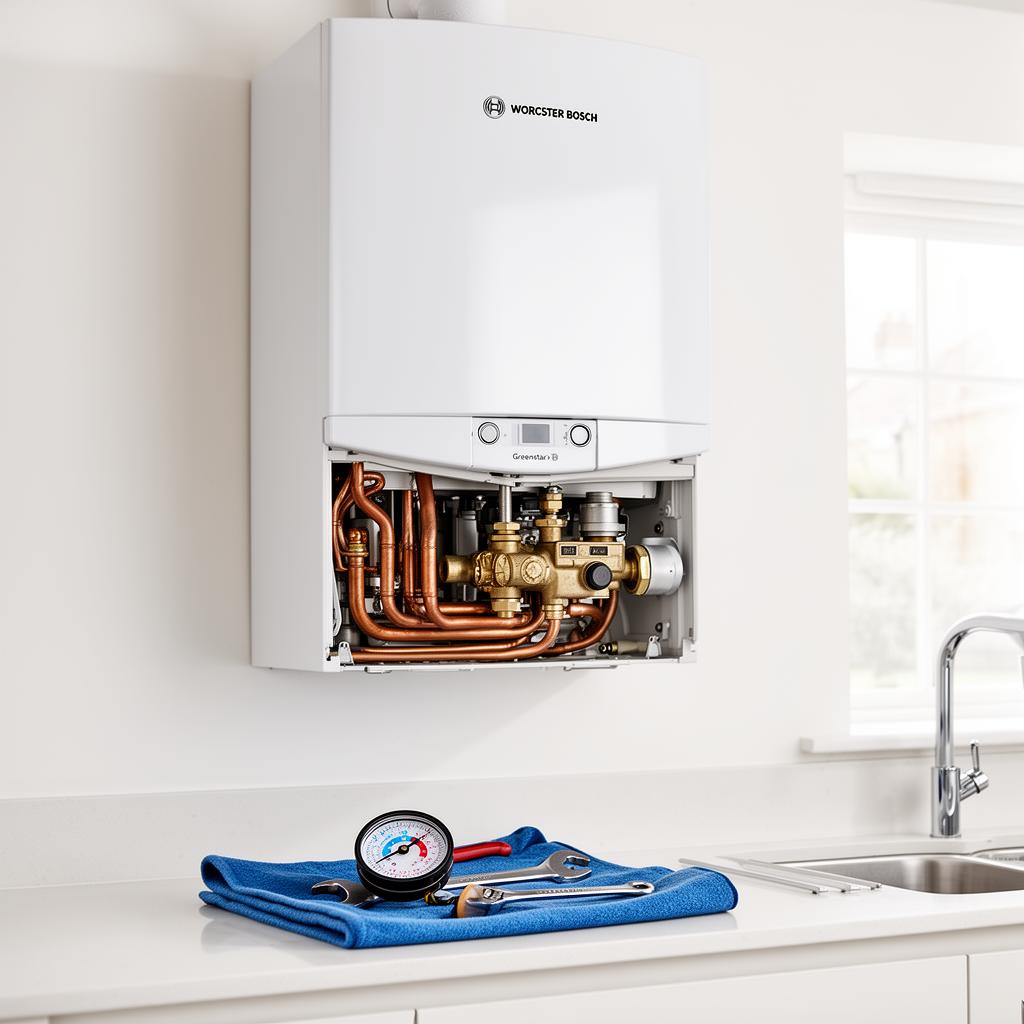
Stone cottages and farmhouses around here were mostly built long before central heating existed, so pipework and boiler locations have usually been retrofitted at some point, sometimes more than once. Thick stone walls, uneven floor levels and low ceilings can all affect where a boiler or cylinder can practically go, and older stonework doesn't always take fixings the way modern block or brick does. We work around those constraints on site rather than assuming a straightforward install. Access is lane access, so parking, spoil removal and delivery timing get planned in advance. homes alongside small commercial and agricultural premises make up most enquiries from this postcode. Holcombe sits roughly 3 miles from our Radstock base via the A367. We're on the road across BA3 every day, so emergency response is genuinely local — not a third-party engineer dispatched from the other side of the county.
What backs up a Holcombe quote
Every gas job notified to Building Control. Photo-evidenced repairs where relevant.
Diverter valves, expansion vessels, pumps, common PCBs — first-visit fixes are the norm.
Oil boilers and tanks covered — we don't bounce oil-fired call-outs to another firm.
We never swap parts blindly. You'll see the fault confirmed before any spare goes in.
Local conditions we plan around in BA3
Stone cottages and farmhouses around here were mostly built long before central heating existed, so pipework and boiler locations have usually been retrofitted at some point, sometimes more than once. Thick stone walls, uneven floor levels and low ceilings can all affect where a boiler or cylinder can practically go, and older stonework doesn't always take fixings the way modern block or brick does. We work around those constraints on site rather than assuming a straightforward install. Access is lane access, so parking, spoil removal and delivery timing get planned in advance. homes alongside small commercial and agricultural premises make up most enquiries from this postcode. Holcombe sits roughly 3 miles from our Radstock base via the A367. We're on the road across BA3 every day, so emergency response is genuinely local — not a third-party engineer dispatched from the other side of the county.
Common faults we see — Holcombe
- No heat / no hot water — diverter valve, PCB
- Pressure dropping — expansion vessel, leak
- Boiler locked out — fan, sensor, PCB
- Cold radiators — pump, sludge, valves
- Frozen condensate (winter) — quick thaw + insulate
- Hot water only — thermostat or motorised valve
Neighbouring Somerset areas we serve
We cover Holcombe alongside Stratton-on-the-Fosse (BA3), Chilcompton (BA3), Coleford (BA3), Kilmersdon (BA3) — so spares, follow-ups and annual visits are easy to schedule together.
Common queries, answered honestly
- What actually happens on install day?
- The engineer isolates the gas or oil supply and water, removes the old boiler, fits and pressure-tests the new one, connects the flue and condensate, and commissions the system. For a straight swap this is usually one day; a conversion, relocation, or cylinder change can run into a second depending on the pipework involved.
- What are your opening hours, and can you help out of hours?
- Our published hours are Monday to Friday, 8:30am to 5pm, and that's when the phones are answered and jobs are booked. We're honest that we don't run a round-the-clock emergency line, so if you're planning ahead, call during those hours on 07516 118198 and we'll get you booked in.
- What paperwork do I get once the job's finished?
- You'll get a Benchmark commissioning checklist for the boiler, a building notice or Building Control completion certificate for notifiable work, manufacturer warranty registration confirmation, and a Gas Safe (or OFTEC) record of the work. Keep these together — they're what a future buyer's solicitor or a warranty claim will ask for.
- What if a part for my existing boiler isn't available anymore?
- Manufacturers stop stocking parts for discontinued models after a number of years, and once that happens a repair simply isn't possible even if the fault itself is minor. We'll confirm parts availability with the manufacturer before quoting a repair, and if it's a dead end we'll explain your replacement options honestly.
- Does an exposed, higher-up location affect boiler choice at all?
- Wind exposure mainly affects flue positioning — a room-sealed balanced flue can be more prone to being affected by strong, gusting wind in an exposed spot, and terminal guards or a slightly different position can help. It doesn't rule out any particular boiler type, but it's something we check at survey on more exposed sites.
- Do you cover oil boilers in Holcombe?
- Yes — OFTEC registered. Holcombe has plenty of oil-fired properties and we keep common oil spares on the van too.
Coverage detail for BA3
- County
- Somerset
- Postcode district
- BA3
- Settlement type
- village
- Nearest classified road
- A367
- Distance from our base
- 3 miles (Radstock, BA3)
- Typical building stock
- stone village homes and modern estates
- Water hardness
- very hard limestone water
- Fuel availability
- mains gas with off-grid pockets
- Customer mix
- homes alongside small commercial and agricultural premises
- Nearby areas covered
- Stratton-on-the-Fosse, Chilcompton, Coleford, Kilmersdon
Practical considerations across BA3
Why very hard limestone water shortens boiler life around Holcombe
The limestone geology under Somerset gives Holcombe very hard limestone water, which drops calcium carbonate out of solution as soon as it's heated. Inside a combi's plate heat exchanger the gaps between plates are only a millimetre or two wide, so scale narrows the waterways long before it's visible anywhere else in the system. The first symptom is usually a hot tap that runs warm rather than hot, or a boiler that fires more often for the same demand. Left unchecked, scale insulates the exchanger from the burner, forces flue gases hotter, and can crack the exchanger from thermal stress. A scale reducer fitted on the mains feed, sized to the property's flow rate, is cheaper to install once than to replace a heat exchanger twice.
Electronic and physical scale reducers compared
In very hard limestone water areas like Holcombe, a scale reducer fitted on the boiler's cold feed protects the heat exchanger without the ongoing salt and drainage requirements of a full water softener. Physical scale reducers use a polyphosphate or template-assisted crystallisation cartridge that alters how calcium carbonate crystallises so it's less likely to adhere to hot surfaces; electronic and electromagnetic devices claim a similar effect without a cartridge to replace, though the evidence base for electronic types is weaker and more inconsistent than for physical media. Manufacturers including Worcester Bosch now specify a scale reducer or softener as a condition of extended guarantees in hard water areas, so the choice affects warranty validity as well as long-term performance, not just descale frequency.
Chasing pipework into lime plaster and stone walls
Solid stone or cob walls finished in lime plaster, common in the older parts of Holcombe, behave very differently to modern plasterboard when a pipe run needs chasing in. Lime plaster is softer and more porous than gypsum, so cutting a neat, consistent chase without blowing the surface needs a slower hand and finer disc than a stud-wall job, and any repair has to be made good in a lime-based skim rather than modern filler, which can trap moisture behind it and cause the patch to fail. On solid stone we sometimes surface-mount pipework in painted conduit instead of chasing, particularly where the wall is a significant structural thickness and chasing would weaken it. Knowing which approach a wall needs before starting avoids expensive plaster damage.
Condensate soakaways where there's no convenient drain
Properties without a nearby internal waste connection or external gully for the boiler's condensate — common on rural plots around Holcombe where the nearest drain run is a long way from the boiler's location — sometimes need a dedicated condensate soakaway instead. This is a small pit filled with granular material that the condensate, which is mildly acidic, can disperse into gradually rather than running to a drain at all. Sizing and siting it correctly matters: it needs to be far enough from foundations and sited where the local ground can actually absorb the modest but steady volume a boiler produces, particularly over a long heating season. Where ground conditions make a soakaway unreliable, running a longer insulated pipe to a proper drainage connection is usually the safer long-term choice even though it's more work to install.
Low-loss headers on larger or multi-zone systems
On a system with several heating zones or a boiler oversized relative to any single zone's flow requirement, a low-loss header hydraulically separates the boiler's primary circuit from the secondary zone circuits, so each side can run its own pump and flow rate without one interfering with the other. Without it, a zone valve closing on a multi-zone system can starve the boiler of flow or force excessive pump pressure through the remaining open zones. It's most relevant on larger properties or ones with commercial premises attached, where several distinct heating circuits — perhaps a shop unit and a flat above — share one heat source. Getting the header sized to the boiler's actual flow rate, not just fitted as standard, is what makes it work rather than just adding another connection.
Radiator sizing after lowering the flow temperature
Running a boiler at a lower flow temperature — typically 55°C or below rather than the old default of 70-80°C — improves condensing efficiency measurably, but it also reduces the heat output of every radiator in the house, because a radiator's output falls roughly with the square of the temperature difference to the room. Radiators sized correctly for a 75°C flow can end up unable to heat the room properly at 55°C unless they're upsized or supplemented. We check each radiator against the lower design flow temperature before recommending it, and where a room falls short we look at whether a larger single panel, a double panel, or an additional radiator on that circuit closes the gap, rather than pushing the flow temperature back up and giving away the efficiency gain.
How to get this priced
Not every enquiry about oil boiler repair needs a full replacement — sometimes a repair, a service, or a smaller fix solves the problem. We'll tell you which applies once we've had a proper look, rather than recommending the largest job by default. Send the appliance make, model and any fault code and you get a straight answer, not a sales script. Nearest neighbours on our round are Stratton-on-the-Fosse, Chilcompton, Coleford. Water here is very hard limestone water, so scale protection is specified accordingly.
Related help for Holcombe
- New Boiler Cost in HolcombeHonest, area-specific pricing guidance for a new combi, system or oil boiler — with no obligation site visit.
- Emergency Boiler Repair in HolcombeSame-week (often same-day) no-heat and no-hot-water call-outs for gas and oil boilers.
- Landlord Gas Safety Certificate (CP12) in HolcombeAnnual CP12 inspections for landlords and letting agents — digital certificate the same day.
- Boiler Replacement Quote in HolcombeFree, no-obligation site visits and written specifications for old boiler replacements.
- Oil Boiler Service Cost in HolcombeWhat an OFTEC registered oil boiler service costs locally, what is included, and what a tank inspection adds.
- Boiler Service Cost in HolcombeAnnual gas boiler service pricing, what the check covers, and how a landlord certificate can be combined in one visit.
- Boiler Installation in HolcombeNew combi, system and regular boiler installations for gas and oil homes — fixed prices, manufacturer warranties.
- Gas Boiler Installation in HolcombeGas Safe registered installations and upgrades for mains gas homes across Bath, Radstock and Wells.
New Worcester boiler with a 10 year guarantee*
Free no-obligation quotes for installation, servicing & repairs across BA & BS postcodes.