
Emergency Boiler Repair, Urgent Boiler Repair, Faulkland (BA3)
Emergency Boiler Repair covers a range of jobs, from straightforward like-for-like swaps to full system redesigns with new pipework, controls and hot water storage. The right approach depends on boiler location, flue length, pump speed, radiator sizing and how the property loses heat. As a Gas Safe and OFTEC registered firm and a Worcester Bosch Accredited Installer working out of Radstock, we specify each install against the building rather than fitting a standard package regardless of fit. Access is lane access, so parking, spoil removal and delivery timing get planned in advance. homes alongside small commercial and agricultural premises make up most enquiries from this postcode. In Faulkland itself (BA3, Somerset) that usually means stone cottages and farms, roughly 3 miles from the workshop.
Emergency Boiler Repair — what you actually get
- Same-week response, often same-day
- Most common parts carried on the van
- Diagnose-first pricing — no blind swaps
- Gas Safe 549918 / OFTEC registered
Village lanes around here are sometimes narrow enough that arranging a specific arrival time matters more than it would on a wider suburban road, particularly if a new boiler, cylinder or radiators need to be carried some distance from where a van can park. We ask about this when scheduling the survey so the job itself isn't held up by something that could have been sorted in advance. homes alongside small commercial and agricultural premises make up most enquiries from this postcode. Typical era of build is mixed-cottage, which affects existing pipework and system cleanliness. Faulkland sits roughly 3 miles from our Radstock base via the A366. We're on the road across BA3 every day, so emergency response is genuinely local — not a third-party engineer dispatched from the other side of the county.
Proof, paperwork and accountability
Every gas job notified to Building Control. Photo-evidenced repairs where relevant.
Diverter valves, expansion vessels, pumps, common PCBs — first-visit fixes are the norm.
Oil boilers and tanks covered — we don't bounce oil-fired call-outs to another firm.
We never swap parts blindly. You'll see the fault confirmed before any spare goes in.
How Somerset building stock shapes the spec
Village lanes around here are sometimes narrow enough that arranging a specific arrival time matters more than it would on a wider suburban road, particularly if a new boiler, cylinder or radiators need to be carried some distance from where a van can park. We ask about this when scheduling the survey so the job itself isn't held up by something that could have been sorted in advance. homes alongside small commercial and agricultural premises make up most enquiries from this postcode. Typical era of build is mixed-cottage, which affects existing pipework and system cleanliness. Faulkland sits roughly 3 miles from our Radstock base via the A366. We're on the road across BA3 every day, so emergency response is genuinely local — not a third-party engineer dispatched from the other side of the county.
Our call-out approach — Faulkland
- Diagnose first, then quote — no blind swaps
- Common spares on the van for first-visit fixes
- Fixed labour rate, parts at cost-plus
- We'll tell you honestly when a repair is uneconomic
- If a replacement makes more sense, we'll explain why
Also covering the lanes around Faulkland
We cover Faulkland alongside Hemington (BA3), Norton St Philip (BA2), Shoscombe (BA2), Kilmersdon (BA3) — so spares, follow-ups and annual visits are easy to schedule together.
Questions before you book
- Who actually carries out the work?
- A Gas Safe and, where relevant, OFTEC registered engineer from our own small team carries out the job — we don't sub the install out to a third party after quoting. You deal with the same people from survey through to commissioning and any aftercare calls.
- What does "commissioning" a boiler actually involve?
- Commissioning is setting the boiler up correctly for the property rather than just switching it on: checking gas or oil pressure and flow rates, setting flow temperatures, testing safety devices, balancing the system, and completing the manufacturer's Benchmark checklist. Skipping this properly is one of the most common reasons warranty claims get refused later.
- Is a boiler install a noisy, disruptive job?
- There's unavoidable noise — drilling for the flue, pipework, sometimes moving a cylinder — but a straightforward swap is usually done within a working day with the mess kept to the immediate work area. We dust-sheet the route in and out and clear away pipe offcuts and old parts before we leave.
- What's actually checked during an annual boiler service?
- A service includes a visual and functional check of the boiler's casing and controls, flue gas analysis to confirm safe and efficient combustion, checking the flame picture and pressure, inspecting seals and condensate, and testing safety devices. It's a safety check as much as a performance one, and it's what keeps most manufacturer warranties valid.
- What paperwork do I get once the job's finished?
- You'll get a Benchmark commissioning checklist for the boiler, a building notice or Building Control completion certificate for notifiable work, manufacturer warranty registration confirmation, and a Gas Safe (or OFTEC) record of the work. Keep these together — they're what a future buyer's solicitor or a warranty claim will ask for.
- Do you charge a call-out fee in Faulkland?
- We charge a fixed first-hour rate that includes the call-out and diagnosis. Parts are quoted before fitting, never after.
Faulkland at a glance
- County
- Somerset
- Postcode district
- BA3
- Settlement type
- village
- Nearest classified road
- A366
- Distance from our base
- 3 miles (Radstock, BA3)
- Typical building stock
- stone cottages and farms
- Water hardness
- very hard limestone water
- Fuel availability
- mains gas with off-grid pockets
- Customer mix
- homes alongside small commercial and agricultural premises
- Nearby areas covered
- Hemington, Norton St Philip, Shoscombe, Kilmersdon
Technical notes for this job type
Why very hard limestone water shortens boiler life around Faulkland
The limestone geology under Somerset gives Faulkland very hard limestone water, which drops calcium carbonate out of solution as soon as it's heated. Inside a combi's plate heat exchanger the gaps between plates are only a millimetre or two wide, so scale narrows the waterways long before it's visible anywhere else in the system. The first symptom is usually a hot tap that runs warm rather than hot, or a boiler that fires more often for the same demand. Left unchecked, scale insulates the exchanger from the burner, forces flue gases hotter, and can crack the exchanger from thermal stress. A scale reducer fitted on the mains feed, sized to the property's flow rate, is cheaper to install once than to replace a heat exchanger twice.
Chasing pipework into lime plaster and stone walls
Solid stone or cob walls finished in lime plaster, common in the older parts of Faulkland, behave very differently to modern plasterboard when a pipe run needs chasing in. Lime plaster is softer and more porous than gypsum, so cutting a neat, consistent chase without blowing the surface needs a slower hand and finer disc than a stud-wall job, and any repair has to be made good in a lime-based skim rather than modern filler, which can trap moisture behind it and cause the patch to fail. On solid stone we sometimes surface-mount pipework in painted conduit instead of chasing, particularly where the wall is a significant structural thickness and chasing would weaken it. Knowing which approach a wall needs before starting avoids expensive plaster damage.
Radiator sizing after lowering the flow temperature
Running a boiler at a lower flow temperature — typically 55°C or below rather than the old default of 70-80°C — improves condensing efficiency measurably, but it also reduces the heat output of every radiator in the house, because a radiator's output falls roughly with the square of the temperature difference to the room. Radiators sized correctly for a 75°C flow can end up unable to heat the room properly at 55°C unless they're upsized or supplemented. We check each radiator against the lower design flow temperature before recommending it, and where a room falls short we look at whether a larger single panel, a double panel, or an additional radiator on that circuit closes the gap, rather than pushing the flow temperature back up and giving away the efficiency gain.
Wood-burning stoves with a back boiler alongside a main boiler
Some older rural properties around Faulkland run a wood-burning stove with a back boiler feeding heat into the same central heating circuit as an oil or gas boiler, usually through a thermal store or a cylinder with two coils. Getting this combination to work safely means the stove's back boiler circuit has its own means of dissipating heat if the pump fails or a valve closes while the stove is still burning — a stove can't simply be switched off the way a boiler can if its heat has nowhere to go, so a gravity-fed safety circuit or heat leak radiator is normally required. It's a more involved design than a single-boiler system and needs planning at the point either appliance is replaced, not treated as an afterthought once the new boiler is already fitted.
Faulkland's A366 corridor and what it means for scheduling
Properties along or near the A366 corridor around Faulkland are generally straightforward to reach without the access constraints of side lanes or unclassified roads further off the main network, which helps with scheduling deliveries of boilers, cylinders or oil tanks to a fixed slot. It doesn't change the technical requirements of the job itself, but predictable access does mean less contingency time needs building into a visit, and it makes coordinating a delivery with an installation date more reliable than on a property with a difficult final approach. We still confirm any specific parking or loading restriction on the immediate street before a job, since a fast main road doesn't guarantee easy stopping right outside the property.
LPG as an alternative to oil off the gas grid
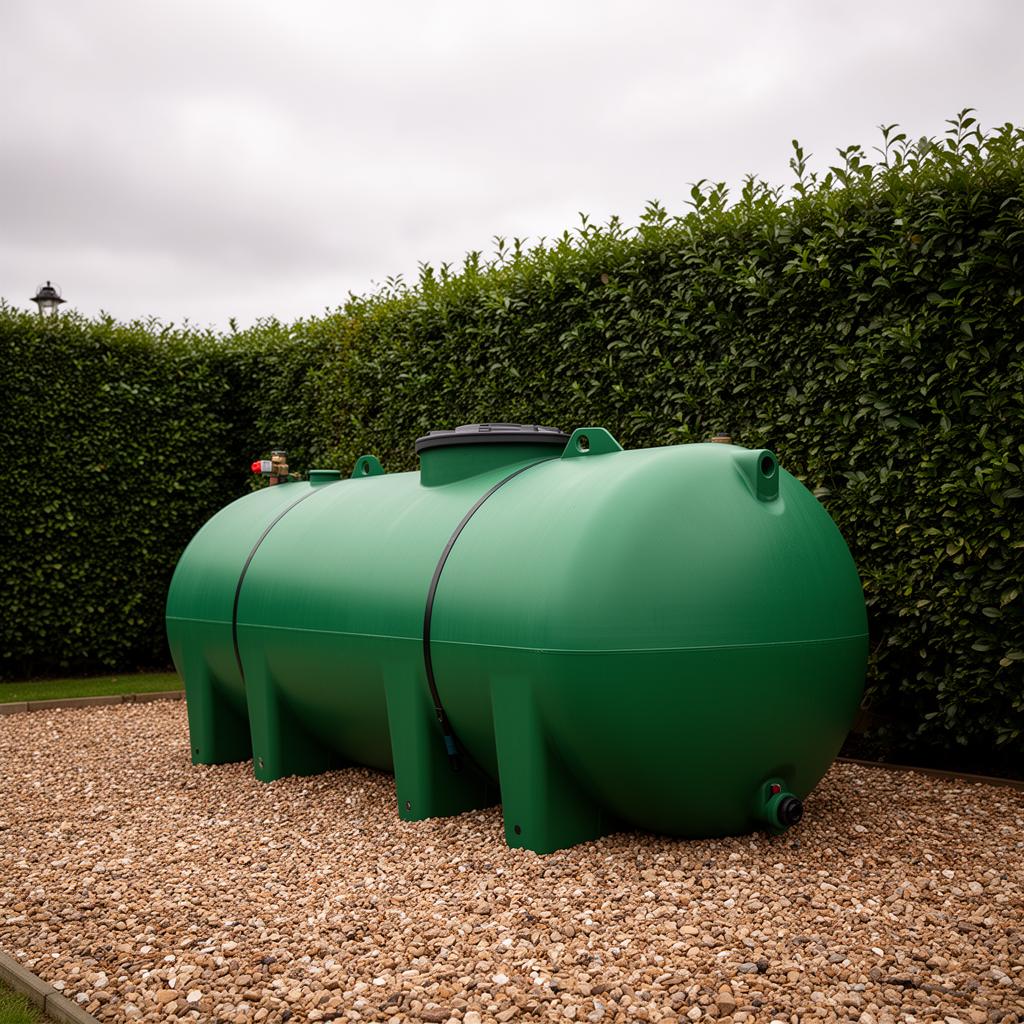
Properties around Faulkland that sit off the mains gas network aren't limited to oil — bulk LPG, stored in an above-ground tank on a concrete base with the same OFTEC-style clearance and access rules as oil, runs standard gas-rated boilers with only a change of injector and pressure setting rather than a different boiler entirely. It suits households that want a gas hob and gas-style modulation rather than an oil burner's on/off firing pattern. The tank still needs delivery access for a tanker, which on some rural driveways is the deciding factor over oil. We check the access route for the largest realistic delivery vehicle before recommending LPG over oil, because a tank that can't be filled easily causes more disruption than the fuel choice was meant to solve.
Chimney liners for boilers using an existing flue
Where an older boiler used the property's original brick or stone chimney as its flue route, a replacement condensing boiler usually can't use the same masonry flue unlined, because the flue gases are cooler and wetter and will attack unprotected brickwork and mortar over time. A correctly specified stainless steel liner, sized to the boiler manufacturer's flue length and diameter tables, carries the flue gases safely and lets the existing chimney be reused rather than needing a new wall or roof penetration — often the only realistic option on a listed or solid-wall property in Faulkland where an external flue run isn't permitted. The liner has to be inspected and swept as part of ongoing servicing exactly as an open-fire flue would be, which is easy to overlook once it's hidden inside the chimney.
Nozzle replacement and baffle cleaning on oil burners
An oil burner's nozzle atomises fuel into a fine spray for combustion, and it wears from constant fuel flow at pressure, gradually changing the spray pattern away from the burner manufacturer's specification even before it visibly fails. A worn nozzle burns less cleanly, producing more soot that coats the heat exchanger's baffles, and a sooted heat exchanger loses efficiency in the same way scale does on a gas boiler's plates. Standard practice on an annual oil service is to replace the nozzle as a matter of course, rather than wait for a fault, and to remove and clean the baffles so the heat exchanger surfaces are exposed to combustion heat properly again. Skipping nozzle replacement to save a service visit's minor parts cost is a false economy against the fuel wasted by a poorly atomising burner.
Where to go from here
Once emergency boiler repair is complete, you'll have the documentation that goes with it — commissioning records and, where applicable, Gas Safe or OFTEC paperwork and manufacturer registration for the guarantee. Keep it somewhere safe; it's what an agent, buyer or insurer will ask to see later. We can usually pair the visit with other work in Hemington to keep the trip efficient. Access is lane access, so parking, spoil removal and delivery timing get planned in advance. Typical era of build is mixed-cottage, which affects existing pipework and system cleanliness.
Related help for Faulkland
- New Boiler Cost in FaulklandHonest, area-specific pricing guidance for a new combi, system or oil boiler — with no obligation site visit.
- Landlord Gas Safety Certificate (CP12) in FaulklandAnnual CP12 inspections for landlords and letting agents — digital certificate the same day.
- Boiler Replacement Quote in FaulklandFree, no-obligation site visits and written specifications for old boiler replacements.
- Oil Boiler Service Cost in FaulklandWhat an OFTEC registered oil boiler service costs locally, what is included, and what a tank inspection adds.
- Oil Boiler Repair in FaulklandOil boiler lockouts, sooting and no heat call outs for homes off the mains gas grid, diagnosed before parts are quoted.
- Boiler Service Cost in FaulklandAnnual gas boiler service pricing, what the check covers, and how a landlord certificate can be combined in one visit.
- Boiler Installation in FaulklandNew combi, system and regular boiler installations for gas and oil homes — fixed prices, manufacturer warranties.
- Gas Boiler Installation in FaulklandGas Safe registered installations and upgrades for mains gas homes across Bath, Radstock and Wells.
New Worcester boiler with a 10 year guarantee*
Free no-obligation quotes for installation, servicing & repairs across BA & BS postcodes.