
Emergency Boiler Repair, Urgent Boiler Repair, Peasedown St John (BA2)
Timing matters with emergency boiler repair: a mid-summer replacement gives more room to plan than an emergency swap in January, and a written quote gives you time to think rather than decide under pressure. We can work to either, but a bit of notice usually means a smoother job. Gas Safe registered, OFTEC registered, 24 Bristol Road, Radstock BA3 3EE, open Monday to Friday, 8:30am to 5pm. Our van runs the A367 to reach you, 3 miles out from the Radstock workshop. a mix of owner-occupied and rented homes make up most enquiries from this postcode. In Peasedown St John itself (BA2, Somerset) that usually means 1960s–2000s estates and bungalows, roughly 3 miles from the workshop.
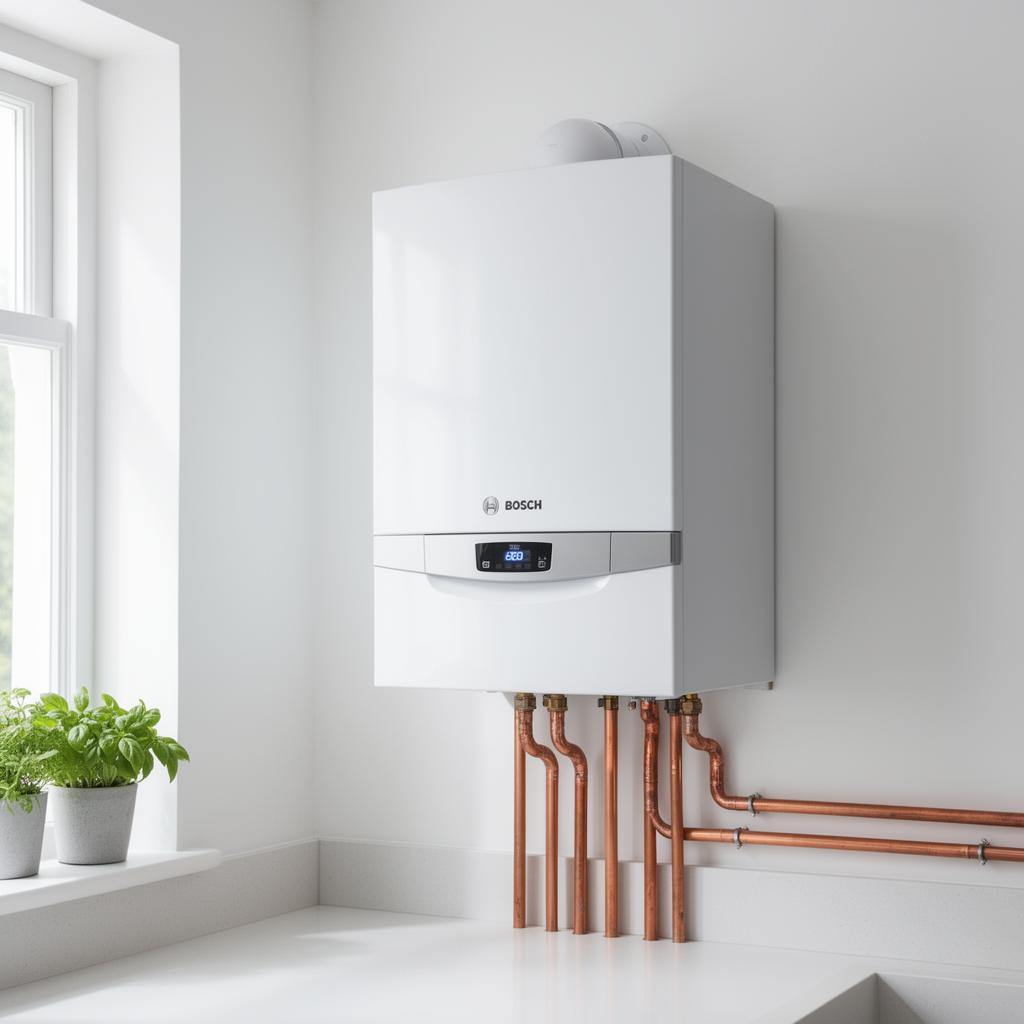
Most properties in this settlement sit on the mains gas network, which keeps the fuel choice straightforward and generally opens up the widest range of boiler options. That doesn't remove every complication — flue routing, existing pipework diameter and how the property currently distributes heat still need checking — but it does mean the conversation usually starts from a simpler baseline than in the off-grid villages further out. We're Gas Safe registered for exactly this kind of work. Access is open suburban, so parking, spoil removal and delivery timing get planned in advance. Our van runs the A367 to reach you, 3 miles out from the Radstock workshop. Peasedown St John sits roughly 3 miles from our Radstock base via the A367. We're on the road across BA2 every day, so emergency response is genuinely local — not a third-party engineer dispatched from the other side of the county.
Common faults we see — Peasedown St John
- No heat / no hot water — diverter valve, PCB
- Pressure dropping — expansion vessel, leak
- Boiler locked out — fan, sensor, PCB
- Cold radiators — pump, sludge, valves
- Frozen condensate (winter) — quick thaw + insulate
- Hot water only — thermostat or motorised valve
Qualifications behind the work
Every gas job notified to Building Control. Photo-evidenced repairs where relevant.
Oil boilers and tanks covered — we don't bounce oil-fired call-outs to another firm.
Diverter valves, expansion vessels, pumps, common PCBs — first-visit fixes are the norm.
We never swap parts blindly. You'll see the fault confirmed before any spare goes in.
What the buildings in Peasedown St John change about the job
Most properties in this settlement sit on the mains gas network, which keeps the fuel choice straightforward and generally opens up the widest range of boiler options. That doesn't remove every complication — flue routing, existing pipework diameter and how the property currently distributes heat still need checking — but it does mean the conversation usually starts from a simpler baseline than in the off-grid villages further out. We're Gas Safe registered for exactly this kind of work. Access is open suburban, so parking, spoil removal and delivery timing get planned in advance. Our van runs the A367 to reach you, 3 miles out from the Radstock workshop. Peasedown St John sits roughly 3 miles from our Radstock base via the A367. We're on the road across BA2 every day, so emergency response is genuinely local — not a third-party engineer dispatched from the other side of the county.
Also covering the lanes around Peasedown St John
We cover Peasedown St John alongside Wellow (BA2), Radstock (BA3), Bath (BA1), Clandown (BA3) — so spares, follow-ups and annual visits are easy to schedule together.
Emergency Boiler Repair FAQs for BA2
- What's actually checked during an annual boiler service?
- A service includes a visual and functional check of the boiler's casing and controls, flue gas analysis to confirm safe and efficient combustion, checking the flame picture and pressure, inspecting seals and condensate, and testing safety devices. It's a safety check as much as a performance one, and it's what keeps most manufacturer warranties valid.
- What support do I get after the install is finished?
- Once commissioning's complete we talk you through the controls, leave the paperwork, and register the manufacturer warranty on your behalf. If anything doesn't feel right in the first few weeks — a fault code, an odd noise, a control setting you're unsure of — call us during office hours and we'll talk it through or come back out.
- Can you look over a quote I've already had from another company?
- Yes, this comes up often. Send or bring in the other written quote and we'll go through the spec — boiler size, controls, cylinder if included, and what's actually listed for parts and labour — and tell you plainly whether it looks right for the property, oversized, or missing something we'd expect to see.
- As a landlord, how quickly can you deal with a no-heat call for a tenant?
- We book calls in during our published hours, Monday to Friday 8:30 to 5, and don't operate an out-of-hours emergency line, so we're upfront that a weekend no-heat call will wait until the next working day unless you've other cover in place. During the week we prioritise no-heat and no-hot-water calls where we can.
- Is it worth upgrading the heating controls when we replace the boiler?
- Where the existing controls are an old mechanical timer and single room thermostat, replacing them alongside the boiler with weather compensation or a modern programmable thermostat usually improves comfort and efficiency more than the boiler swap alone. It's not compulsory, but it's often the single best-value addition to a new install.
- Do you charge a call-out fee in Peasedown St John?
- We charge a fixed first-hour rate that includes the call-out and diagnosis. Parts are quoted before fitting, never after.
Coverage detail for BA2
- County
- Somerset
- Postcode district
- BA2
- Settlement type
- town
- Nearest classified road
- A367
- Distance from our base
- 3 miles (Radstock, BA3)
- Typical building stock
- 1960s–2000s estates and bungalows
- Water hardness
- very hard limestone water
- Fuel availability
- mains gas across most of the area
- Customer mix
- a mix of owner-occupied and rented homes
- Nearby areas covered
- Wellow, Radstock, Bath, Clandown
Practical considerations across BA2
Radiator sizing after lowering the flow temperature
Running a boiler at a lower flow temperature — typically 55°C or below rather than the old default of 70-80°C — improves condensing efficiency measurably, but it also reduces the heat output of every radiator in the house, because a radiator's output falls roughly with the square of the temperature difference to the room. Radiators sized correctly for a 75°C flow can end up unable to heat the room properly at 55°C unless they're upsized or supplemented. We check each radiator against the lower design flow temperature before recommending it, and where a room falls short we look at whether a larger single panel, a double panel, or an additional radiator on that circuit closes the gap, rather than pushing the flow temperature back up and giving away the efficiency gain.
Dealing with microbore pipework
Housing from the 1930s to 1960s around Peasedown St John was sometimes retrofitted with 8mm or 10mm microbore pipe run in bundles from a manifold, which was cheap and quick to install at the time but restricts flow badly compared with modern 15mm or 22mm pipe. Microbore is prone to sludge blockage because its narrow bore has no capacity to carry debris in suspension — it settles instead. A radiator on a microbore tail that's cold at the bottom is very often a blocked tail rather than a boiler fault. Replacing microbore with standard-bore pipe usually needs some floor lifting, but on a heating upgrade it removes a recurring source of cold radiators rather than papering over it with another flush.
Why very hard limestone water shortens boiler life around Peasedown St John
The limestone geology under Somerset gives Peasedown St John very hard limestone water, which drops calcium carbonate out of solution as soon as it's heated. Inside a combi's plate heat exchanger the gaps between plates are only a millimetre or two wide, so scale narrows the waterways long before it's visible anywhere else in the system. The first symptom is usually a hot tap that runs warm rather than hot, or a boiler that fires more often for the same demand. Left unchecked, scale insulates the exchanger from the burner, forces flue gases hotter, and can crack the exchanger from thermal stress. A scale reducer fitted on the mains feed, sized to the property's flow rate, is cheaper to install once than to replace a heat exchanger twice.
Common boiler fault codes and what usually causes them
Most modern boilers display a fault code on the control panel when they lock out, and while the exact code differs between manufacturers, the underlying causes cluster into a small number of categories: low system pressure (often from a small leak or after bleeding radiators), ignition failure (a worn electrode, gas supply issue, or blocked condensate causing a safety shutdown), or a failed sensor reporting an implausible temperature reading. A condensate blockage or freeze specifically tends to show a distinct code from a genuine ignition fault, which is why checking the external condensate pipe for ice before calling out an engineer in a cold snap can sometimes resolve the issue without a visit at all. We ask for the exact fault code and any recent history — a bled radiator, a cold snap, a recent service — before attending, since it often narrows down the likely cause before we arrive.
What voids or protects a Worcester Bosch extended guarantee
Worcester Bosch's longer guarantee periods on qualifying installations are conditional on the boiler being installed and commissioned by an Accredited Installer, on an annual service being carried out (by any Gas Safe registered engineer, not necessarily the original installer) within the required window each year, and on system water quality being maintained to the standard set out in their published guidance — meaning a system flush at installation, correct inhibitor dosing, and in hard water areas a scale reducer or filter as specified. Missing a single annual service, or installing without the required water treatment, can reduce cover back to the manufacturer's standard guarantee period even if the boiler itself has had no faults. Keeping the Benchmark record and service history together is what lets a claim be assessed quickly if it's ever needed.
Nozzle replacement and baffle cleaning on oil burners
An oil burner's nozzle atomises fuel into a fine spray for combustion, and it wears from constant fuel flow at pressure, gradually changing the spray pattern away from the burner manufacturer's specification even before it visibly fails. A worn nozzle burns less cleanly, producing more soot that coats the heat exchanger's baffles, and a sooted heat exchanger loses efficiency in the same way scale does on a gas boiler's plates. Standard practice on an annual oil service is to replace the nozzle as a matter of course, rather than wait for a fault, and to remove and clean the baffles so the heat exchanger surfaces are exposed to combustion heat properly again. Skipping nozzle replacement to save a service visit's minor parts cost is a false economy against the fuel wasted by a poorly atomising burner.
Working across Somerset: what being local changes
Being based at 24 Bristol Road, Radstock, 3 miles from Peasedown St John via the A367, means a callout doesn't involve a long cross-county drive, and it also means familiarity with the recurring patterns in the local building stock — 1960s–2000s estates and bungalows — rather than encountering that construction type for the first time on-site. Local knowledge doesn't replace a proper site survey, but it does mean fewer surprises: knowing in advance that a particular postcode area typically has hard water, older single-pipe circuits, or restricted parking means the quote reflects the likely reality of the job before the first visit. We're Gas Safe and OFTEC registered and work across Somerset on that basis, not by claiming coverage we don't actually deliver on.
How a condensing boiler recovers extra heat
A condensing boiler passes flue gases through a secondary heat exchanger before they leave the flue, extracting additional heat by condensing water vapour in the exhaust back into liquid, which is expelled as the mildly acidic condensate water down the drain. This is why every condensing boiler needs a condensate drainage route as part of its installation, unlike older non-condensing boilers, which simply vented hot dry gas straight out. The efficiency benefit only fully materialises when the boiler is actually condensing regularly, which needs a return water temperature low enough — generally below 55°C — for water vapour to condense in the first place. A condensing boiler run permanently at a high flow temperature can spend much of its time not actually condensing, which is one of the main reasons flow temperature settings matter as much as the boiler model chosen.
Booking work in Peasedown St John
If you're dealing with a failed system rather than planning ahead, say so when you call — it changes how quickly we try to get someone out, within the working hours we operate, Monday to Friday, 8:30am to 5pm. Outside those hours, leave a message and we'll get back to you when we reopen. Gas work is signed off Gas Safe; oil work is signed off OFTEC. Mains gas is available across most streets, which changes the appliance shortlist. Planning constraints are usually light here, so external work is checked first.
Related help for Peasedown St John
- New Boiler Cost in Peasedown St JohnHonest, area-specific pricing guidance for a new combi, system or oil boiler — with no obligation site visit.
- Landlord Gas Safety Certificate (CP12) in Peasedown St JohnAnnual CP12 inspections for landlords and letting agents — digital certificate the same day.
- Boiler Replacement Quote in Peasedown St JohnFree, no-obligation site visits and written specifications for old boiler replacements.
- Oil Boiler Service Cost in Peasedown St JohnWhat an OFTEC registered oil boiler service costs locally, what is included, and what a tank inspection adds.
- Oil Boiler Repair in Peasedown St JohnOil boiler lockouts, sooting and no heat call outs for homes off the mains gas grid, diagnosed before parts are quoted.
- Boiler Service Cost in Peasedown St JohnAnnual gas boiler service pricing, what the check covers, and how a landlord certificate can be combined in one visit.
- Boiler Installation in Peasedown St JohnNew combi, system and regular boiler installations for gas and oil homes — fixed prices, manufacturer warranties.
- Gas Boiler Installation in Peasedown St JohnGas Safe registered installations and upgrades for mains gas homes across Bath, Radstock and Wells.
New Worcester boiler with a 10 year guarantee*
Free no-obligation quotes for installation, servicing & repairs across BA & BS postcodes.