
Oil Boiler Repair, No Heat in Peasedown St John? Local Engineer, Fast
Timing matters with oil boiler repair: a mid-summer replacement gives more room to plan than an emergency swap in January, and a written quote gives you time to think rather than decide under pressure. We can work to either, but a bit of notice usually means a smoother job. Gas Safe registered, OFTEC registered, 24 Bristol Road, Radstock BA3 3EE, open Monday to Friday, 8:30am to 5pm. Water here is very hard limestone water, so scale protection is specified accordingly. Typical era of build is postwar, which affects existing pipework and system cleanliness. In Peasedown St John itself (BA2, Somerset) that usually means 1960s–2000s estates and bungalows, roughly 3 miles from the workshop.
Oil Boiler Repair — what you actually get
- Lockouts, sooting and puffing sorted
- Photocell, pump and control diagnostics
- Water or sludge in the tank dealt with
- OFTEC registered, diagnose first pricing
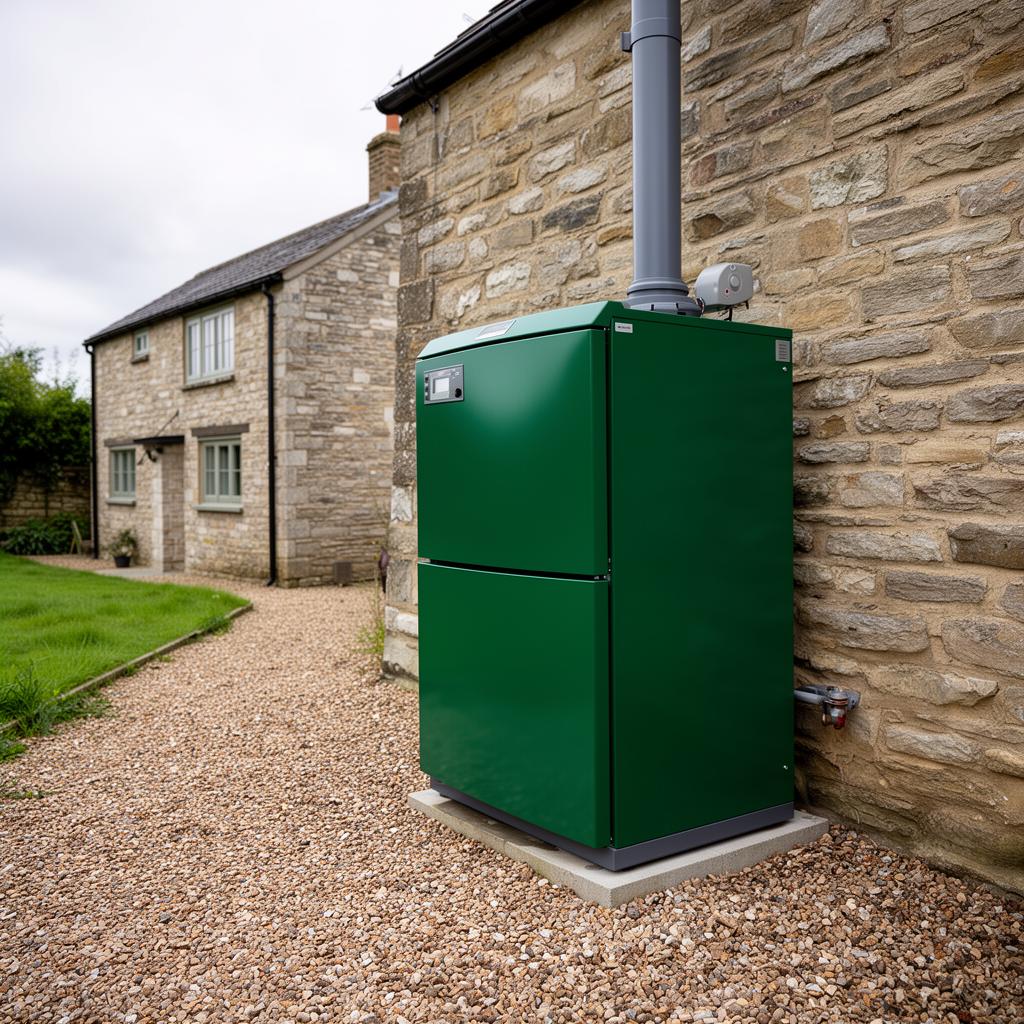
Water here runs off carboniferous limestone and Jurassic oolite, which makes it very hard by national standards. Hard water accelerates scale build-up inside heat exchangers, cylinders and pipework, which shortens the working life of components that aren't protected against it. On jobs in this area we factor scale protection into the specification rather than treating it as an optional extra, because the difference between a protected and unprotected system shows up within a few years, not decades. It's a genuine local variable, not generic sales advice, and it applies whether the property is on mains gas or oil. Most of what we open up here is 1960s–2000s estates and bungalows, which dictates flue routes and pipe sizing. Water here is very hard limestone water, so scale protection is specified accordingly. Peasedown St John sits roughly 3 miles from our Radstock base via the A367. We're on the road across BA2 every day, so emergency response is genuinely local — not a third-party engineer dispatched from the other side of the county.
Nearby villages and neighbourhoods
We cover Peasedown St John alongside Wellow (BA2), Radstock (BA3), Bath (BA1), Clandown (BA3) — so spares, follow-ups and annual visits are easy to schedule together.
Local conditions we plan around in BA2
Water here runs off carboniferous limestone and Jurassic oolite, which makes it very hard by national standards. Hard water accelerates scale build-up inside heat exchangers, cylinders and pipework, which shortens the working life of components that aren't protected against it. On jobs in this area we factor scale protection into the specification rather than treating it as an optional extra, because the difference between a protected and unprotected system shows up within a few years, not decades. It's a genuine local variable, not generic sales advice, and it applies whether the property is on mains gas or oil. Most of what we open up here is 1960s–2000s estates and bungalows, which dictates flue routes and pipe sizing. Water here is very hard limestone water, so scale protection is specified accordingly. Peasedown St John sits roughly 3 miles from our Radstock base via the A367. We're on the road across BA2 every day, so emergency response is genuinely local — not a third-party engineer dispatched from the other side of the county.
Proof, paperwork and accountability
Oil boilers and tanks covered — we don't bounce oil-fired call-outs to another firm.
We never swap parts blindly. You'll see the fault confirmed before any spare goes in.
Every gas job notified to Building Control. Photo-evidenced repairs where relevant.
Diverter valves, expansion vessels, pumps, common PCBs — first-visit fixes are the norm.
Our call-out approach — Peasedown St John
- Diagnose first, then quote — no blind swaps
- Common spares on the van for first-visit fixes
- Fixed labour rate, parts at cost-plus
- We'll tell you honestly when a repair is uneconomic
- If a replacement makes more sense, we'll explain why
Peasedown St John questions we get asked
- Will the new boiler work properly with our existing radiators?
- Not always without checking. Modern condensing boilers run most efficiently at lower flow temperatures, and radiators originally sized for an old, hotter-running boiler can end up struggling to heat a room adequately at those lower temperatures. We check radiator sizing against a heat loss calculation and flag any that are undersized for the room before installing.
- What support do I get after the install is finished?
- Once commissioning's complete we talk you through the controls, leave the paperwork, and register the manufacturer warranty on your behalf. If anything doesn't feel right in the first few weeks — a fault code, an odd noise, a control setting you're unsure of — call us during office hours and we'll talk it through or come back out.
- How do you decide whether to repair or replace a boiler?
- We weigh the age of the boiler, whether parts are still made for it, how many faults it's had recently, and its running efficiency against a like-for-like or upgraded replacement. If a straightforward part fixes it and the boiler's otherwise sound, we'll say so rather than push a new install you don't need.
- How often should a boiler actually be serviced?
- Once a year is the standard recommendation from every manufacturer, and most warranty terms make it a condition rather than a suggestion — miss a year and a claim can be refused even if the fault is unrelated. Landlords have a separate legal duty to have gas appliances checked annually regardless of warranty terms.
- How do we decide between a combi boiler and a boiler-plus-cylinder system?
- It comes down to hot water demand and available space. A combi heats water on demand with no cylinder to fill, which suits smaller households and single-bathroom homes, while a system or regular boiler with a cylinder stores hot water and copes far better where two bathrooms or a bath and shower run at the same time.
- As a landlord, how quickly can you deal with a no-heat call for a tenant?
- We book calls in during our published hours, Monday to Friday 8:30 to 5, and don't operate an out-of-hours emergency line, so we're upfront that a weekend no-heat call will wait until the next working day unless you've other cover in place. During the week we prioritise no-heat and no-hot-water calls where we can.
Coverage detail for BA2
- County
- Somerset
- Postcode district
- BA2
- Settlement type
- town
- Nearest classified road
- A367
- Distance from our base
- 3 miles (Radstock, BA3)
- Typical building stock
- 1960s–2000s estates and bungalows
- Water hardness
- very hard limestone water
- Fuel availability
- mains gas across most of the area
- Customer mix
- a mix of owner-occupied and rented homes
- Nearby areas covered
- Wellow, Radstock, Bath, Clandown
Technical notes for this job type
Dealing with microbore pipework
Housing from the 1930s to 1960s around Peasedown St John was sometimes retrofitted with 8mm or 10mm microbore pipe run in bundles from a manifold, which was cheap and quick to install at the time but restricts flow badly compared with modern 15mm or 22mm pipe. Microbore is prone to sludge blockage because its narrow bore has no capacity to carry debris in suspension — it settles instead. A radiator on a microbore tail that's cold at the bottom is very often a blocked tail rather than a boiler fault. Replacing microbore with standard-bore pipe usually needs some floor lifting, but on a heating upgrade it removes a recurring source of cold radiators rather than papering over it with another flush.
Heating in 1950s-60s built housing
Housing built through the 1950s and 60s around Peasedown St John, including ex-local-authority stock, often has solid or early cavity wall construction with limited or no cavity insulation, giving a heat loss profile between older solid-wall Victorian stock and modern insulated builds. Original heating pipework from this era is a mix — some properties were plumbed with early microbore retrofits, others kept full-bore two-pipe systems throughout — so assuming a standard layout without checking is unreliable. Loft insulation levels also vary significantly between individual properties even on the same estate, depending on what's been added since construction, which affects the heat loss calculation more than the build era label alone would suggest. We check actual insulation and pipework on site rather than assuming a standard 1960s answer.
Mixed owner-occupied and rented housing in Peasedown St John
Peasedown St John's mix of owner-occupied and rented housing means we regularly work to two different sets of expectations on the same street — a landlord wanting the minimum reliable, compliant system at reasonable cost for a tenanted property, and an owner-occupier next door wanting a longer-term investment in efficiency and comfort. Both are legitimate priorities, but they lead to different specifications: a landlord's replacement boiler decision is often driven by the annual gas safety record and reliable compliance, while an owner-occupier's decision more often factors in flow temperature optimisation and controls for their own daily comfort. We ask which category a job falls into early, since it changes the questions worth asking about the property and the recommendation that follows.
Working across Somerset: what being local changes
Being based at 24 Bristol Road, Radstock, 3 miles from Peasedown St John via the A367, means a callout doesn't involve a long cross-county drive, and it also means familiarity with the recurring patterns in the local building stock — 1960s–2000s estates and bungalows — rather than encountering that construction type for the first time on-site. Local knowledge doesn't replace a proper site survey, but it does mean fewer surprises: knowing in advance that a particular postcode area typically has hard water, older single-pipe circuits, or restricted parking means the quote reflects the likely reality of the job before the first visit. We're Gas Safe and OFTEC registered and work across Somerset on that basis, not by claiming coverage we don't actually deliver on.
Common boiler fault codes and what usually causes them
Most modern boilers display a fault code on the control panel when they lock out, and while the exact code differs between manufacturers, the underlying causes cluster into a small number of categories: low system pressure (often from a small leak or after bleeding radiators), ignition failure (a worn electrode, gas supply issue, or blocked condensate causing a safety shutdown), or a failed sensor reporting an implausible temperature reading. A condensate blockage or freeze specifically tends to show a distinct code from a genuine ignition fault, which is why checking the external condensate pipe for ice before calling out an engineer in a cold snap can sometimes resolve the issue without a visit at all. We ask for the exact fault code and any recent history — a bled radiator, a cold snap, a recent service — before attending, since it often narrows down the likely cause before we arrive.
Signs a boiler repair is no longer the right call
A boiler that's failing repeatedly, needing a different part replaced every service, or over roughly ten to fifteen years old is approaching the point where continued repair costs more over time than replacement, particularly once a heat exchanger — the most expensive single part — starts to show signs of failure through leaks or reduced output. Efficiency is the other half of the calculation: an older non-condensing boiler running at 70-80% efficiency against a modern condensing combi at over 90% means a meaningful chunk of every unit of fuel burned in the old boiler is simply lost up the flue. We give a straight answer on repair versus replace based on the fault found and the boiler's age and condition, rather than defaulting to whichever is more profitable to us on the day.
Why very hard limestone water shortens boiler life around Peasedown St John
The limestone geology under Somerset gives Peasedown St John very hard limestone water, which drops calcium carbonate out of solution as soon as it's heated. Inside a combi's plate heat exchanger the gaps between plates are only a millimetre or two wide, so scale narrows the waterways long before it's visible anywhere else in the system. The first symptom is usually a hot tap that runs warm rather than hot, or a boiler that fires more often for the same demand. Left unchecked, scale insulates the exchanger from the burner, forces flue gases hotter, and can crack the exchanger from thermal stress. A scale reducer fitted on the mains feed, sized to the property's flow rate, is cheaper to install once than to replace a heat exchanger twice.
What a proper heating quote should include
A quote worth relying on states the specific boiler or equipment model, the labour and materials it covers, whether a system flush and magnetic filter are included, what happens to old equipment removal and disposal, and what's excluded — an unexpected gas pipe upsizing or asbestos-containing material discovered during removal, for example, which can't always be known before work starts. It should also state who's completing the Gas Safe or OFTEC notification and Benchmark commissioning record, since that's the paperwork that protects both the manufacturer's guarantee and the property's compliance history when it's sold. A vague one-line quote makes comparing genuinely different offers difficult, because two prices that look similar can cover very different scopes of actual work.
- Specific make and model, not just "combi boiler"
- Flush and magnetic filter stated as included or excluded
- Old equipment removal and disposal covered
- Notification and Benchmark record responsibility stated
Electronic and physical scale reducers compared
In very hard limestone water areas like Peasedown St John, a scale reducer fitted on the boiler's cold feed protects the heat exchanger without the ongoing salt and drainage requirements of a full water softener. Physical scale reducers use a polyphosphate or template-assisted crystallisation cartridge that alters how calcium carbonate crystallises so it's less likely to adhere to hot surfaces; electronic and electromagnetic devices claim a similar effect without a cartridge to replace, though the evidence base for electronic types is weaker and more inconsistent than for physical media. Manufacturers including Worcester Bosch now specify a scale reducer or softener as a condition of extended guarantees in hard water areas, so the choice affects warranty validity as well as long-term performance, not just descale frequency.
Booking work in Peasedown St John
Expect three things from oil boiler repair with us: a proper look at the property before any figure is given, a written quote that spells out what's included, and work carried out by a Gas Safe and OFTEC registered engineer who stands behind it. We can usually pair the visit with other work in Wellow to keep the trip efficient. Most of what we open up here is 1960s–2000s estates and bungalows, which dictates flue routes and pipe sizing. a mix of owner-occupied and rented homes make up most enquiries from this postcode.
Related help for Peasedown St John
- New Boiler Cost in Peasedown St JohnHonest, area-specific pricing guidance for a new combi, system or oil boiler — with no obligation site visit.
- Emergency Boiler Repair in Peasedown St JohnSame-week (often same-day) no-heat and no-hot-water call-outs for gas and oil boilers.
- Landlord Gas Safety Certificate (CP12) in Peasedown St JohnAnnual CP12 inspections for landlords and letting agents — digital certificate the same day.
- Boiler Replacement Quote in Peasedown St JohnFree, no-obligation site visits and written specifications for old boiler replacements.
- Oil Boiler Service Cost in Peasedown St JohnWhat an OFTEC registered oil boiler service costs locally, what is included, and what a tank inspection adds.
- Boiler Service Cost in Peasedown St JohnAnnual gas boiler service pricing, what the check covers, and how a landlord certificate can be combined in one visit.
- Boiler Installation in Peasedown St JohnNew combi, system and regular boiler installations for gas and oil homes — fixed prices, manufacturer warranties.
- Gas Boiler Installation in Peasedown St JohnGas Safe registered installations and upgrades for mains gas homes across Bath, Radstock and Wells.
New Worcester boiler with a 10 year guarantee*
Free no-obligation quotes for installation, servicing & repairs across BA & BS postcodes.