
Landlord Gas Safety Certificate (CP12), Landlord CP12 in Peasedown St John — Same-Day Digital Cert
Before quoting for landlord gas safety certificate (cp12), we start with what's actually there: the existing pipework, the flue route, the water pressure and the age of what you've already got. Guesswork on a heating system leads to call-backs and wasted money, so a proper look at the property comes first. We're Gas Safe registered and OFTEC registered, based at 24 Bristol Road, Radstock BA3 3EE, and we size and specify jobs on what we find on site, not on assumptions. Our van runs the A367 to reach you, 3 miles out from the Radstock workshop. Mains gas is available across most streets, which changes the appliance shortlist. In Peasedown St John itself (BA2, Somerset) that usually means 1960s–2000s estates and bungalows, roughly 3 miles from the workshop.
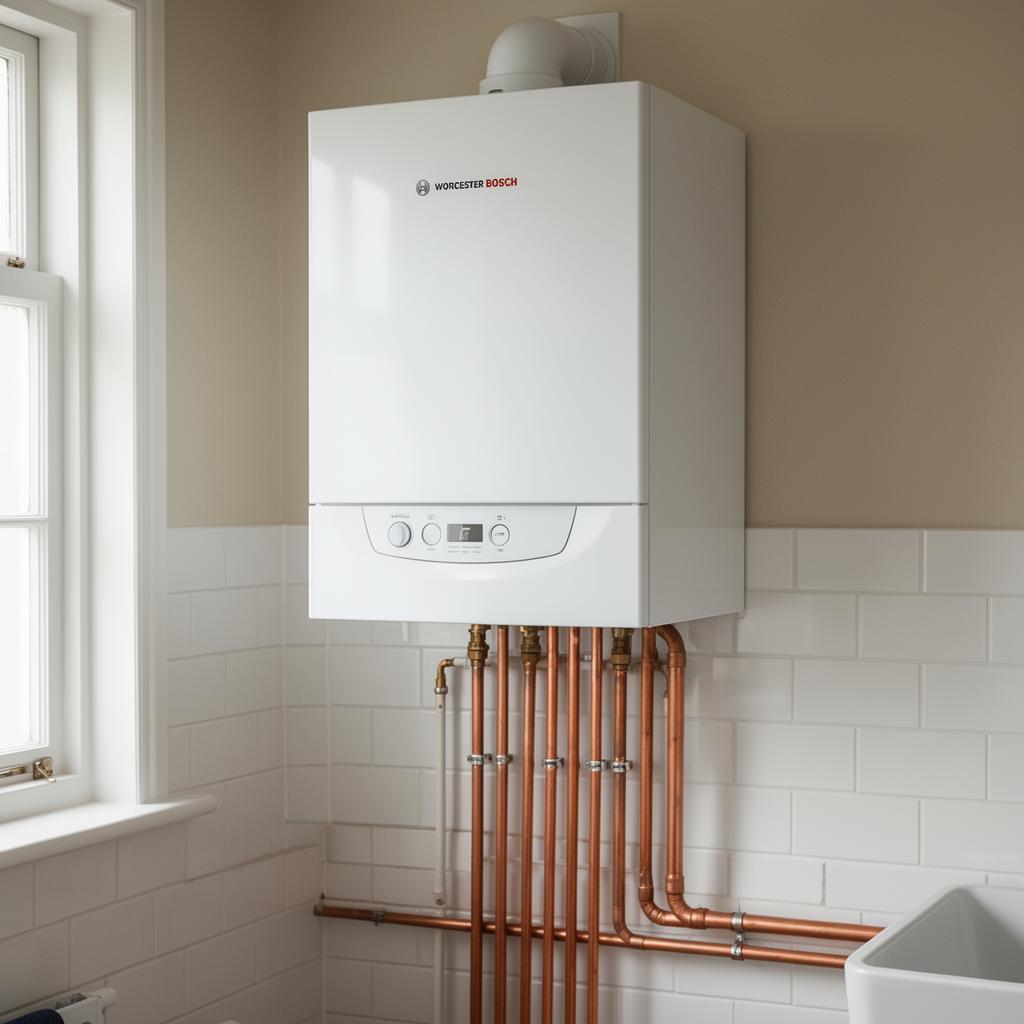
Access on the more open suburban streets in this area is generally straightforward, with driveway or nearby parking and reasonably standard-width doorways and hallways, which keeps installation logistics simple. That doesn't mean every job is identical — internal layout, existing pipe routes and where the current boiler or cylinder sits still shape the work — but access itself is rarely the limiting factor here the way it can be in tighter terraced streets or on unmade lanes. Water here is very hard limestone water, so scale protection is specified accordingly. Access is open suburban, so parking, spoil removal and delivery timing get planned in advance. Peasedown St John (BA2) has a healthy private-rental sector, particularly across 1960s–2000s estates and bungalows. We service a number of letting-agent portfolios across the area and keep the certification cycle running so renewals never slip.
What's included in a CP12 visit — Peasedown St John
- Full gas appliance safety inspection
- Flue integrity and ventilation check
- Operating pressures and burner check
- Tightness test on the gas installation
- Digital CP12 certificate emailed same day
- Copy issued for the tenant by hand or email
Why Peasedown St John households use us
Certificate emailed before we leave the property — copy direct to tenant if preferred.
Rolling 30-day reminders across every property — no missed renewals.
Direct billing to the letting agent, single engineer across the portfolio.
Notified, certified, fully insured — your statutory obligations covered properly.
What the buildings in Peasedown St John change about the job
Access on the more open suburban streets in this area is generally straightforward, with driveway or nearby parking and reasonably standard-width doorways and hallways, which keeps installation logistics simple. That doesn't mean every job is identical — internal layout, existing pipe routes and where the current boiler or cylinder sits still shape the work — but access itself is rarely the limiting factor here the way it can be in tighter terraced streets or on unmade lanes. Water here is very hard limestone water, so scale protection is specified accordingly. Access is open suburban, so parking, spoil removal and delivery timing get planned in advance. Peasedown St John (BA2) has a healthy private-rental sector, particularly across 1960s–2000s estates and bungalows. We service a number of letting-agent portfolios across the area and keep the certification cycle running so renewals never slip.
Where else we work near Peasedown St John
We cover Peasedown St John alongside Wellow (BA2), Radstock (BA3), Bath (BA1), Clandown (BA3) — so spares, follow-ups and annual visits are easy to schedule together.
Landlord Gas Safety Certificate (CP12) FAQs for BA2
- Who actually carries out the work?
- A Gas Safe and, where relevant, OFTEC registered engineer from our own small team carries out the job — we don't sub the install out to a third party after quoting. You deal with the same people from survey through to commissioning and any aftercare calls.
- How often should a boiler actually be serviced?
- Once a year is the standard recommendation from every manufacturer, and most warranty terms make it a condition rather than a suggestion — miss a year and a claim can be refused even if the fault is unrelated. Landlords have a separate legal duty to have gas appliances checked annually regardless of warranty terms.
- As a landlord, how quickly can you deal with a no-heat call for a tenant?
- We book calls in during our published hours, Monday to Friday 8:30 to 5, and don't operate an out-of-hours emergency line, so we're upfront that a weekend no-heat call will wait until the next working day unless you've other cover in place. During the week we prioritise no-heat and no-hot-water calls where we can.
- How do you decide whether to repair or replace a boiler?
- We weigh the age of the boiler, whether parts are still made for it, how many faults it's had recently, and its running efficiency against a like-for-like or upgraded replacement. If a straightforward part fixes it and the boiler's otherwise sound, we'll say so rather than push a new install you don't need.
- Is a boiler install a noisy, disruptive job?
- There's unavoidable noise — drilling for the flue, pipework, sometimes moving a cylinder — but a straightforward swap is usually done within a working day with the mess kept to the immediate work area. We dust-sheet the route in and out and clear away pipe offcuts and old parts before we leave.
- Do you remind us when Peasedown St John CP12s expire?
- Yes — we run rolling 30-day reminders for every landlord on our system. You won't get caught at renewal.
Area data we work from
- County
- Somerset
- Postcode district
- BA2
- Settlement type
- town
- Nearest classified road
- A367
- Distance from our base
- 3 miles (Radstock, BA3)
- Typical building stock
- 1960s–2000s estates and bungalows
- Water hardness
- very hard limestone water
- Fuel availability
- mains gas across most of the area
- Customer mix
- a mix of owner-occupied and rented homes
- Nearby areas covered
- Wellow, Radstock, Bath, Clandown
Things we check around Peasedown St John
Being minutes away in Peasedown St John
Peasedown St John sits close enough to our Radstock base, just 3 miles via the A367, that a diagnostic visit or a return trip for a part doesn't add the delay it would on a job further afield. That's practically useful on jobs where a fault only shows itself once a boiler's been running for a while, or where a part needs collecting after an initial diagnosis rather than being carried on the off-chance. It doesn't change how the job itself is done — the same Gas Safe and OFTEC standards and the same commissioning paperwork apply regardless of distance — but it does mean less waiting between visits on multi-stage jobs like a full system upgrade that needs a survey, a flush, and an installation visit in sequence.
Signs a boiler repair is no longer the right call
A boiler that's failing repeatedly, needing a different part replaced every service, or over roughly ten to fifteen years old is approaching the point where continued repair costs more over time than replacement, particularly once a heat exchanger — the most expensive single part — starts to show signs of failure through leaks or reduced output. Efficiency is the other half of the calculation: an older non-condensing boiler running at 70-80% efficiency against a modern condensing combi at over 90% means a meaningful chunk of every unit of fuel burned in the old boiler is simply lost up the flue. We give a straight answer on repair versus replace based on the fault found and the boiler's age and condition, rather than defaulting to whichever is more profitable to us on the day.
Heating in 1950s-60s built housing
Housing built through the 1950s and 60s around Peasedown St John, including ex-local-authority stock, often has solid or early cavity wall construction with limited or no cavity insulation, giving a heat loss profile between older solid-wall Victorian stock and modern insulated builds. Original heating pipework from this era is a mix — some properties were plumbed with early microbore retrofits, others kept full-bore two-pipe systems throughout — so assuming a standard layout without checking is unreliable. Loft insulation levels also vary significantly between individual properties even on the same estate, depending on what's been added since construction, which affects the heat loss calculation more than the build era label alone would suggest. We check actual insulation and pipework on site rather than assuming a standard 1960s answer.
Peasedown St John's A367 corridor and what it means for scheduling
Properties along or near the A367 corridor around Peasedown St John are generally straightforward to reach without the access constraints of side lanes or unclassified roads further off the main network, which helps with scheduling deliveries of boilers, cylinders or oil tanks to a fixed slot. It doesn't change the technical requirements of the job itself, but predictable access does mean less contingency time needs building into a visit, and it makes coordinating a delivery with an installation date more reliable than on a property with a difficult final approach. We still confirm any specific parking or loading restriction on the immediate street before a job, since a fast main road doesn't guarantee easy stopping right outside the property.
What different boiler noises usually mean
A kettling or rumbling sound from a boiler is most often scale or sludge build-up on the heat exchanger causing localised boiling as water is trapped and overheated in restricted channels — the heating equivalent of a kettle furring up. A banging or knocking sound in pipework, sometimes called water hammer, is usually caused by a valve closing too quickly or trapped air rather than the boiler itself. A whining or humming sound tends to point to the circulating pump, either from wear or from air in the system reducing lubrication at the bearing. Diagnosing correctly from the noise alone isn't reliable enough to act on without checking system pressure, inhibitor condition and the pump directly, but the noise itself is a useful first indicator of which of those to check first.
How a condensing boiler recovers extra heat
A condensing boiler passes flue gases through a secondary heat exchanger before they leave the flue, extracting additional heat by condensing water vapour in the exhaust back into liquid, which is expelled as the mildly acidic condensate water down the drain. This is why every condensing boiler needs a condensate drainage route as part of its installation, unlike older non-condensing boilers, which simply vented hot dry gas straight out. The efficiency benefit only fully materialises when the boiler is actually condensing regularly, which needs a return water temperature low enough — generally below 55°C — for water vapour to condense in the first place. A condensing boiler run permanently at a high flow temperature can spend much of its time not actually condensing, which is one of the main reasons flow temperature settings matter as much as the boiler model chosen.
Working across Somerset: what being local changes
Being based at 24 Bristol Road, Radstock, 3 miles from Peasedown St John via the A367, means a callout doesn't involve a long cross-county drive, and it also means familiarity with the recurring patterns in the local building stock — 1960s–2000s estates and bungalows — rather than encountering that construction type for the first time on-site. Local knowledge doesn't replace a proper site survey, but it does mean fewer surprises: knowing in advance that a particular postcode area typically has hard water, older single-pipe circuits, or restricted parking means the quote reflects the likely reality of the job before the first visit. We're Gas Safe and OFTEC registered and work across Somerset on that basis, not by claiming coverage we don't actually deliver on.
Peasedown St John's place within the wider Somerset area we cover
Peasedown St John is one of several neighbourhoods we work in around the wider area, and while the postcode district and general water hardness and building stock trends are shared with the surrounding district, the specific street-level access, parking and property type still varies enough locally that we treat each visit on its own facts rather than applying a generic area answer. Nearby areas we also cover include Wellow, Radstock and Bath, which is relevant mainly where a customer wants comparable jobs referenced or where a single visit can sensibly cover more than one nearby property in the same trip. The underlying trade standards — Gas Safe, OFTEC, correct commissioning — don't vary by neighbourhood, only the practical details of the job do.
Your next move in BA2
If you're dealing with a failed system rather than planning ahead, say so when you call — it changes how quickly we try to get someone out, within the working hours we operate, Monday to Friday, 8:30am to 5pm. Outside those hours, leave a message and we'll get back to you when we reopen. A written quote follows the survey — no pressure, and no charge for the Peasedown St John visit. Mains gas is available across most streets, which changes the appliance shortlist. Water here is very hard limestone water, so scale protection is specified accordingly.
Related help for Peasedown St John
- New Boiler Cost in Peasedown St JohnHonest, area-specific pricing guidance for a new combi, system or oil boiler — with no obligation site visit.
- Emergency Boiler Repair in Peasedown St JohnSame-week (often same-day) no-heat and no-hot-water call-outs for gas and oil boilers.
- Boiler Replacement Quote in Peasedown St JohnFree, no-obligation site visits and written specifications for old boiler replacements.
- Oil Boiler Service Cost in Peasedown St JohnWhat an OFTEC registered oil boiler service costs locally, what is included, and what a tank inspection adds.
- Oil Boiler Repair in Peasedown St JohnOil boiler lockouts, sooting and no heat call outs for homes off the mains gas grid, diagnosed before parts are quoted.
- Boiler Service Cost in Peasedown St JohnAnnual gas boiler service pricing, what the check covers, and how a landlord certificate can be combined in one visit.
- Boiler Installation in Peasedown St JohnNew combi, system and regular boiler installations for gas and oil homes — fixed prices, manufacturer warranties.
- Gas Boiler Installation in Peasedown St JohnGas Safe registered installations and upgrades for mains gas homes across Bath, Radstock and Wells.
New Worcester boiler with a 10 year guarantee*
Free no-obligation quotes for installation, servicing & repairs across BA & BS postcodes.