
Local Boiler Servicing for Chew Magna
Before quoting for boiler servicing, we start with what's actually there: the existing pipework, the flue route, the water pressure and the age of what you've already got. Guesswork on a heating system leads to call-backs and wasted money, so a proper look at the property comes first. We're Gas Safe registered and OFTEC registered, based at 24 Bristol Road, Radstock BA3 3EE, and we size and specify jobs on what we find on site, not on assumptions. Conservation and listed constraints apply to parts of the area, so external work is checked first. Typical era of build is georgian, which affects existing pipework and system cleanliness. In Chew Magna itself (BS40, North Somerset) that usually means stone village homes and georgian houses, roughly 8 miles from the workshop.
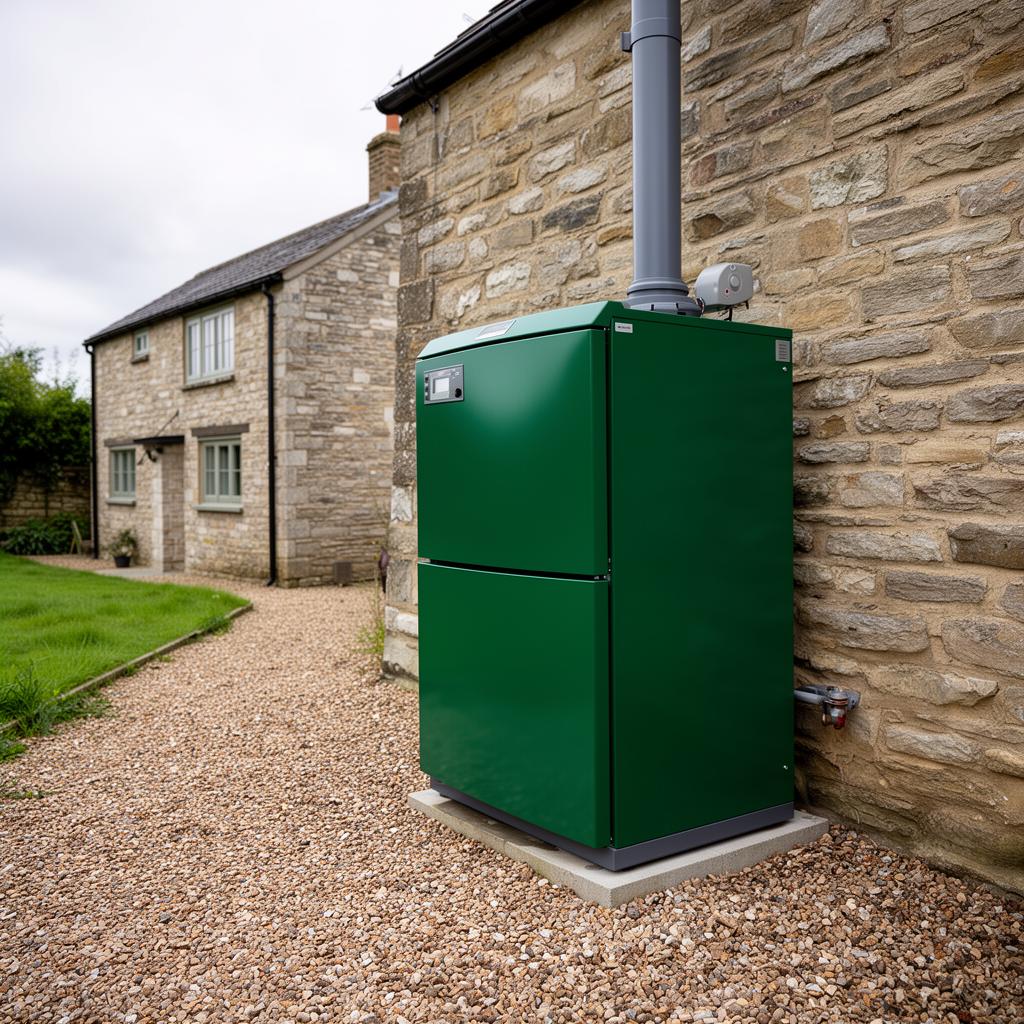
Site realities in and around Chew Magna
This settlement has a genuine mix of owner-occupied and rented housing, which means the priorities on any given job vary: an owner-occupier might prioritise long-term running costs, while a landlord is usually focused on reliability and having the right paperwork in place for tenants and agents. We ask early on which category a job falls into, since it shapes what matters most in the specification and what documentation needs to be provided at the end. Typical era of build is georgian, which affects existing pipework and system cleanliness. Our van runs the B3130 to reach you, 8 miles out from the Radstock workshop. Chew Magna is roughly 8 miles from our Radstock base via the B3130. Typical property stock here: stone village homes and Georgian houses. Mains gas covers most of Chew Magna, so the usual choice is between a modern combi or a system boiler with a cylinder — we'll size it correctly for the home, not just swap like-for-like. Annual services in Chew Magna include a full safety check, efficiency report and warranty stamp where applicable.
How we run boiler servicing on site
- Full annual safety check
- Landlord gas safety certificates
- Efficiency report
- Friendly, tidy engineers
- Free written quote, no obligation
- Local aftercare from a 8-mile base
Also covering the lanes around Chew Magna
Beyond Chew Magna we're frequently on jobs in Chew Stoke (BS40), Stanton Drew (BS39), Winford (BS40) and Compton Martin (BS40) — so spares, follow-ups and annual services are straightforward.
Qualifications behind the work
Qualifies your install for the full 10-year manufacturer guarantee* on supported models.
No verbal-only quotes. You'll get the boiler model, controls and warranty in writing before we book.
Oil boilers, oil tanks and pipework — fully certified for off-grid installs and replacements.
362+ verified reviews from real customers across BA and BS postcodes.
Boiler Servicing FAQs for BS40
- What's the difference between a power flush and a chemical flush?
- A chemical flush circulates a cleaning agent through the existing system to loosen light debris, while a power flush uses a pump to force water at higher velocity and reversed direction through radiators and pipework to shift heavier sludge. We usually recommend the more thorough power flush before connecting a new boiler to an older system.
- Do I need to do anything to activate my boiler's warranty?
- As a Worcester Bosch Accredited Installer we register qualifying Worcester installs on your behalf, which is what unlocks the extended guarantee (up to 10 years* on qualifying installs) rather than the standard shorter term. For other brands we still register the installation; keep the confirmation with your other paperwork in case you need it.
- How much longer does a full conversion take compared to a straight boiler swap?
- A straight like-for-like swap in the same location is typically a single working day. Converting boiler type (for example back boiler to combi, or oil to LPG), relocating the boiler, or adding a new cylinder usually needs one to two extra days for additional pipework, flue routing, and electrical work, which we'll scope out at survey.
- Is a boiler install a noisy, disruptive job?
- There's unavoidable noise — drilling for the flue, pipework, sometimes moving a cylinder — but a straightforward swap is usually done within a working day with the mess kept to the immediate work area. We dust-sheet the route in and out and clear away pipe offcuts and old parts before we leave.
- What is condensate and why does its routing matter?
- Condensate is the mildly acidic water produced by a modern condensing boiler as it extracts extra heat from the flue gases, and it needs a route to an internal drain or, less ideally, an external soakaway. In colder or more exposed locations an external condensate pipe can freeze and shut the boiler down, so internal routing is worth prioritising where the layout allows it.
- Do you cover all of Chew Magna?
- Yes — every street in BS40 that falls under Chew Magna, plus the lanes towards Chew Stoke and Stanton Drew. We're 8 miles away in Radstock, so most jobs are reached in well under half an hour.
Where to go from here
For landlords, boiler servicing usually needs to fit around a tenancy, so let us know at the outset if the property is occupied and what access arrangements work for the tenant. We'll build that into the quote and the schedule rather than assuming an empty property. Send the appliance make, model and any fault code and you get a straight answer, not a sales script. Mains gas is available across most streets, which changes the appliance shortlist. Nearest neighbours on our round are Chew Stoke, Stanton Drew, Winford.
Coverage detail for BS40
- County
- North Somerset
- Postcode district
- BS40
- Settlement type
- town
- Nearest classified road
- B3130
- Distance from our base
- 8 miles (Radstock, BA3)
- Typical building stock
- stone village homes and Georgian houses
- Water hardness
- hard water
- Fuel availability
- mains gas across most of the area
- Customer mix
- a mix of owner-occupied and rented homes
- Nearby areas covered
- Chew Stoke, Stanton Drew, Winford, Compton Martin
Detail that matters in Chew Magna
Pumped-oil versus gravity feed: does it matter?
Older oil systems sometimes still rely on gravity feed, where the tank sits higher than the burner and oil flows down to it under its own weight; a pumped system uses the burner's internal pump to draw oil up from a tank at any level, including below the boiler. Gravity feed limits where a tank can be sited and is more prone to airlocks if the line runs dry, while a pumped system is more flexible on tank position but needs the pipe run and lift height kept within the burner pump's rated capacity — usually no more than a few metres of lift and a set maximum run length. When we replace an oil boiler we check which type the existing tank and pipework support before assuming a straight swap, because a tank sited for gravity feed may need repositioning or a different pump to suit a modern burner.
Access and parking constraints before we start work
Chew Magna's narrow terraced frontages affect how a job is planned before any pipework is touched. A boiler, cylinder or radiators have to be carried in, and on some streets that means checking parking permit zones or loading restrictions in advance rather than on the day; on farm tracks it means confirming a van can actually reach the building in wet weather, since a track that's fine in summer can be impassable after heavy rain. Old equipment being removed — an oil tank, an old cylinder, a cast iron boiler — needs the same access route in reverse, and weight matters as much as width. We ask about access and parking at the quoting stage specifically so it doesn't become a delay on the installation day.
Valley-floor properties: flood risk and boiler positioning
Properties on lower ground near watercourses around Chew Magna carry a higher flood risk than the surrounding hills, and that's a genuine factor in deciding where a replacement boiler or cylinder is sited, particularly in a floor-standing oil boiler's case. Raising a floor-standing appliance onto a plinth, or relocating a boiler from a ground-floor utility room to a wall-mounted position higher up, reduces the chance of it being damaged in a flood event that a hillside property simply doesn't need to plan for. Electrical connections and any floor-level wiring also benefit from being kept above likely flood water levels where practical. We raise this with customers on lower-lying sites at the planning stage rather than only after a flood has already caused damage.
Reaching properties off the main road network
Chew Magna is reached via the B3130, a B-road rather than a trunk route, which matters mainly for winter access and for confirming a delivery vehicle carrying a new oil tank or bulky equipment can realistically reach the property. We factor the actual route in when scheduling deliveries or larger installations, checking with the customer about any width, height or surface restrictions on the final approach rather than assuming a mapping app's route reflects what a loaded van can manage. It rarely changes the technical scope of a job, but it does affect how a visit is planned and timed, particularly for jobs needing a specific delivery slot to coincide with the installation date.
How a condensing boiler recovers extra heat
A condensing boiler passes flue gases through a secondary heat exchanger before they leave the flue, extracting additional heat by condensing water vapour in the exhaust back into liquid, which is expelled as the mildly acidic condensate water down the drain. This is why every condensing boiler needs a condensate drainage route as part of its installation, unlike older non-condensing boilers, which simply vented hot dry gas straight out. The efficiency benefit only fully materialises when the boiler is actually condensing regularly, which needs a return water temperature low enough — generally below 55°C — for water vapour to condense in the first place. A condensing boiler run permanently at a high flow temperature can spend much of its time not actually condensing, which is one of the main reasons flow temperature settings matter as much as the boiler model chosen.
Nozzle replacement and baffle cleaning on oil burners
An oil burner's nozzle atomises fuel into a fine spray for combustion, and it wears from constant fuel flow at pressure, gradually changing the spray pattern away from the burner manufacturer's specification even before it visibly fails. A worn nozzle burns less cleanly, producing more soot that coats the heat exchanger's baffles, and a sooted heat exchanger loses efficiency in the same way scale does on a gas boiler's plates. Standard practice on an annual oil service is to replace the nozzle as a matter of course, rather than wait for a fault, and to remove and clean the baffles so the heat exchanger surfaces are exposed to combustion heat properly again. Skipping nozzle replacement to save a service visit's minor parts cost is a false economy against the fuel wasted by a poorly atomising burner.
Other boiler services in Chew Magna
- Boiler Installation in Chew MagnaNew combi, system and regular boiler installations for gas and oil homes — fixed prices, manufacturer warranties.
- Gas Boiler Installation in Chew MagnaGas Safe registered installations and upgrades for mains gas homes across Bath, Radstock and Wells.
- Oil Boiler Installation in Chew MagnaOFTEC-trained oil boiler specialist for rural homes off the gas grid — tank and boiler replacements.
- Maintenance & Repair in Chew MagnaDiagnostics, repairs and breakdown call-outs for gas and oil boilers across BA and BS postcodes.
- Landlord Gas Safety Certificates in Chew MagnaAnnual CP12 landlord gas safety records issued on the day, for single lets, HMOs, holiday lets and whole portfolios.
- Oil Boiler Servicing in Chew MagnaOFTEC registered annual servicing for oil boilers, including nozzle, electrode, filter and smoke test work on off grid homes.
- Oil Boiler Repairs in Chew MagnaOil boiler breakdown repairs across rural Somerset, from lockouts and sooting to pump, photocell and control faults.
- Oil Tank Replacement in Chew MagnaBunded oil tank replacement and relocation with base preparation, new supply line and OFTEC paperwork on completion.
New Worcester boiler with a 10 year guarantee*
Free no-obligation quotes for installation, servicing & repairs across BA & BS postcodes.