
Oil Boiler Repairs in Dundry
We treat oil boiler repairs as work that has to meet the same standard whether it's a small job or a full system replacement: correct registration, proper commissioning, and documentation you can keep. Gas Safe registered, OFTEC registered and a Worcester Bosch Accredited Installer, based at 24 Bristol Road, Radstock BA3 3EE, that's the baseline we work to on every job, not an upsell. Terrain is hill top, which matters for condensate runs and tank siting. Access is lane access, so parking, spoil removal and delivery timing get planned in advance. In Dundry itself (BS41, North Somerset) that usually means stone cottages with city views, roughly 11 miles from the workshop.
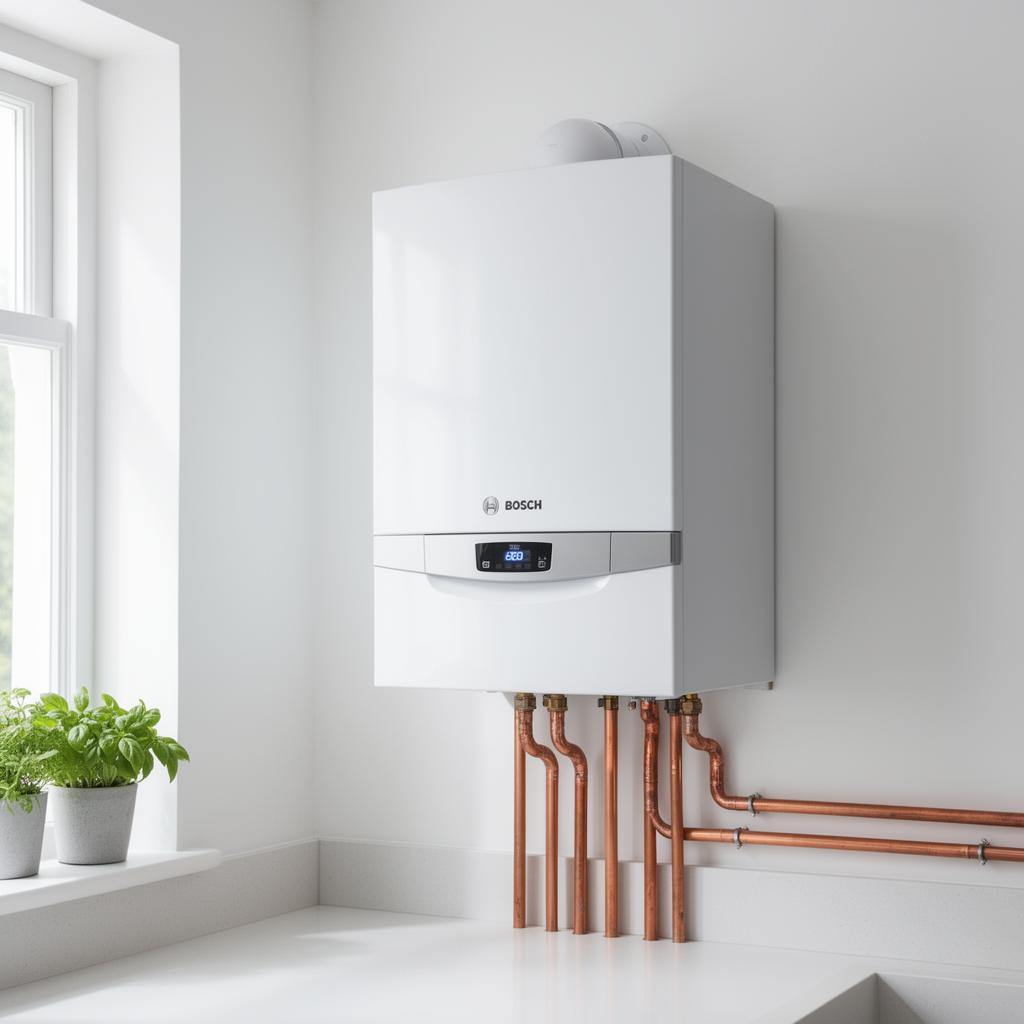
What oil boiler repairs includes here
- Boiler will not fire or keeps locking out
- Sooting, puffing and smoky flue faults
- Pump, photocell and control diagnostics
- Sludge and water in tank dealt with properly
- Free written quote, no obligation
- Local aftercare from a 11-mile base
Neighbouring North Somerset areas we serve
Beyond Dundry we're frequently on jobs in Long Ashton (BS41), Barrow Gurney (BS48), Winford (BS40) and Chew Magna (BS40) — so spares, follow-ups and annual services are straightforward.
What backs up a Dundry quote
Oil boilers, oil tanks and pipework — fully certified for off-grid installs and replacements.
362+ verified reviews from real customers across BA and BS postcodes.
Reg. 549918 — every gas job notified to Building Control and a CP12 issued where required.
No verbal-only quotes. You'll get the boiler model, controls and warranty in writing before we book.
How North Somerset building stock shapes the spec
Stone cottages and farmhouses around here were mostly built long before central heating existed, so pipework and boiler locations have usually been retrofitted at some point, sometimes more than once. Thick stone walls, uneven floor levels and low ceilings can all affect where a boiler or cylinder can practically go, and older stonework doesn't always take fixings the way modern block or brick does. We work around those constraints on site rather than assuming a straightforward install. Water here is hard water, so scale protection is specified accordingly. homes alongside small commercial and agricultural premises make up most enquiries from this postcode. Dundry is roughly 11 miles from our Radstock base via the unclassified. Typical property stock here: stone cottages with city views. A meaningful share of properties around Dundry are off the gas grid, so oil boiler installs and tank swaps make up a fair part of what we do locally. Repair calls in Dundry usually get a same-week visit, with most common faults fixed on the first attempt.
Oil Boiler Repairs FAQs for BS41
- How often should a boiler actually be serviced?
- Once a year is the standard recommendation from every manufacturer, and most warranty terms make it a condition rather than a suggestion — miss a year and a claim can be refused even if the fault is unrelated. Landlords have a separate legal duty to have gas appliances checked annually regardless of warranty terms.
- What's the difference between a boiler service and general maintenance?
- A service is the annual manufacturer-required safety and efficiency check that keeps the warranty valid. Maintenance covers everything else — bleeding radiators, checking system pressure, sorting minor faults, and periodic flushing or filter checks — that keeps the system running well between those annual services rather than replacing them.
- What support do I get after the install is finished?
- Once commissioning's complete we talk you through the controls, leave the paperwork, and register the manufacturer warranty on your behalf. If anything doesn't feel right in the first few weeks — a fault code, an odd noise, a control setting you're unsure of — call us during office hours and we'll talk it through or come back out.
- Do I need to do anything to activate my boiler's warranty?
- As a Worcester Bosch Accredited Installer we register qualifying Worcester installs on your behalf, which is what unlocks the extended guarantee (up to 10 years* on qualifying installs) rather than the standard shorter term. For other brands we still register the installation; keep the confirmation with your other paperwork in case you need it.
- Who actually carries out the work?
- A Gas Safe and, where relevant, OFTEC registered engineer from our own small team carries out the job — we don't sub the install out to a third party after quoting. You deal with the same people from survey through to commissioning and any aftercare calls.
- Is a boiler install a noisy, disruptive job?
- There's unavoidable noise — drilling for the flue, pipework, sometimes moving a cylinder — but a straightforward swap is usually done within a working day with the mess kept to the immediate work area. We dust-sheet the route in and out and clear away pipe offcuts and old parts before we leave.
Next step for Dundry
The next step for oil boiler repairs is a site visit, not a phone-only estimate. Seeing the property, the current system and the access lets us give you a figure that holds up once the work starts, rather than one that changes on the day. Call 07516 118198, Monday to Friday, 8:30am to 5pm, and we'll arrange a time that suits. Call 07516 118198 and we will confirm a visit slot for BS41. Water here is hard water, so scale protection is specified accordingly. homes alongside small commercial and agricultural premises make up most enquiries from this postcode.
Local reference data
- County
- North Somerset
- Postcode district
- BS41
- Settlement type
- village
- Nearest classified road
- unclassified
- Distance from our base
- 11 miles (Radstock, BA3)
- Typical building stock
- stone cottages with city views
- Water hardness
- hard water
- Fuel availability
- mains gas with off-grid pockets
- Customer mix
- homes alongside small commercial and agricultural premises
- Nearby areas covered
- Long Ashton, Barrow Gurney, Winford, Chew Magna
Things we check around Dundry
Chasing pipework into lime plaster and stone walls
Solid stone or cob walls finished in lime plaster, common in the older parts of Dundry, behave very differently to modern plasterboard when a pipe run needs chasing in. Lime plaster is softer and more porous than gypsum, so cutting a neat, consistent chase without blowing the surface needs a slower hand and finer disc than a stud-wall job, and any repair has to be made good in a lime-based skim rather than modern filler, which can trap moisture behind it and cause the patch to fail. On solid stone we sometimes surface-mount pipework in painted conduit instead of chasing, particularly where the wall is a significant structural thickness and chasing would weaken it. Knowing which approach a wall needs before starting avoids expensive plaster damage.
Planning a visit out to Dundry
At 11 miles from Radstock via the unclassified, a job in Dundry is planned as a full visit rather than a quick call-back, which is why we ask more detail up front — model numbers, symptoms, access notes — so the first visit is more likely to be the one that resolves the issue rather than the one that diagnoses it. For multi-stage work such as a full boiler and system upgrade, we sequence the survey, any preparatory work and the installation to minimise separate trips where the job allows it. It doesn't affect the standard of work or the paperwork completed on-site, but it's a reasonable practical difference from a job five minutes from the workshop, and we're upfront about it when scheduling.
Condensate pipe freezing on exposed elevations
Properties on the higher ground around Dundry catch more wind chill than the valley floor, and an external condensate pipe on a north or east-facing wall is the most common cause of a boiler lockout in a cold snap. The pipe carries mildly acidic waste water from the flue; if it's routed externally in 21.5mm pipe rather than run internally and lagged, or dropped into an internal soil stack, it freezes solid and the boiler senses a blockage and shuts down for safety. Building Regulations guidance favours an internal run with a trapped connection to the waste system wherever the layout allows it. Where an external run is unavoidable we use 32mm insulated pipe with a minimal fall, which resists freezing far better than the standard diameter.
Radiator sizing after lowering the flow temperature
Running a boiler at a lower flow temperature — typically 55°C or below rather than the old default of 70-80°C — improves condensing efficiency measurably, but it also reduces the heat output of every radiator in the house, because a radiator's output falls roughly with the square of the temperature difference to the room. Radiators sized correctly for a 75°C flow can end up unable to heat the room properly at 55°C unless they're upsized or supplemented. We check each radiator against the lower design flow temperature before recommending it, and where a room falls short we look at whether a larger single panel, a double panel, or an additional radiator on that circuit closes the gap, rather than pushing the flow temperature back up and giving away the efficiency gain.
Extra wind exposure on hilltop properties and what it means for heating
Elevated sites around Dundry lose heat faster through infiltration in windy weather than a sheltered valley property of identical construction, because wind pressure drives more cold air through gaps around doors, windows and loft hatches. This shows up as a heating system working harder to maintain the same internal temperature on a windy but not especially cold day than a still, colder one — a pattern that can look like an underperforming boiler when the real cause is draught infiltration. It also affects flue performance: an exposed terminal position can experience more downdraught, which is one reason correct terminal siting and, where needed, terminal guards matter more on hilltop sites than sheltered ones. We factor exposure into heat loss assumptions on elevated properties rather than using a flat regional design temperature.
Pumped-oil versus gravity feed: does it matter?
Older oil systems sometimes still rely on gravity feed, where the tank sits higher than the burner and oil flows down to it under its own weight; a pumped system uses the burner's internal pump to draw oil up from a tank at any level, including below the boiler. Gravity feed limits where a tank can be sited and is more prone to airlocks if the line runs dry, while a pumped system is more flexible on tank position but needs the pipe run and lift height kept within the burner pump's rated capacity — usually no more than a few metres of lift and a set maximum run length. When we replace an oil boiler we check which type the existing tank and pipework support before assuming a straight swap, because a tank sited for gravity feed may need repositioning or a different pump to suit a modern burner.
Common boiler fault codes and what usually causes them
Most modern boilers display a fault code on the control panel when they lock out, and while the exact code differs between manufacturers, the underlying causes cluster into a small number of categories: low system pressure (often from a small leak or after bleeding radiators), ignition failure (a worn electrode, gas supply issue, or blocked condensate causing a safety shutdown), or a failed sensor reporting an implausible temperature reading. A condensate blockage or freeze specifically tends to show a distinct code from a genuine ignition fault, which is why checking the external condensate pipe for ice before calling out an engineer in a cold snap can sometimes resolve the issue without a visit at all. We ask for the exact fault code and any recent history — a bled radiator, a cold snap, a recent service — before attending, since it often narrows down the likely cause before we arrive.
How a condensing boiler recovers extra heat
A condensing boiler passes flue gases through a secondary heat exchanger before they leave the flue, extracting additional heat by condensing water vapour in the exhaust back into liquid, which is expelled as the mildly acidic condensate water down the drain. This is why every condensing boiler needs a condensate drainage route as part of its installation, unlike older non-condensing boilers, which simply vented hot dry gas straight out. The efficiency benefit only fully materialises when the boiler is actually condensing regularly, which needs a return water temperature low enough — generally below 55°C — for water vapour to condense in the first place. A condensing boiler run permanently at a high flow temperature can spend much of its time not actually condensing, which is one of the main reasons flow temperature settings matter as much as the boiler model chosen.
Chimney liners for boilers using an existing flue
Where an older boiler used the property's original brick or stone chimney as its flue route, a replacement condensing boiler usually can't use the same masonry flue unlined, because the flue gases are cooler and wetter and will attack unprotected brickwork and mortar over time. A correctly specified stainless steel liner, sized to the boiler manufacturer's flue length and diameter tables, carries the flue gases safely and lets the existing chimney be reused rather than needing a new wall or roof penetration — often the only realistic option on a listed or solid-wall property in Dundry where an external flue run isn't permitted. The liner has to be inspected and swept as part of ongoing servicing exactly as an open-fire flue would be, which is easy to overlook once it's hidden inside the chimney.
Other boiler services in Dundry
- Boiler Installation in DundryNew combi, system and regular boiler installations for gas and oil homes — fixed prices, manufacturer warranties.
- Gas Boiler Installation in DundryGas Safe registered installations and upgrades for mains gas homes across Bath, Radstock and Wells.
- Oil Boiler Installation in DundryOFTEC-trained oil boiler specialist for rural homes off the gas grid — tank and boiler replacements.
- Boiler Servicing in DundryAnnual boiler services to keep your warranty valid and your home safe, efficient and warm.
- Maintenance & Repair in DundryDiagnostics, repairs and breakdown call-outs for gas and oil boilers across BA and BS postcodes.
- Landlord Gas Safety Certificates in DundryAnnual CP12 landlord gas safety records issued on the day, for single lets, HMOs, holiday lets and whole portfolios.
- Oil Boiler Servicing in DundryOFTEC registered annual servicing for oil boilers, including nozzle, electrode, filter and smoke test work on off grid homes.
- Oil Tank Replacement in DundryBunded oil tank replacement and relocation with base preparation, new supply line and OFTEC paperwork on completion.
New Worcester boiler with a 10 year guarantee*
Free no-obligation quotes for installation, servicing & repairs across BA & BS postcodes.