
Local Gas Boiler Installation for Dundry
Homeowners, landlords and smallholders tend to ask different questions about gas boiler installation: homeowners want comfort and running costs sorted, landlords need compliant paperwork they can hand to tenants and agents, and rural owners often need to weigh oil against other fuels. We cover all three from 24 Bristol Road, Radstock BA3 3EE as a Gas Safe registered and OFTEC registered firm, so the advice is tailored to what you actually need the system to do. Planning constraints are usually light here, so external work is checked first. Water here is hard water, so scale protection is specified accordingly. In Dundry itself (BS41, North Somerset) that usually means stone cottages with city views, roughly 11 miles from the workshop.
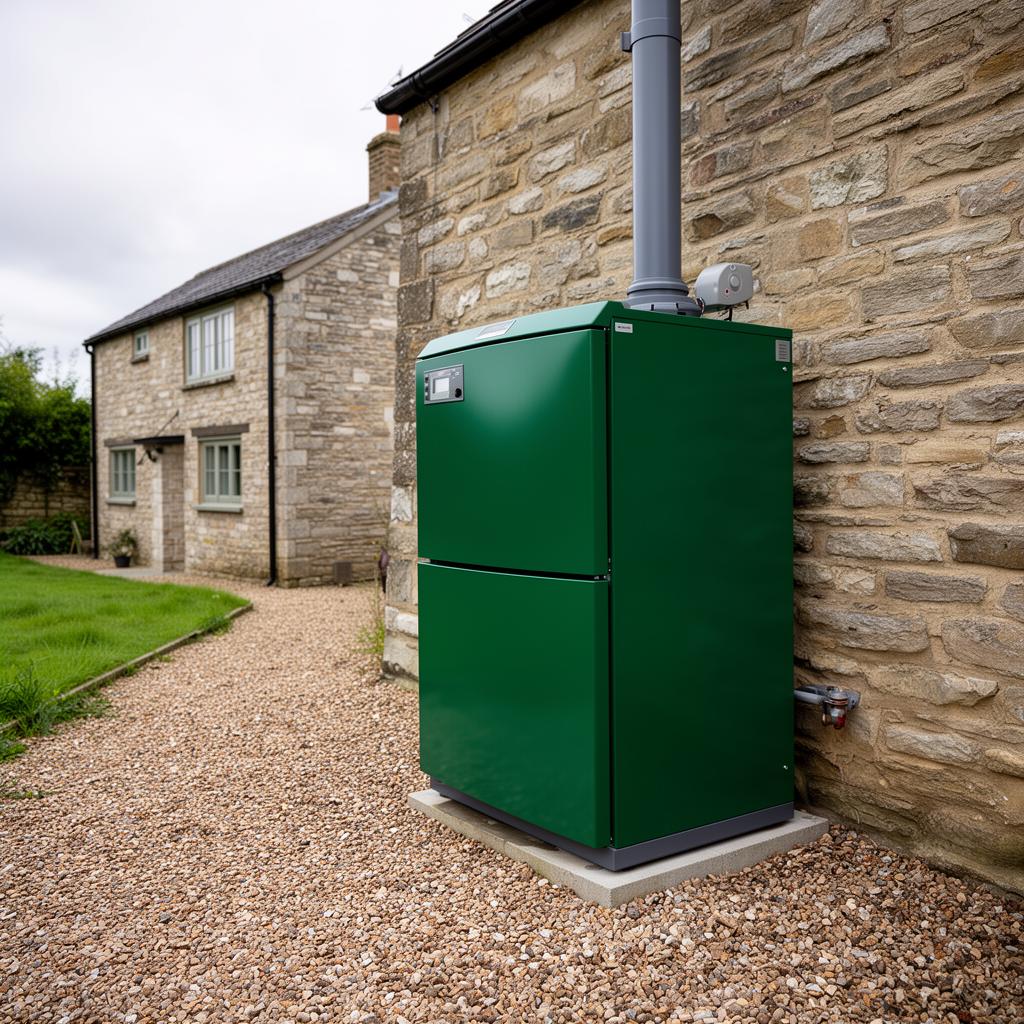
Within reach of the unclassified
Beyond Dundry we're frequently on jobs in Long Ashton (BS41), Barrow Gurney (BS48), Winford (BS40) and Chew Magna (BS40) — so spares, follow-ups and annual services are straightforward.
Included as standard in Dundry
- Gas Safe registered engineers
- Free no-obligation quotes
- Smart heating controls fitted
- Conversions (regular to combi)
- Free written quote, no obligation
- Local aftercare from a 11-mile base
Local conditions we plan around in BS41
Hilltop and ridge properties in this area are more exposed to wind, which can affect flue performance and, in older systems, pipework runs that lose more heat than an equivalent property in a sheltered spot. It's a genuine factor in how a system should be specified and insulated, not a cosmetic detail. We take exposure into account when sizing radiators and specifying pipe insulation on properties in these more exposed locations. Access is lane access, so parking, spoil removal and delivery timing get planned in advance. Planning constraints are usually light here, so external work is checked first. Dundry is roughly 11 miles from our Radstock base via the unclassified. Typical property stock here: stone cottages with city views. A meaningful share of properties around Dundry are off the gas grid, so oil boiler installs and tank swaps make up a fair part of what we do locally. When we quote gas boiler installation here we factor in flue routing, condensate fall and gas-supply pipe sizing before the price is fixed.
Qualifications behind the work
Oil boilers, oil tanks and pipework — fully certified for off-grid installs and replacements.
No verbal-only quotes. You'll get the boiler model, controls and warranty in writing before we book.
Based at 24 Bristol Rd, Radstock — every job is run by the team that quoted it.
362+ verified reviews from real customers across BA and BS postcodes.
Common queries, answered honestly
- What's a CP12 and do I need one as a landlord?
- A CP12 (Landlord Gas Safety Record) confirms every gas appliance in a rented property has passed an annual safety check by a Gas Safe registered engineer. It's a legal requirement before letting and at each renewal, a copy has to go to tenants, and it needs to be renewed every 12 months without a gap.
- Does an exposed, higher-up location affect boiler choice at all?
- Wind exposure mainly affects flue positioning — a room-sealed balanced flue can be more prone to being affected by strong, gusting wind in an exposed spot, and terminal guards or a slightly different position can help. It doesn't rule out any particular boiler type, but it's something we check at survey on more exposed sites.
- What does "commissioning" a boiler actually involve?
- Commissioning is setting the boiler up correctly for the property rather than just switching it on: checking gas or oil pressure and flow rates, setting flow temperatures, testing safety devices, balancing the system, and completing the manufacturer's Benchmark checklist. Skipping this properly is one of the most common reasons warranty claims get refused later.
- What paperwork do I get once the job's finished?
- You'll get a Benchmark commissioning checklist for the boiler, a building notice or Building Control completion certificate for notifiable work, manufacturer warranty registration confirmation, and a Gas Safe (or OFTEC) record of the work. Keep these together — they're what a future buyer's solicitor or a warranty claim will ask for.
- Can your van get down our lane, or do we need to arrange something?
- Most village lanes we work on are manageable in our vehicles, but if it's single-track, has a low bridge, or turning is tight, mention it when you book so we bring the right size van and allow extra time. It's rarely a reason to turn a job down, just something we plan around.
- Can you do oil boiler work in Dundry?
- Yes — we're OFTEC registered. Dundry has plenty of off-grid properties, so Worcester Heatslave and Grant Vortex installs (with tank swaps where needed) are routine for us.
How to get this priced
If you've got questions about gas boiler installation before committing to a survey — about fuel choice, likely disruption, or what's actually involved — call 07516 118198 and ask. You don't need to book anything to have that conversation first. Photos of the existing setup speed up pricing for village properties like these. Planning constraints are usually light here, so external work is checked first. Nearest neighbours on our round are Long Ashton, Barrow Gurney, Winford.
Dundry at a glance
- County
- North Somerset
- Postcode district
- BS41
- Settlement type
- village
- Nearest classified road
- unclassified
- Distance from our base
- 11 miles (Radstock, BA3)
- Typical building stock
- stone cottages with city views
- Water hardness
- hard water
- Fuel availability
- mains gas with off-grid pockets
- Customer mix
- homes alongside small commercial and agricultural premises
- Nearby areas covered
- Long Ashton, Barrow Gurney, Winford, Chew Magna
Practical considerations across BS41
Why hard water shortens boiler life around Dundry
The limestone geology under North Somerset gives Dundry hard water, which drops calcium carbonate out of solution as soon as it's heated. Inside a combi's plate heat exchanger the gaps between plates are only a millimetre or two wide, so scale narrows the waterways long before it's visible anywhere else in the system. The first symptom is usually a hot tap that runs warm rather than hot, or a boiler that fires more often for the same demand. Left unchecked, scale insulates the exchanger from the burner, forces flue gases hotter, and can crack the exchanger from thermal stress. A scale reducer fitted on the mains feed, sized to the property's flow rate, is cheaper to install once than to replace a heat exchanger twice.
Common boiler fault codes and what usually causes them
Most modern boilers display a fault code on the control panel when they lock out, and while the exact code differs between manufacturers, the underlying causes cluster into a small number of categories: low system pressure (often from a small leak or after bleeding radiators), ignition failure (a worn electrode, gas supply issue, or blocked condensate causing a safety shutdown), or a failed sensor reporting an implausible temperature reading. A condensate blockage or freeze specifically tends to show a distinct code from a genuine ignition fault, which is why checking the external condensate pipe for ice before calling out an engineer in a cold snap can sometimes resolve the issue without a visit at all. We ask for the exact fault code and any recent history — a bled radiator, a cold snap, a recent service — before attending, since it often narrows down the likely cause before we arrive.
Chimney liners for boilers using an existing flue
Where an older boiler used the property's original brick or stone chimney as its flue route, a replacement condensing boiler usually can't use the same masonry flue unlined, because the flue gases are cooler and wetter and will attack unprotected brickwork and mortar over time. A correctly specified stainless steel liner, sized to the boiler manufacturer's flue length and diameter tables, carries the flue gases safely and lets the existing chimney be reused rather than needing a new wall or roof penetration — often the only realistic option on a listed or solid-wall property in Dundry where an external flue run isn't permitted. The liner has to be inspected and swept as part of ongoing servicing exactly as an open-fire flue would be, which is easy to overlook once it's hidden inside the chimney.
Nozzle replacement and baffle cleaning on oil burners
An oil burner's nozzle atomises fuel into a fine spray for combustion, and it wears from constant fuel flow at pressure, gradually changing the spray pattern away from the burner manufacturer's specification even before it visibly fails. A worn nozzle burns less cleanly, producing more soot that coats the heat exchanger's baffles, and a sooted heat exchanger loses efficiency in the same way scale does on a gas boiler's plates. Standard practice on an annual oil service is to replace the nozzle as a matter of course, rather than wait for a fault, and to remove and clean the baffles so the heat exchanger surfaces are exposed to combustion heat properly again. Skipping nozzle replacement to save a service visit's minor parts cost is a false economy against the fuel wasted by a poorly atomising burner.
Electronic and physical scale reducers compared
In hard water areas like Dundry, a scale reducer fitted on the boiler's cold feed protects the heat exchanger without the ongoing salt and drainage requirements of a full water softener. Physical scale reducers use a polyphosphate or template-assisted crystallisation cartridge that alters how calcium carbonate crystallises so it's less likely to adhere to hot surfaces; electronic and electromagnetic devices claim a similar effect without a cartridge to replace, though the evidence base for electronic types is weaker and more inconsistent than for physical media. Manufacturers including Worcester Bosch now specify a scale reducer or softener as a condition of extended guarantees in hard water areas, so the choice affects warranty validity as well as long-term performance, not just descale frequency.
Radiator sizing after lowering the flow temperature
Running a boiler at a lower flow temperature — typically 55°C or below rather than the old default of 70-80°C — improves condensing efficiency measurably, but it also reduces the heat output of every radiator in the house, because a radiator's output falls roughly with the square of the temperature difference to the room. Radiators sized correctly for a 75°C flow can end up unable to heat the room properly at 55°C unless they're upsized or supplemented. We check each radiator against the lower design flow temperature before recommending it, and where a room falls short we look at whether a larger single panel, a double panel, or an additional radiator on that circuit closes the gap, rather than pushing the flow temperature back up and giving away the efficiency gain.
Low-loss headers on larger or multi-zone systems
On a system with several heating zones or a boiler oversized relative to any single zone's flow requirement, a low-loss header hydraulically separates the boiler's primary circuit from the secondary zone circuits, so each side can run its own pump and flow rate without one interfering with the other. Without it, a zone valve closing on a multi-zone system can starve the boiler of flow or force excessive pump pressure through the remaining open zones. It's most relevant on larger properties or ones with commercial premises attached, where several distinct heating circuits — perhaps a shop unit and a flat above — share one heat source. Getting the header sized to the boiler's actual flow rate, not just fitted as standard, is what makes it work rather than just adding another connection.
Dundry's place within the wider North Somerset area we cover
Dundry is one of several neighbourhoods we work in around the wider area, and while the postcode district and general water hardness and building stock trends are shared with the surrounding district, the specific street-level access, parking and property type still varies enough locally that we treat each visit on its own facts rather than applying a generic area answer. Nearby areas we also cover include Long Ashton, Barrow Gurney and Winford, which is relevant mainly where a customer wants comparable jobs referenced or where a single visit can sensibly cover more than one nearby property in the same trip. The underlying trade standards — Gas Safe, OFTEC, correct commissioning — don't vary by neighbourhood, only the practical details of the job do.
Other boiler services in Dundry
- Boiler Installation in DundryNew combi, system and regular boiler installations for gas and oil homes — fixed prices, manufacturer warranties.
- Oil Boiler Installation in DundryOFTEC-trained oil boiler specialist for rural homes off the gas grid — tank and boiler replacements.
- Boiler Servicing in DundryAnnual boiler services to keep your warranty valid and your home safe, efficient and warm.
- Maintenance & Repair in DundryDiagnostics, repairs and breakdown call-outs for gas and oil boilers across BA and BS postcodes.
- Landlord Gas Safety Certificates in DundryAnnual CP12 landlord gas safety records issued on the day, for single lets, HMOs, holiday lets and whole portfolios.
- Oil Boiler Servicing in DundryOFTEC registered annual servicing for oil boilers, including nozzle, electrode, filter and smoke test work on off grid homes.
- Oil Boiler Repairs in DundryOil boiler breakdown repairs across rural Somerset, from lockouts and sooting to pump, photocell and control faults.
- Oil Tank Replacement in DundryBunded oil tank replacement and relocation with base preparation, new supply line and OFTEC paperwork on completion.
New Worcester boiler with a 10 year guarantee*
Free no-obligation quotes for installation, servicing & repairs across BA & BS postcodes.