
Local Boiler Servicing for Dinder
Working across Radstock, Bath and the surrounding Mendip villages day to day means we see plenty of variation in how boiler servicing needs to be approached — different building ages, different water supplies, different access. That local experience feeds into how we survey and quote, rather than working from a single generic template. Gas Safe registered, OFTEC registered, 24 Bristol Road, Radstock BA3 3EE. Conservation and listed constraints apply to parts of the area, so external work is checked first. Mains gas covers much of the area, with off-grid pockets, which changes the appliance shortlist. In Dinder itself (BA5, Somerset) that usually means stone village homes, roughly 10 miles from the workshop.
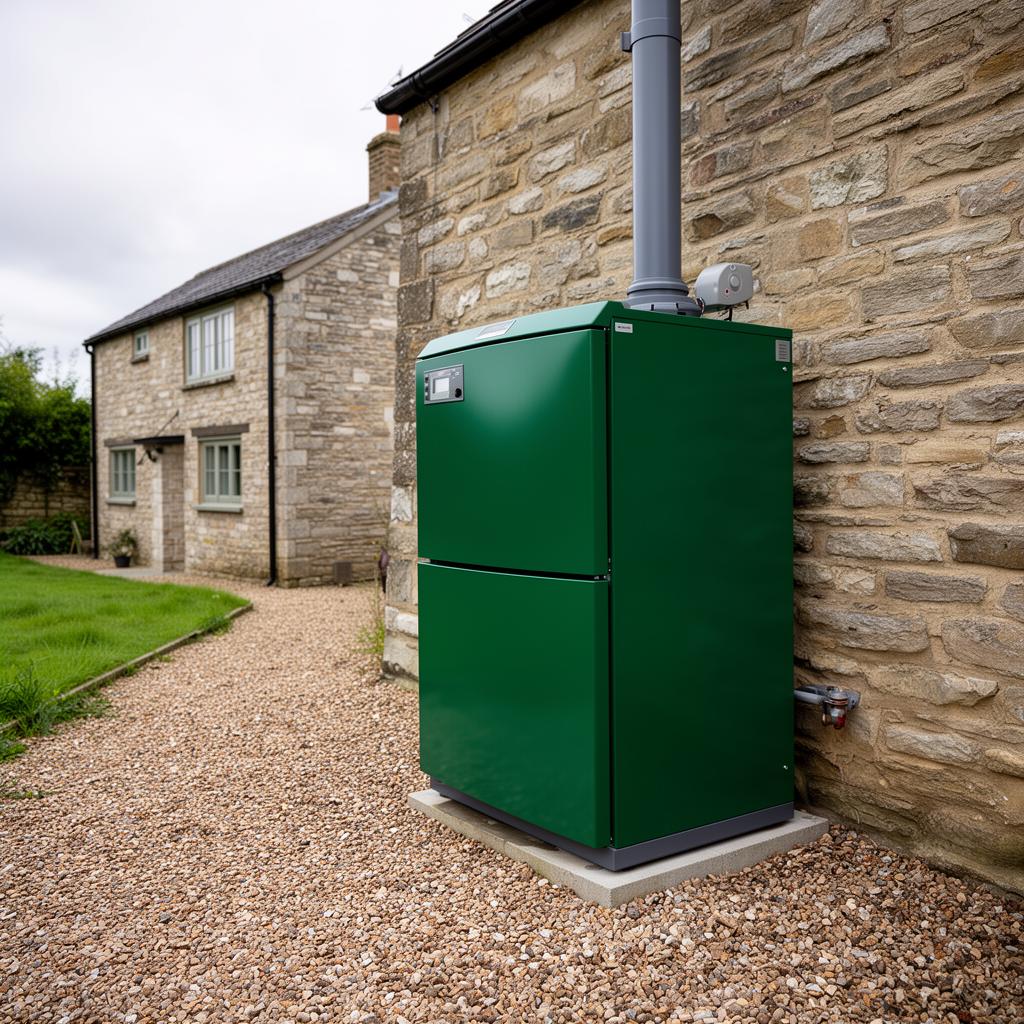
Site realities in and around Dinder
Conservation area status, and in Bath's case UNESCO World Heritage designation, adds a layer of consideration to anything visible from the street, particularly flue positions and external pipework. It doesn't rule out a straightforward boiler replacement, but it does mean the survey needs to look properly at routing options that keep the installation discreet and compliant. We flag this at quote stage rather than after the work has started, so there are no surprises about what can and can't be fitted where. Access is lane access, so parking, spoil removal and delivery timing get planned in advance. Our van runs the A371 to reach you, 10 miles out from the Radstock workshop. Dinder is roughly 10 miles from our Radstock base via the A371. Typical property stock here: stone village homes. A meaningful share of properties around Dinder are off the gas grid, so oil boiler installs and tank swaps make up a fair part of what we do locally. Annual services in Dinder include a full safety check, efficiency report and warranty stamp where applicable.
Qualifications behind the work
Qualifies your install for the full 10-year manufacturer guarantee* on supported models.
Based at 24 Bristol Rd, Radstock — every job is run by the team that quoted it.
Oil boilers, oil tanks and pipework — fully certified for off-grid installs and replacements.
No verbal-only quotes. You'll get the boiler model, controls and warranty in writing before we book.
Also covering the lanes around Dinder
Beyond Dinder we're frequently on jobs in Croscombe (BA5), Wells (BA5), Easton (BA5) and Pilton (BA4) — so spares, follow-ups and annual services are straightforward.
What boiler servicing includes here
- Full annual safety check
- Landlord gas safety certificates
- Efficiency report
- Friendly, tidy engineers
- Free written quote, no obligation
- Local aftercare from a 10-mile base
Dinder questions we get asked
- Who actually carries out the work?
- A Gas Safe and, where relevant, OFTEC registered engineer from our own small team carries out the job — we don't sub the install out to a third party after quoting. You deal with the same people from survey through to commissioning and any aftercare calls.
- What's an unvented cylinder and does it need special installation rules?
- An unvented cylinder stores mains-pressure hot water without a cold water tank in the loft, giving strong pressure at every outlet. Building Regulations require it to be fitted and commissioned by someone holding a specific unvented cylinder qualification (which we hold), including fitting the correct safety valves, because an incorrectly installed unvented cylinder is a pressure vessel hazard.
- What if a part for my existing boiler isn't available anymore?
- Manufacturers stop stocking parts for discontinued models after a number of years, and once that happens a repair simply isn't possible even if the fault itself is minor. We'll confirm parts availability with the manufacturer before quoting a repair, and if it's a dead end we'll explain your replacement options honestly.
- What support do I get after the install is finished?
- Once commissioning's complete we talk you through the controls, leave the paperwork, and register the manufacturer warranty on your behalf. If anything doesn't feel right in the first few weeks — a fault code, an odd noise, a control setting you're unsure of — call us during office hours and we'll talk it through or come back out.
- We're a home attached to or near a small business premises — do you cover that kind of property?
- Where the heating system is a standard domestic boiler serving living accommodation, it's within our normal scope even if it sits next to or above a shop or workshop, which is a common layout around Dinder. Fully commercial systems and appliances are a different scope, so we'd confirm exactly what's being asked at enquiry stage.
- Can you do oil boiler work in Dinder?
- Yes — we're OFTEC registered. Dinder has plenty of off-grid properties, so Worcester Heatslave and Grant Vortex installs (with tank swaps where needed) are routine for us.
Booking work in Dinder
A survey and written quote for boiler servicing doesn't commit you to anything — it gives you accurate information to make a decision with, whether that's going ahead with us, getting a further comparison, or deciding the timing isn't right yet. We can usually pair the visit with other work in Croscombe to keep the trip efficient. Most of what we open up here is stone village homes, which dictates flue routes and pipe sizing. Access is lane access, so parking, spoil removal and delivery timing get planned in advance.
Dinder at a glance
- County
- Somerset
- Postcode district
- BA5
- Settlement type
- village
- Nearest classified road
- A371
- Distance from our base
- 10 miles (Radstock, BA3)
- Typical building stock
- stone village homes
- Water hardness
- moderately hard water
- Fuel availability
- mains gas with off-grid pockets
- Customer mix
- homes alongside small commercial and agricultural premises
- Nearby areas covered
- Croscombe, Wells, Easton, Pilton
Practical considerations across BA5
Valley-floor properties: flood risk and boiler positioning
Properties on lower ground near watercourses around Dinder carry a higher flood risk than the surrounding hills, and that's a genuine factor in deciding where a replacement boiler or cylinder is sited, particularly in a floor-standing oil boiler's case. Raising a floor-standing appliance onto a plinth, or relocating a boiler from a ground-floor utility room to a wall-mounted position higher up, reduces the chance of it being damaged in a flood event that a hillside property simply doesn't need to plan for. Electrical connections and any floor-level wiring also benefit from being kept above likely flood water levels where practical. We raise this with customers on lower-lying sites at the planning stage rather than only after a flood has already caused damage.
Single-pipe circuits in older stone cottages
A lot of the stone cottages and farmhouses around Dinder were plumbed decades ago on a single-pipe gravity circuit, where each radiator draws from and returns to the same loop rather than having its own flow and return. It works, but radiators furthest from the boiler receive water that's already cooled after giving up heat to the ones before it, so the far end of the house is always the coldest. Converting to a two-pipe layout means new pipe runs, which in a stone cottage often means chasing lime plaster or lifting flagstones — not a trivial job. Where a full rewire of the pipework isn't wanted, we sometimes improve balance instead by oversizing the radiators nearest the end of the run and fitting TRVs to hold back the ones nearest the boiler.
What voids or protects a Worcester Bosch extended guarantee
Worcester Bosch's longer guarantee periods on qualifying installations are conditional on the boiler being installed and commissioned by an Accredited Installer, on an annual service being carried out (by any Gas Safe registered engineer, not necessarily the original installer) within the required window each year, and on system water quality being maintained to the standard set out in their published guidance — meaning a system flush at installation, correct inhibitor dosing, and in hard water areas a scale reducer or filter as specified. Missing a single annual service, or installing without the required water treatment, can reduce cover back to the manufacturer's standard guarantee period even if the boiler itself has had no faults. Keeping the Benchmark record and service history together is what lets a claim be assessed quickly if it's ever needed.
Low-loss headers on larger or multi-zone systems
On a system with several heating zones or a boiler oversized relative to any single zone's flow requirement, a low-loss header hydraulically separates the boiler's primary circuit from the secondary zone circuits, so each side can run its own pump and flow rate without one interfering with the other. Without it, a zone valve closing on a multi-zone system can starve the boiler of flow or force excessive pump pressure through the remaining open zones. It's most relevant on larger properties or ones with commercial premises attached, where several distinct heating circuits — perhaps a shop unit and a flat above — share one heat source. Getting the header sized to the boiler's actual flow rate, not just fitted as standard, is what makes it work rather than just adding another connection.
Choosing a boiler location that satisfies both planning and practicality in Dinder
On a property within a conservation area, AONB or World Heritage designation, the boiler's physical location is often decided as much by the acceptable flue route as by where the homeowner would naturally put it — a kitchen wall facing the street may need ruling out even before considering pipe run length, simply because the flue outlet would be visible from a protected streetscape. Working back from an acceptable flue position to find a viable boiler location sometimes means a longer pipework run through the property than would otherwise be chosen, adding to the job's cost and complexity. We assess planning constraints on the flue before finalising the boiler's proposed location, rather than picking the location first and discovering the flue route is unacceptable afterwards.
Common boiler fault codes and what usually causes them
Most modern boilers display a fault code on the control panel when they lock out, and while the exact code differs between manufacturers, the underlying causes cluster into a small number of categories: low system pressure (often from a small leak or after bleeding radiators), ignition failure (a worn electrode, gas supply issue, or blocked condensate causing a safety shutdown), or a failed sensor reporting an implausible temperature reading. A condensate blockage or freeze specifically tends to show a distinct code from a genuine ignition fault, which is why checking the external condensate pipe for ice before calling out an engineer in a cold snap can sometimes resolve the issue without a visit at all. We ask for the exact fault code and any recent history — a bled radiator, a cold snap, a recent service — before attending, since it often narrows down the likely cause before we arrive.
Routing a flue through a listed or conservation-area property
Dinder falls within an area where listed building consent or conservation area rules can affect where a boiler flue is allowed to terminate — a plume on a principal elevation facing the street is often unacceptable even where it would technically clear manufacturer distances. Getting consent, where it's needed, has to happen before the flue is cut through a wall, not retrospectively. In practice this usually means routing the flue to a rear or side elevation even if that means a longer pipe run and an extra bend, or using a horizontal flue kit through a lower window reveal wall rather than the roof. We check with the relevant conservation officer's published guidance before quoting a flue route on a listed or Article 4 property rather than assuming the shortest run will be approved.
Condensate soakaways where there's no convenient drain
Properties without a nearby internal waste connection or external gully for the boiler's condensate — common on rural plots around Dinder where the nearest drain run is a long way from the boiler's location — sometimes need a dedicated condensate soakaway instead. This is a small pit filled with granular material that the condensate, which is mildly acidic, can disperse into gradually rather than running to a drain at all. Sizing and siting it correctly matters: it needs to be far enough from foundations and sited where the local ground can actually absorb the modest but steady volume a boiler produces, particularly over a long heating season. Where ground conditions make a soakaway unreliable, running a longer insulated pipe to a proper drainage connection is usually the safer long-term choice even though it's more work to install.
Other boiler services in Dinder
- Boiler Installation in DinderNew combi, system and regular boiler installations for gas and oil homes — fixed prices, manufacturer warranties.
- Gas Boiler Installation in DinderGas Safe registered installations and upgrades for mains gas homes across Bath, Radstock and Wells.
- Oil Boiler Installation in DinderOFTEC-trained oil boiler specialist for rural homes off the gas grid — tank and boiler replacements.
- Maintenance & Repair in DinderDiagnostics, repairs and breakdown call-outs for gas and oil boilers across BA and BS postcodes.
- Landlord Gas Safety Certificates in DinderAnnual CP12 landlord gas safety records issued on the day, for single lets, HMOs, holiday lets and whole portfolios.
- Oil Boiler Servicing in DinderOFTEC registered annual servicing for oil boilers, including nozzle, electrode, filter and smoke test work on off grid homes.
- Oil Boiler Repairs in DinderOil boiler breakdown repairs across rural Somerset, from lockouts and sooting to pump, photocell and control faults.
- Oil Tank Replacement in DinderBunded oil tank replacement and relocation with base preparation, new supply line and OFTEC paperwork on completion.
New Worcester boiler with a 10 year guarantee*
Free no-obligation quotes for installation, servicing & repairs across BA & BS postcodes.