
Boiler Servicing in Wells
Timing matters with boiler servicing: a mid-summer replacement gives more room to plan than an emergency swap in January, and a written quote gives you time to think rather than decide under pressure. We can work to either, but a bit of notice usually means a smoother job. Gas Safe registered, OFTEC registered, 24 Bristol Road, Radstock BA3 3EE, open Monday to Friday, 8:30am to 5pm. Water here is moderately hard water, so scale protection is specified accordingly. Our van runs the A371 to reach you, 10 miles out from the Radstock workshop. In Wells itself (BA5, Somerset) that usually means stone city-centre homes, georgian and victorian terraces, roughly 10 miles from the workshop.
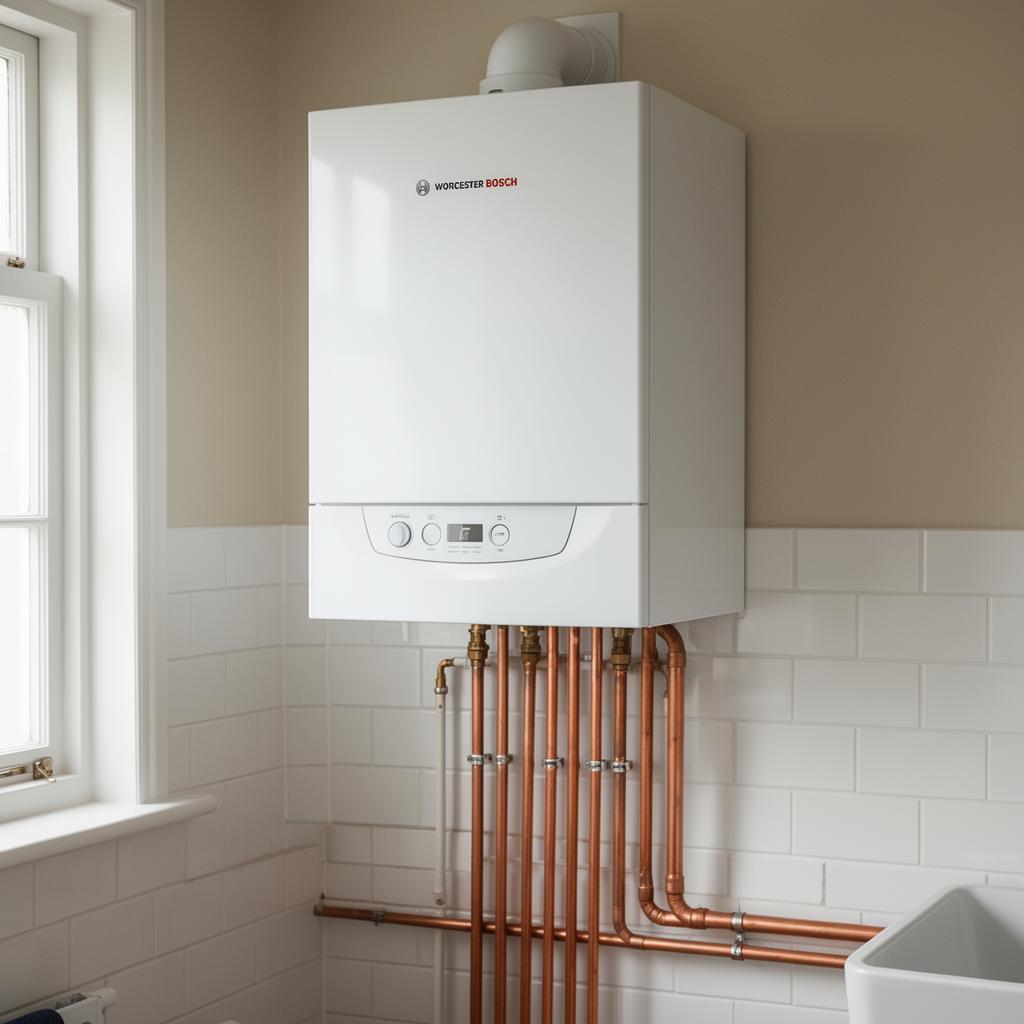
Scope of work, itemised
- Full annual safety check
- Landlord gas safety certificates
- Efficiency report
- Friendly, tidy engineers
- Free written quote, no obligation
- Local aftercare from a 10-mile base
What backs up a Wells quote
No verbal-only quotes. You'll get the boiler model, controls and warranty in writing before we book.
Based at 24 Bristol Rd, Radstock — every job is run by the team that quoted it.
Reg. 549918 — every gas job notified to Building Control and a CP12 issued where required.
Qualifies your install for the full 10-year manufacturer guarantee* on supported models.
Within reach of the A371
Beyond Wells we're frequently on jobs in Wookey (BA5), Dinder (BA5), Easton (BA5) and Croscombe (BA5) — so spares, follow-ups and annual services are straightforward.
What the buildings in Wells change about the job
Georgian townhouses bring their own set of practical issues: tall, narrow flue runs, thick solid walls that make routing new pipework more involved, and in many cases conservation constraints on anything visible from the street. High ceilings and large room volumes also change how a heating system needs to be sized compared with a modern equivalent-sized property. We survey these properties with that in mind rather than applying a standard modern-house specification to a building that doesn't behave like one. Most of what we open up here is stone city-centre homes, georgian and victorian terraces, which dictates flue routes and pipe sizing. Conservation and listed constraints apply to parts of the area, so external work is checked first. Wells is roughly 10 miles from our Radstock base via the A371. Typical property stock here: stone city-centre homes, Georgian and Victorian terraces. Mains gas covers most of Wells, so the usual choice is between a modern combi or a system boiler with a cylinder — we'll size it correctly for the home, not just swap like-for-like. Annual services in Wells include a full safety check, efficiency report and warranty stamp where applicable.
Straight answers for Wells homeowners
- What actually happens on install day?
- The engineer isolates the gas or oil supply and water, removes the old boiler, fits and pressure-tests the new one, connects the flue and condensate, and commissions the system. For a straight swap this is usually one day; a conversion, relocation, or cylinder change can run into a second depending on the pipework involved.
- What are your opening hours, and can you help out of hours?
- Our published hours are Monday to Friday, 8:30am to 5pm, and that's when the phones are answered and jobs are booked. We're honest that we don't run a round-the-clock emergency line, so if you're planning ahead, call during those hours on 07516 118198 and we'll get you booked in.
- What's actually checked during an annual boiler service?
- A service includes a visual and functional check of the boiler's casing and controls, flue gas analysis to confirm safe and efficient combustion, checking the flame picture and pressure, inspecting seals and condensate, and testing safety devices. It's a safety check as much as a performance one, and it's what keeps most manufacturer warranties valid.
- What's different about heating a Georgian townhouse compared to a modern home?
- Georgian townhouses typically have tall rooms, solid walls, and long pipe runs between floors, which affects both heat loss calculations and boiler sizing — undersizing the boiler or radiators for the room volume is a common mistake. Flue routing also needs care given the height of the building and the appearance rules that often apply to the facade.
- How often should a boiler actually be serviced?
- Once a year is the standard recommendation from every manufacturer, and most warranty terms make it a condition rather than a suggestion — miss a year and a claim can be refused even if the fault is unrelated. Landlords have a separate legal duty to have gas appliances checked annually regardless of warranty terms.
- What is condensate and why does its routing matter?
- Condensate is the mildly acidic water produced by a modern condensing boiler as it extracts extra heat from the flue gases, and it needs a route to an internal drain or, less ideally, an external soakaway. In colder or more exposed locations an external condensate pipe can freeze and shut the boiler down, so internal routing is worth prioritising where the layout allows it.
Booking work in Wells
Finishing boiler servicing isn't the end of the relationship — if something doesn't feel right once the system's been running for a while, get in touch and we'll come back and look at it. Annual servicing afterwards keeps the guarantee valid and the system running as it should. Call 07516 118198 and we will confirm a visit slot for BA5. Terrain is level, which matters for condensate runs and tank siting. Mains gas is available across most streets, which changes the appliance shortlist.
Area data we work from
- County
- Somerset
- Postcode district
- BA5
- Settlement type
- city
- Nearest classified road
- A371
- Distance from our base
- 10 miles (Radstock, BA3)
- Typical building stock
- stone city-centre homes, Georgian and Victorian terraces
- Water hardness
- moderately hard water
- Fuel availability
- mains gas across most of the area
- Customer mix
- homes alongside small commercial and agricultural premises
- Nearby areas covered
- Wookey, Dinder, Easton, Croscombe
Technical notes for this job type
Pumped-oil versus gravity feed: does it matter?
Older oil systems sometimes still rely on gravity feed, where the tank sits higher than the burner and oil flows down to it under its own weight; a pumped system uses the burner's internal pump to draw oil up from a tank at any level, including below the boiler. Gravity feed limits where a tank can be sited and is more prone to airlocks if the line runs dry, while a pumped system is more flexible on tank position but needs the pipe run and lift height kept within the burner pump's rated capacity — usually no more than a few metres of lift and a set maximum run length. When we replace an oil boiler we check which type the existing tank and pipework support before assuming a straight swap, because a tank sited for gravity feed may need repositioning or a different pump to suit a modern burner.
Nozzle replacement and baffle cleaning on oil burners
An oil burner's nozzle atomises fuel into a fine spray for combustion, and it wears from constant fuel flow at pressure, gradually changing the spray pattern away from the burner manufacturer's specification even before it visibly fails. A worn nozzle burns less cleanly, producing more soot that coats the heat exchanger's baffles, and a sooted heat exchanger loses efficiency in the same way scale does on a gas boiler's plates. Standard practice on an annual oil service is to replace the nozzle as a matter of course, rather than wait for a fault, and to remove and clean the baffles so the heat exchanger surfaces are exposed to combustion heat properly again. Skipping nozzle replacement to save a service visit's minor parts cost is a false economy against the fuel wasted by a poorly atomising burner.
How a condensing boiler recovers extra heat
A condensing boiler passes flue gases through a secondary heat exchanger before they leave the flue, extracting additional heat by condensing water vapour in the exhaust back into liquid, which is expelled as the mildly acidic condensate water down the drain. This is why every condensing boiler needs a condensate drainage route as part of its installation, unlike older non-condensing boilers, which simply vented hot dry gas straight out. The efficiency benefit only fully materialises when the boiler is actually condensing regularly, which needs a return water temperature low enough — generally below 55°C — for water vapour to condense in the first place. A condensing boiler run permanently at a high flow temperature can spend much of its time not actually condensing, which is one of the main reasons flow temperature settings matter as much as the boiler model chosen.
Oil tank de-sludging: why it's not optional
Oil sitting in a tank for years accumulates water from condensation and fine sediment that settles at the bottom, and over time this forms a sludge layer that can be drawn into the fuel line, particularly when the tank is nearly empty and the outlet pulls from lower in the tank than usual. Sludge blocks fine oil filters and burner nozzles, which shows up as burner lockouts or a boiler that won't fire cleanly rather than as an obvious tank problem. De-sludging drains and cleans the tank base without necessarily removing the whole tank, and it's worth doing when a tank is inherited with a property, before switching to a new boiler, or if lockouts recur despite the filter and nozzle being replaced. It's a preventative job that's cheaper done on schedule than after a burner failure it caused.
Radiator sizing after lowering the flow temperature
Running a boiler at a lower flow temperature — typically 55°C or below rather than the old default of 70-80°C — improves condensing efficiency measurably, but it also reduces the heat output of every radiator in the house, because a radiator's output falls roughly with the square of the temperature difference to the room. Radiators sized correctly for a 75°C flow can end up unable to heat the room properly at 55°C unless they're upsized or supplemented. We check each radiator against the lower design flow temperature before recommending it, and where a room falls short we look at whether a larger single panel, a double panel, or an additional radiator on that circuit closes the gap, rather than pushing the flow temperature back up and giving away the efficiency gain.
Access and parking constraints before we start work
Wells's narrow terraced frontages affect how a job is planned before any pipework is touched. A boiler, cylinder or radiators have to be carried in, and on some streets that means checking parking permit zones or loading restrictions in advance rather than on the day; on farm tracks it means confirming a van can actually reach the building in wet weather, since a track that's fine in summer can be impassable after heavy rain. Old equipment being removed — an oil tank, an old cylinder, a cast iron boiler — needs the same access route in reverse, and weight matters as much as width. We ask about access and parking at the quoting stage specifically so it doesn't become a delay on the installation day.
Plume management kits for restricted flue positions
Where the ideal, shortest flue route would discharge too close to a boundary, a window, or onto a neighbouring property — a common constraint on tight plots in Wells — a plume management kit extends the flue's discharge point away from the boiler's own wall penetration, directing the visible water vapour plume and flue gases to a compliant location instead. It adds ductwork and sometimes a small additional fan to overcome the extra resistance, and it has to be specified against the specific boiler's approved kit range rather than improvised, since flue certification only covers tested combinations. It's a legitimate way to fit a boiler on a plot where the compliant flue route and the sensible boiler location aren't the same wall, without compromising on clearances to solve it.
Other boiler services in Wells
- Boiler Installation in WellsNew combi, system and regular boiler installations for gas and oil homes — fixed prices, manufacturer warranties.
- Gas Boiler Installation in WellsGas Safe registered installations and upgrades for mains gas homes across Bath, Radstock and Wells.
- Oil Boiler Installation in WellsOFTEC-trained oil boiler specialist for rural homes off the gas grid — tank and boiler replacements.
- Maintenance & Repair in WellsDiagnostics, repairs and breakdown call-outs for gas and oil boilers across BA and BS postcodes.
- Landlord Gas Safety Certificates in WellsAnnual CP12 landlord gas safety records issued on the day, for single lets, HMOs, holiday lets and whole portfolios.
- Oil Boiler Servicing in WellsOFTEC registered annual servicing for oil boilers, including nozzle, electrode, filter and smoke test work on off grid homes.
- Oil Boiler Repairs in WellsOil boiler breakdown repairs across rural Somerset, from lockouts and sooting to pump, photocell and control faults.
- Oil Tank Replacement in WellsBunded oil tank replacement and relocation with base preparation, new supply line and OFTEC paperwork on completion.
New Worcester boiler with a 10 year guarantee*
Free no-obligation quotes for installation, servicing & repairs across BA & BS postcodes.