
Wells Maintenance & Repair
Before quoting for maintenance & repair, we start with what's actually there: the existing pipework, the flue route, the water pressure and the age of what you've already got. Guesswork on a heating system leads to call-backs and wasted money, so a proper look at the property comes first. We're Gas Safe registered and OFTEC registered, based at 24 Bristol Road, Radstock BA3 3EE, and we size and specify jobs on what we find on site, not on assumptions. Water here is moderately hard water, so scale protection is specified accordingly. Access is narrow terrace, so parking, spoil removal and delivery timing get planned in advance. In Wells itself (BA5, Somerset) that usually means stone city-centre homes, georgian and victorian terraces, roughly 10 miles from the workshop.
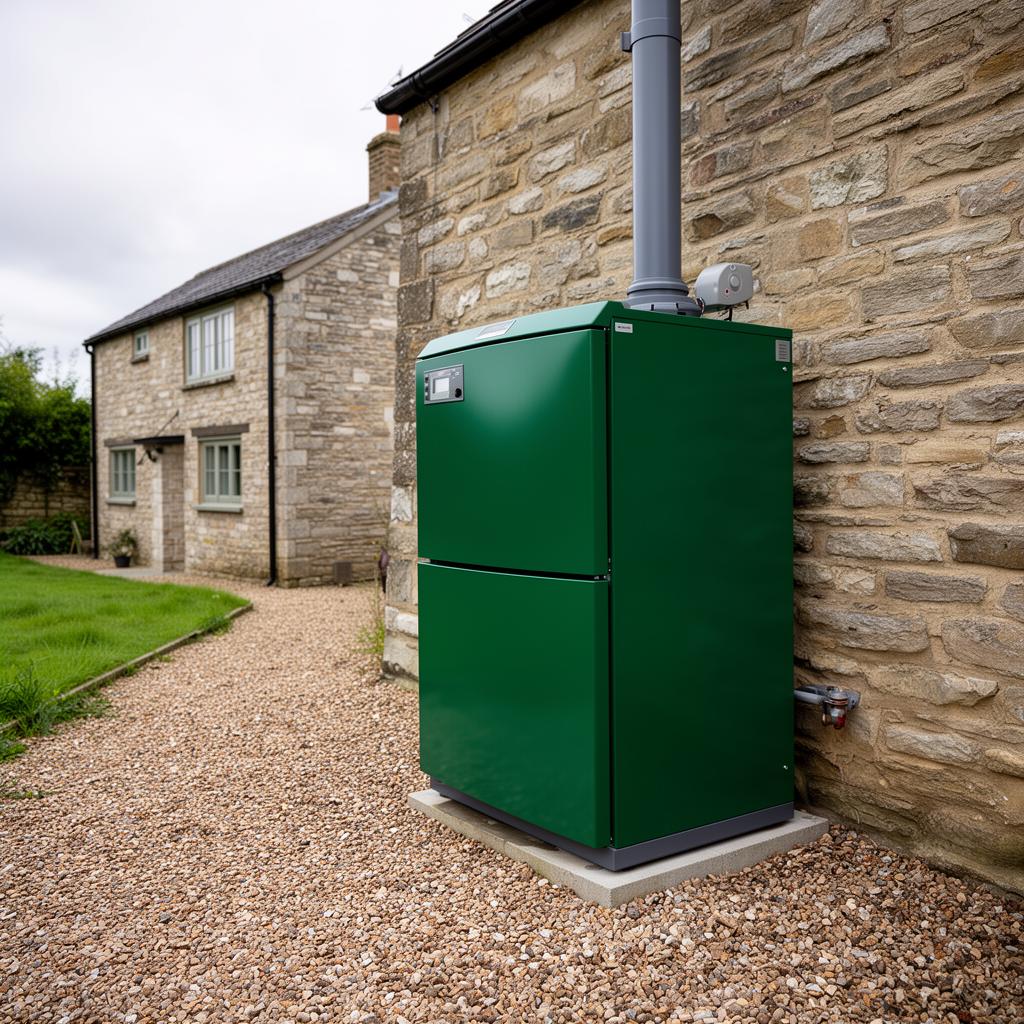
How Somerset building stock shapes the spec
Narrow terraced streets typically mean limited parking directly outside the property and sometimes tight internal access to the boiler cupboard or airing cupboard. Getting a new cylinder or boiler through a Victorian-width hallway occasionally needs planning ahead of the job rather than discovering it on the day. We check access details as part of the survey, including whether permits or specific arrival times would help the job run smoothly. Typical era of build is georgian, which affects existing pipework and system cleanliness. Access is narrow terrace, so parking, spoil removal and delivery timing get planned in advance. Wells is roughly 10 miles from our Radstock base via the A371. Typical property stock here: stone city-centre homes, Georgian and Victorian terraces. Mains gas covers most of Wells, so the usual choice is between a modern combi or a system boiler with a cylinder — we'll size it correctly for the home, not just swap like-for-like. Repair calls in Wells usually get a same-week visit, with most common faults fixed on the first attempt.
Where else we work near Wells
Beyond Wells we're frequently on jobs in Wookey (BA5), Dinder (BA5), Easton (BA5) and Croscombe (BA5) — so spares, follow-ups and annual services are straightforward.
How we run maintenance & repair on site
- Fast diagnostics
- Common faults fixed same-visit
- Pumps, valves & PCB replacements
- Honest, fixed-price repairs
- Free written quote, no obligation
- Local aftercare from a 10-mile base
Why Wells households use us
Oil boilers, oil tanks and pipework — fully certified for off-grid installs and replacements.
Reg. 549918 — every gas job notified to Building Control and a CP12 issued where required.
Based at 24 Bristol Rd, Radstock — every job is run by the team that quoted it.
362+ verified reviews from real customers across BA and BS postcodes.
Wells questions we get asked
- Who actually carries out the work?
- A Gas Safe and, where relevant, OFTEC registered engineer from our own small team carries out the job — we don't sub the install out to a third party after quoting. You deal with the same people from survey through to commissioning and any aftercare calls.
- What support do I get after the install is finished?
- Once commissioning's complete we talk you through the controls, leave the paperwork, and register the manufacturer warranty on your behalf. If anything doesn't feel right in the first few weeks — a fault code, an odd noise, a control setting you're unsure of — call us during office hours and we'll talk it through or come back out.
- Do we need planning permission for a new boiler flue on a listed or conservation-area property?
- If the property is listed, Listed Building Consent can be needed for anything altering its appearance, including a new external flue terminal, even where the work itself would normally be permitted development. In conservation areas like parts of Wells's setting, flue position and visibility from the street can also come under scrutiny. We flag this at survey rather than after ordering the boiler.
- What if a part for my existing boiler isn't available anymore?
- Manufacturers stop stocking parts for discontinued models after a number of years, and once that happens a repair simply isn't possible even if the fault itself is minor. We'll confirm parts availability with the manufacturer before quoting a repair, and if it's a dead end we'll explain your replacement options honestly.
- What actually happens on install day?
- The engineer isolates the gas or oil supply and water, removes the old boiler, fits and pressure-tests the new one, connects the flue and condensate, and commissions the system. For a straight swap this is usually one day; a conversion, relocation, or cylinder change can run into a second depending on the pipework involved.
- What's the warranty on a new boiler installed in Wells?
- Up to 10 years on qualifying Worcester Bosch installs registered through us as Accredited Installers. Other manufacturers typically offer 5–7 years.
How to get this priced
Once we've seen the property, you'll get a written quote for maintenance & repair that sets out exactly what's included — the equipment, the work, and what happens if anything unexpected turns up once we're on site. That gives you something concrete to compare against any other quotes you're getting. Send the appliance make, model and any fault code and you get a straight answer, not a sales script. Our van runs the A371 to reach you, 10 miles out from the Radstock workshop. homes alongside small commercial and agricultural premises make up most enquiries from this postcode.
Coverage detail for BA5
- County
- Somerset
- Postcode district
- BA5
- Settlement type
- city
- Nearest classified road
- A371
- Distance from our base
- 10 miles (Radstock, BA3)
- Typical building stock
- stone city-centre homes, Georgian and Victorian terraces
- Water hardness
- moderately hard water
- Fuel availability
- mains gas across most of the area
- Customer mix
- homes alongside small commercial and agricultural premises
- Nearby areas covered
- Wookey, Dinder, Easton, Croscombe
Detail that matters in Wells
Plume management kits for restricted flue positions
Where the ideal, shortest flue route would discharge too close to a boundary, a window, or onto a neighbouring property — a common constraint on tight plots in Wells — a plume management kit extends the flue's discharge point away from the boiler's own wall penetration, directing the visible water vapour plume and flue gases to a compliant location instead. It adds ductwork and sometimes a small additional fan to overcome the extra resistance, and it has to be specified against the specific boiler's approved kit range rather than improvised, since flue certification only covers tested combinations. It's a legitimate way to fit a boiler on a plot where the compliant flue route and the sensible boiler location aren't the same wall, without compromising on clearances to solve it.
Low-loss headers on larger or multi-zone systems
On a system with several heating zones or a boiler oversized relative to any single zone's flow requirement, a low-loss header hydraulically separates the boiler's primary circuit from the secondary zone circuits, so each side can run its own pump and flow rate without one interfering with the other. Without it, a zone valve closing on a multi-zone system can starve the boiler of flow or force excessive pump pressure through the remaining open zones. It's most relevant on larger properties or ones with commercial premises attached, where several distinct heating circuits — perhaps a shop unit and a flat above — share one heat source. Getting the header sized to the boiler's actual flow rate, not just fitted as standard, is what makes it work rather than just adding another connection.
What different boiler noises usually mean
A kettling or rumbling sound from a boiler is most often scale or sludge build-up on the heat exchanger causing localised boiling as water is trapped and overheated in restricted channels — the heating equivalent of a kettle furring up. A banging or knocking sound in pipework, sometimes called water hammer, is usually caused by a valve closing too quickly or trapped air rather than the boiler itself. A whining or humming sound tends to point to the circulating pump, either from wear or from air in the system reducing lubrication at the bearing. Diagnosing correctly from the noise alone isn't reliable enough to act on without checking system pressure, inhibitor condition and the pump directly, but the noise itself is a useful first indicator of which of those to check first.
Chimney liners for boilers using an existing flue
Where an older boiler used the property's original brick or stone chimney as its flue route, a replacement condensing boiler usually can't use the same masonry flue unlined, because the flue gases are cooler and wetter and will attack unprotected brickwork and mortar over time. A correctly specified stainless steel liner, sized to the boiler manufacturer's flue length and diameter tables, carries the flue gases safely and lets the existing chimney be reused rather than needing a new wall or roof penetration — often the only realistic option on a listed or solid-wall property in Wells where an external flue run isn't permitted. The liner has to be inspected and swept as part of ongoing servicing exactly as an open-fire flue would be, which is easy to overlook once it's hidden inside the chimney.
Radiator sizing after lowering the flow temperature
Running a boiler at a lower flow temperature — typically 55°C or below rather than the old default of 70-80°C — improves condensing efficiency measurably, but it also reduces the heat output of every radiator in the house, because a radiator's output falls roughly with the square of the temperature difference to the room. Radiators sized correctly for a 75°C flow can end up unable to heat the room properly at 55°C unless they're upsized or supplemented. We check each radiator against the lower design flow temperature before recommending it, and where a room falls short we look at whether a larger single panel, a double panel, or an additional radiator on that circuit closes the gap, rather than pushing the flow temperature back up and giving away the efficiency gain.
Access and parking constraints before we start work
Wells's narrow terraced frontages affect how a job is planned before any pipework is touched. A boiler, cylinder or radiators have to be carried in, and on some streets that means checking parking permit zones or loading restrictions in advance rather than on the day; on farm tracks it means confirming a van can actually reach the building in wet weather, since a track that's fine in summer can be impassable after heavy rain. Old equipment being removed — an oil tank, an old cylinder, a cast iron boiler — needs the same access route in reverse, and weight matters as much as width. We ask about access and parking at the quoting stage specifically so it doesn't become a delay on the installation day.
How a condensing boiler recovers extra heat
A condensing boiler passes flue gases through a secondary heat exchanger before they leave the flue, extracting additional heat by condensing water vapour in the exhaust back into liquid, which is expelled as the mildly acidic condensate water down the drain. This is why every condensing boiler needs a condensate drainage route as part of its installation, unlike older non-condensing boilers, which simply vented hot dry gas straight out. The efficiency benefit only fully materialises when the boiler is actually condensing regularly, which needs a return water temperature low enough — generally below 55°C — for water vapour to condense in the first place. A condensing boiler run permanently at a high flow temperature can spend much of its time not actually condensing, which is one of the main reasons flow temperature settings matter as much as the boiler model chosen.
Signs a boiler repair is no longer the right call
A boiler that's failing repeatedly, needing a different part replaced every service, or over roughly ten to fifteen years old is approaching the point where continued repair costs more over time than replacement, particularly once a heat exchanger — the most expensive single part — starts to show signs of failure through leaks or reduced output. Efficiency is the other half of the calculation: an older non-condensing boiler running at 70-80% efficiency against a modern condensing combi at over 90% means a meaningful chunk of every unit of fuel burned in the old boiler is simply lost up the flue. We give a straight answer on repair versus replace based on the fault found and the boiler's age and condition, rather than defaulting to whichever is more profitable to us on the day.
Other boiler services in Wells
- Boiler Installation in WellsNew combi, system and regular boiler installations for gas and oil homes — fixed prices, manufacturer warranties.
- Gas Boiler Installation in WellsGas Safe registered installations and upgrades for mains gas homes across Bath, Radstock and Wells.
- Oil Boiler Installation in WellsOFTEC-trained oil boiler specialist for rural homes off the gas grid — tank and boiler replacements.
- Boiler Servicing in WellsAnnual boiler services to keep your warranty valid and your home safe, efficient and warm.
- Landlord Gas Safety Certificates in WellsAnnual CP12 landlord gas safety records issued on the day, for single lets, HMOs, holiday lets and whole portfolios.
- Oil Boiler Servicing in WellsOFTEC registered annual servicing for oil boilers, including nozzle, electrode, filter and smoke test work on off grid homes.
- Oil Boiler Repairs in WellsOil boiler breakdown repairs across rural Somerset, from lockouts and sooting to pump, photocell and control faults.
- Oil Tank Replacement in WellsBunded oil tank replacement and relocation with base preparation, new supply line and OFTEC paperwork on completion.
New Worcester boiler with a 10 year guarantee*
Free no-obligation quotes for installation, servicing & repairs across BA & BS postcodes.