
Local Maintenance & Repair for Croscombe
Before quoting for maintenance & repair, we start with what's actually there: the existing pipework, the flue route, the water pressure and the age of what you've already got. Guesswork on a heating system leads to call-backs and wasted money, so a proper look at the property comes first. We're Gas Safe registered and OFTEC registered, based at 24 Bristol Road, Radstock BA3 3EE, and we size and specify jobs on what we find on site, not on assumptions. Mains gas covers much of the area, with off-grid pockets, which changes the appliance shortlist. Most of what we open up here is stone cottages and listed buildings, which dictates flue routes and pipe sizing. In Croscombe itself (BA5, Somerset) that usually means stone cottages and listed buildings, roughly 9 miles from the workshop.
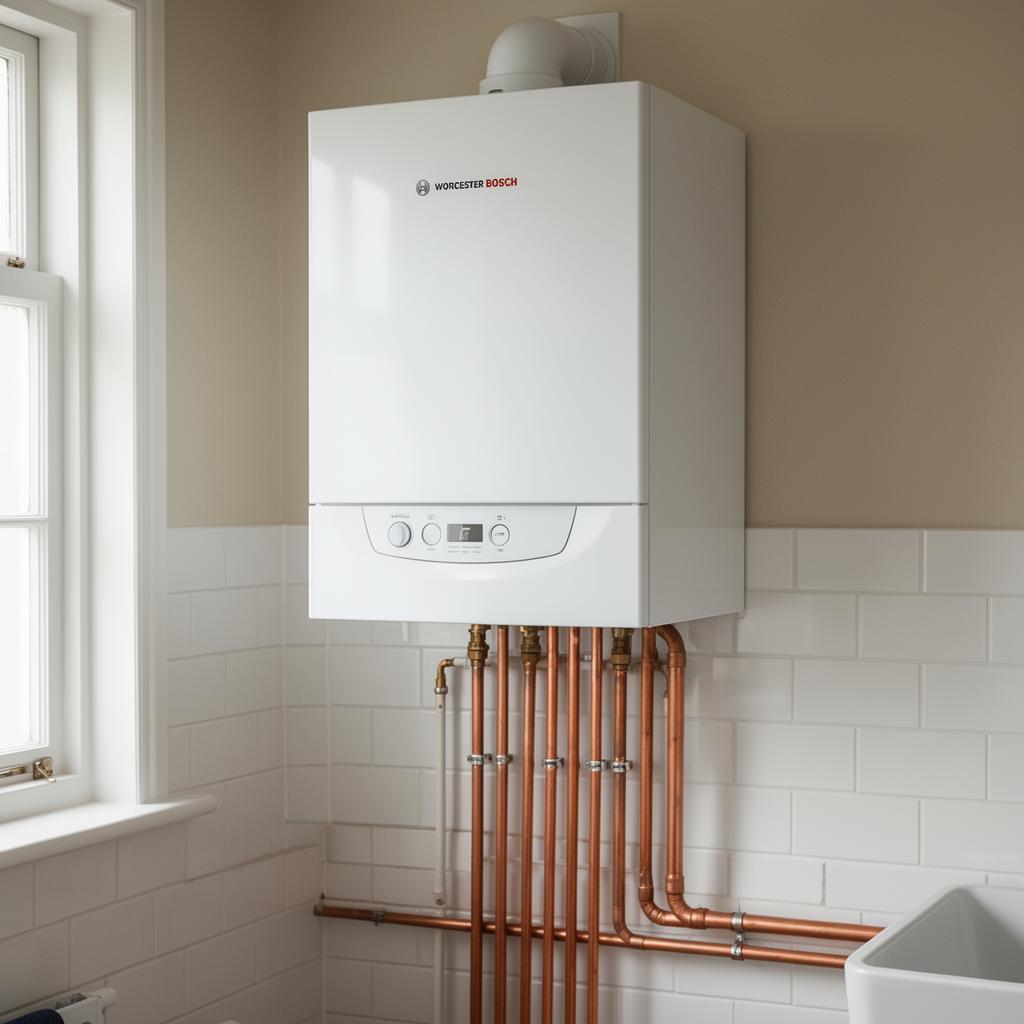
How Somerset building stock shapes the spec
This area has a genuine mix of mains gas and oil-fired properties, sometimes on the same street, depending on when the gas network reached that particular row of houses. It's worth confirming which fuel your property is actually on and whether a fuel switch is realistic before assuming either option is off the table. Being registered for both Gas Safe and OFTEC work means we can look at the honest options for your specific property rather than steering you toward whichever fuel we happen to be set up for. Our van runs the A371 to reach you, 9 miles out from the Radstock workshop. Conservation and listed constraints apply to parts of the area, so external work is checked first. Croscombe is roughly 9 miles from our Radstock base via the A371. Typical property stock here: stone cottages and listed buildings. A meaningful share of properties around Croscombe are off the gas grid, so oil boiler installs and tank swaps make up a fair part of what we do locally. Repair calls in Croscombe usually get a same-week visit, with most common faults fixed on the first attempt.
Within reach of the A371
Beyond Croscombe we're frequently on jobs in Wells (BA5), Pilton (BA4), Shepton Mallet (BA4) and Dinder (BA5) — so spares, follow-ups and annual services are straightforward.
The work, step by step
- Fast diagnostics
- Common faults fixed same-visit
- Pumps, valves & PCB replacements
- Honest, fixed-price repairs
- Free written quote, no obligation
- Local aftercare from a 9-mile base
What backs up a Croscombe quote
Based at 24 Bristol Rd, Radstock — every job is run by the team that quoted it.
Reg. 549918 — every gas job notified to Building Control and a CP12 issued where required.
Oil boilers, oil tanks and pipework — fully certified for off-grid installs and replacements.
362+ verified reviews from real customers across BA and BS postcodes.
Questions before you book
- What actually happens on install day?
- The engineer isolates the gas or oil supply and water, removes the old boiler, fits and pressure-tests the new one, connects the flue and condensate, and commissions the system. For a straight swap this is usually one day; a conversion, relocation, or cylinder change can run into a second depending on the pipework involved.
- What if a part for my existing boiler isn't available anymore?
- Manufacturers stop stocking parts for discontinued models after a number of years, and once that happens a repair simply isn't possible even if the fault itself is minor. We'll confirm parts availability with the manufacturer before quoting a repair, and if it's a dead end we'll explain your replacement options honestly.
- What's actually checked during an annual boiler service?
- A service includes a visual and functional check of the boiler's casing and controls, flue gas analysis to confirm safe and efficient combustion, checking the flame picture and pressure, inspecting seals and condensate, and testing safety devices. It's a safety check as much as a performance one, and it's what keeps most manufacturer warranties valid.
- Is it worth upgrading the heating controls when we replace the boiler?
- Where the existing controls are an old mechanical timer and single room thermostat, replacing them alongside the boiler with weather compensation or a modern programmable thermostat usually improves comfort and efficiency more than the boiler swap alone. It's not compulsory, but it's often the single best-value addition to a new install.
- What's a CP12 and do I need one as a landlord?
- A CP12 (Landlord Gas Safety Record) confirms every gas appliance in a rented property has passed an annual safety check by a Gas Safe registered engineer. It's a legal requirement before letting and at each renewal, a copy has to go to tenants, and it needs to be renewed every 12 months without a gap.
- Do you cover all of Croscombe?
- Yes — every street in BA5 that falls under Croscombe, plus the lanes towards Wells and Pilton. We're 9 miles away in Radstock, so most jobs are reached in well under half an hour.
How to get this priced
Before booking any tradesperson for maintenance & repair, it's worth checking their registration directly rather than taking a website's word for it. We're Gas Safe registered and OFTEC registered — you're welcome to verify that independently before you decide, and we'd encourage you to do the same with anyone else you're considering. A written quote follows the survey — no pressure, and no charge for the Croscombe visit. Access is lane access, so parking, spoil removal and delivery timing get planned in advance. Most of what we open up here is stone cottages and listed buildings, which dictates flue routes and pipe sizing.
The factual picture in Croscombe
- County
- Somerset
- Postcode district
- BA5
- Settlement type
- village
- Nearest classified road
- A371
- Distance from our base
- 9 miles (Radstock, BA3)
- Typical building stock
- stone cottages and listed buildings
- Water hardness
- moderately hard water
- Fuel availability
- mains gas with off-grid pockets
- Customer mix
- homes alongside small commercial and agricultural premises
- Nearby areas covered
- Wells, Pilton, Shepton Mallet, Dinder
Detail that matters in Croscombe
Chasing pipework into lime plaster and stone walls
Solid stone or cob walls finished in lime plaster, common in the older parts of Croscombe, behave very differently to modern plasterboard when a pipe run needs chasing in. Lime plaster is softer and more porous than gypsum, so cutting a neat, consistent chase without blowing the surface needs a slower hand and finer disc than a stud-wall job, and any repair has to be made good in a lime-based skim rather than modern filler, which can trap moisture behind it and cause the patch to fail. On solid stone we sometimes surface-mount pipework in painted conduit instead of chasing, particularly where the wall is a significant structural thickness and chasing would weaken it. Knowing which approach a wall needs before starting avoids expensive plaster damage.
What voids or protects a Worcester Bosch extended guarantee
Worcester Bosch's longer guarantee periods on qualifying installations are conditional on the boiler being installed and commissioned by an Accredited Installer, on an annual service being carried out (by any Gas Safe registered engineer, not necessarily the original installer) within the required window each year, and on system water quality being maintained to the standard set out in their published guidance — meaning a system flush at installation, correct inhibitor dosing, and in hard water areas a scale reducer or filter as specified. Missing a single annual service, or installing without the required water treatment, can reduce cover back to the manufacturer's standard guarantee period even if the boiler itself has had no faults. Keeping the Benchmark record and service history together is what lets a claim be assessed quickly if it's ever needed.
Routing a flue through a listed or conservation-area property
Croscombe falls within an area where listed building consent or conservation area rules can affect where a boiler flue is allowed to terminate — a plume on a principal elevation facing the street is often unacceptable even where it would technically clear manufacturer distances. Getting consent, where it's needed, has to happen before the flue is cut through a wall, not retrospectively. In practice this usually means routing the flue to a rear or side elevation even if that means a longer pipe run and an extra bend, or using a horizontal flue kit through a lower window reveal wall rather than the roof. We check with the relevant conservation officer's published guidance before quoting a flue route on a listed or Article 4 property rather than assuming the shortest run will be approved.
Low-loss headers on larger or multi-zone systems
On a system with several heating zones or a boiler oversized relative to any single zone's flow requirement, a low-loss header hydraulically separates the boiler's primary circuit from the secondary zone circuits, so each side can run its own pump and flow rate without one interfering with the other. Without it, a zone valve closing on a multi-zone system can starve the boiler of flow or force excessive pump pressure through the remaining open zones. It's most relevant on larger properties or ones with commercial premises attached, where several distinct heating circuits — perhaps a shop unit and a flat above — share one heat source. Getting the header sized to the boiler's actual flow rate, not just fitted as standard, is what makes it work rather than just adding another connection.
Condensate soakaways where there's no convenient drain
Properties without a nearby internal waste connection or external gully for the boiler's condensate — common on rural plots around Croscombe where the nearest drain run is a long way from the boiler's location — sometimes need a dedicated condensate soakaway instead. This is a small pit filled with granular material that the condensate, which is mildly acidic, can disperse into gradually rather than running to a drain at all. Sizing and siting it correctly matters: it needs to be far enough from foundations and sited where the local ground can actually absorb the modest but steady volume a boiler produces, particularly over a long heating season. Where ground conditions make a soakaway unreliable, running a longer insulated pipe to a proper drainage connection is usually the safer long-term choice even though it's more work to install.
Heating where a home sits alongside commercial premises
Properties around Croscombe that combine living accommodation with an attached shop, workshop or other commercial space often need heating designed as genuinely separate zones with independent controls, since a shop's occupied hours and heating demand rarely match the flat or house above it. Where the two shared a single ageing system, splitting them onto separate zone valves — or, on a larger scale, separate boilers — stops one side subsidising or interfering with the other's heating schedule. Commercial space also sometimes falls under different servicing and safety-record obligations than the residential side, depending on how it's used, so it's worth establishing which parts of the building fall under which regime before assuming a single annual service covers everything.
Village lane access and van positioning for larger jobs
Village lanes around Croscombe are often single-track or tight two-way roads without dedicated off-street loading space, which affects how a larger job like a full system installation or an oil tank replacement is planned — the van needs somewhere to park close enough for repeated trips carrying equipment without blocking the lane for through traffic or farm vehicles. On a job involving a full radiator or pipework replacement, materials sometimes need staging over more than one visit rather than delivered all at once if there's nowhere secure to leave them on-site between visits. We check lane width and passing places when scheduling larger jobs in village locations, and plan van access and parking as part of the job rather than as an afterthought on the day.
What different boiler noises usually mean
A kettling or rumbling sound from a boiler is most often scale or sludge build-up on the heat exchanger causing localised boiling as water is trapped and overheated in restricted channels — the heating equivalent of a kettle furring up. A banging or knocking sound in pipework, sometimes called water hammer, is usually caused by a valve closing too quickly or trapped air rather than the boiler itself. A whining or humming sound tends to point to the circulating pump, either from wear or from air in the system reducing lubrication at the bearing. Diagnosing correctly from the noise alone isn't reliable enough to act on without checking system pressure, inhibitor condition and the pump directly, but the noise itself is a useful first indicator of which of those to check first.
Other boiler services in Croscombe
- Boiler Installation in CroscombeNew combi, system and regular boiler installations for gas and oil homes — fixed prices, manufacturer warranties.
- Gas Boiler Installation in CroscombeGas Safe registered installations and upgrades for mains gas homes across Bath, Radstock and Wells.
- Oil Boiler Installation in CroscombeOFTEC-trained oil boiler specialist for rural homes off the gas grid — tank and boiler replacements.
- Boiler Servicing in CroscombeAnnual boiler services to keep your warranty valid and your home safe, efficient and warm.
- Landlord Gas Safety Certificates in CroscombeAnnual CP12 landlord gas safety records issued on the day, for single lets, HMOs, holiday lets and whole portfolios.
- Oil Boiler Servicing in CroscombeOFTEC registered annual servicing for oil boilers, including nozzle, electrode, filter and smoke test work on off grid homes.
- Oil Boiler Repairs in CroscombeOil boiler breakdown repairs across rural Somerset, from lockouts and sooting to pump, photocell and control faults.
- Oil Tank Replacement in CroscombeBunded oil tank replacement and relocation with base preparation, new supply line and OFTEC paperwork on completion.
New Worcester boiler with a 10 year guarantee*
Free no-obligation quotes for installation, servicing & repairs across BA & BS postcodes.