
Gas Boiler Installers in Wells
Some properties make gas boiler installation straightforward; others need a bit more thought about parking, access to the boiler cupboard, or how equipment gets in and out. We factor that into the visit rather than discovering it on the day. Working from 24 Bristol Road, Radstock BA3 3EE across the Radstock, Bath and Mendip area, we're Gas Safe registered and OFTEC registered, so both mains gas and oil-fired work is covered under one roof. Terrain is level, which matters for condensate runs and tank siting. homes alongside small commercial and agricultural premises make up most enquiries from this postcode. In Wells itself (BA5, Somerset) that usually means stone city-centre homes, georgian and victorian terraces, roughly 10 miles from the workshop.
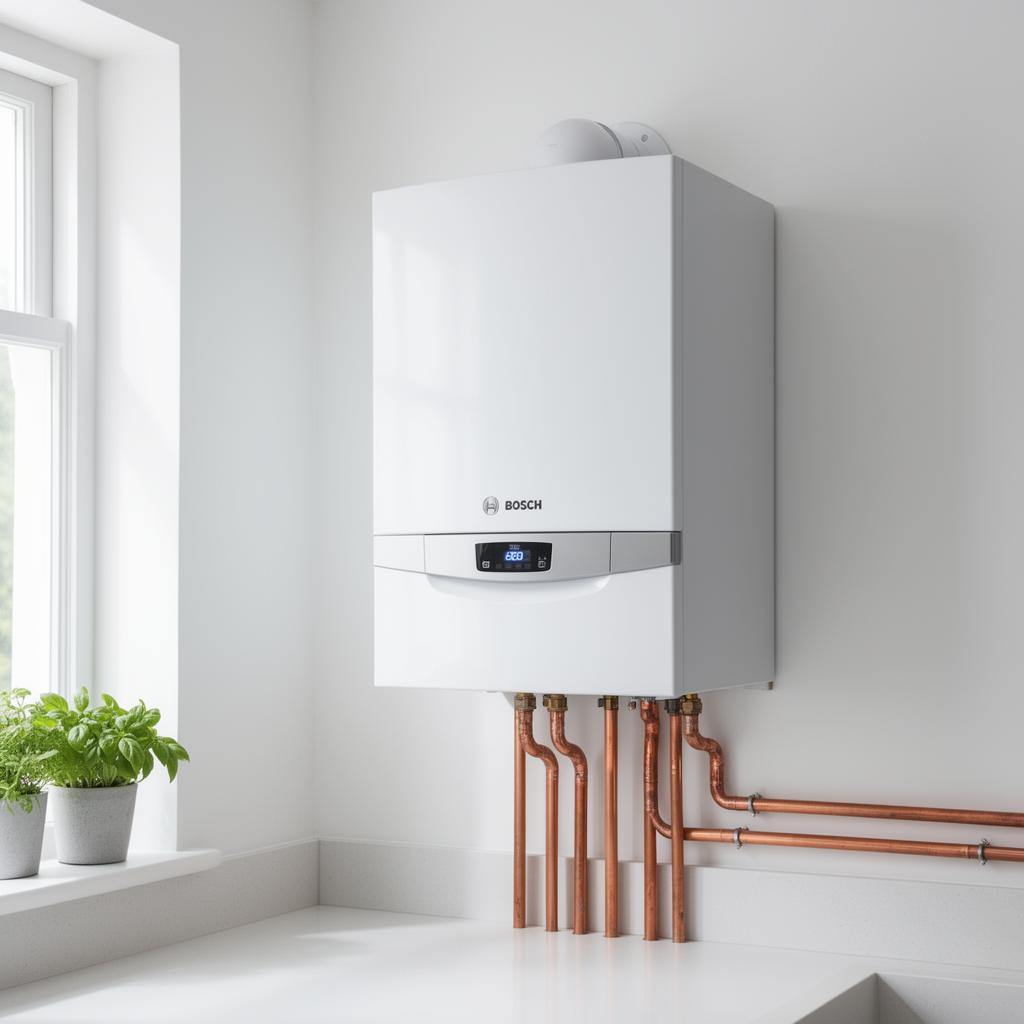
Included as standard in Wells
- Gas Safe registered engineers
- Free no-obligation quotes
- Smart heating controls fitted
- Conversions (regular to combi)
- Free written quote, no obligation
- Local aftercare from a 10-mile base
Proof, paperwork and accountability
No verbal-only quotes. You'll get the boiler model, controls and warranty in writing before we book.
362+ verified reviews from real customers across BA and BS postcodes.
Reg. 549918 — every gas job notified to Building Control and a CP12 issued where required.
Qualifies your install for the full 10-year manufacturer guarantee* on supported models.
Where else we work near Wells
Beyond Wells we're frequently on jobs in Wookey (BA5), Dinder (BA5), Easton (BA5) and Croscombe (BA5) — so spares, follow-ups and annual services are straightforward.
How Somerset building stock shapes the spec
Properties in this area sometimes sit alongside small commercial premises or agricultural buildings, which occasionally means slightly different considerations around flue positioning, noise from external plant, or shared access with a business next door. It's worth mentioning at the point of booking a survey if your property has any commercial neighbours or shared access, so we can check anything relevant before quoting rather than after. Nearest neighbours on our round are Wookey, Dinder, Easton. Access is narrow terrace, so parking, spoil removal and delivery timing get planned in advance. Wells is roughly 10 miles from our Radstock base via the A371. Typical property stock here: stone city-centre homes, Georgian and Victorian terraces. Mains gas covers most of Wells, so the usual choice is between a modern combi or a system boiler with a cylinder — we'll size it correctly for the home, not just swap like-for-like. When we quote gas boiler installation here we factor in flue routing, condensate fall and gas-supply pipe sizing before the price is fixed.
Questions before you book
- What's the difference between a power flush and a chemical flush?
- A chemical flush circulates a cleaning agent through the existing system to loosen light debris, while a power flush uses a pump to force water at higher velocity and reversed direction through radiators and pipework to shift heavier sludge. We usually recommend the more thorough power flush before connecting a new boiler to an older system.
- What are your opening hours, and can you help out of hours?
- Our published hours are Monday to Friday, 8:30am to 5pm, and that's when the phones are answered and jobs are booked. We're honest that we don't run a round-the-clock emergency line, so if you're planning ahead, call during those hours on 07516 118198 and we'll get you booked in.
- What actually happens on install day?
- The engineer isolates the gas or oil supply and water, removes the old boiler, fits and pressure-tests the new one, connects the flue and condensate, and commissions the system. For a straight swap this is usually one day; a conversion, relocation, or cylinder change can run into a second depending on the pipework involved.
- We're on mains gas — is a boiler swap a fairly simple job?
- Where the new boiler goes in the same place with the same flue route, a mains gas swap is usually the most straightforward job we do — often completed within a working day. It gets more involved if you're relocating the boiler, changing from a heat-only or system boiler to a combi, or the existing pipework needs upgrading to suit.
- What paperwork do I get once the job's finished?
- You'll get a Benchmark commissioning checklist for the boiler, a building notice or Building Control completion certificate for notifiable work, manufacturer warranty registration confirmation, and a Gas Safe (or OFTEC) record of the work. Keep these together — they're what a future buyer's solicitor or a warranty claim will ask for.
- Can you look over a quote I've already had from another company?
- Yes, this comes up often. Send or bring in the other written quote and we'll go through the spec — boiler size, controls, cylinder if included, and what's actually listed for parts and labour — and tell you plainly whether it looks right for the property, oversized, or missing something we'd expect to see.
How to get this priced
Getting more than one quote for gas boiler installation is sensible, and we're happy to be one of them. Ask each tradesperson the same questions about what's included, what's excluded, and what registration they hold, so you're comparing genuinely equivalent quotes rather than a headline figure with hidden gaps. A written quote follows the survey — no pressure, and no charge for the Wells visit. Access is narrow terrace, so parking, spoil removal and delivery timing get planned in advance. Conservation and listed constraints apply to parts of the area, so external work is checked first.
Local reference data
- County
- Somerset
- Postcode district
- BA5
- Settlement type
- city
- Nearest classified road
- A371
- Distance from our base
- 10 miles (Radstock, BA3)
- Typical building stock
- stone city-centre homes, Georgian and Victorian terraces
- Water hardness
- moderately hard water
- Fuel availability
- mains gas across most of the area
- Customer mix
- homes alongside small commercial and agricultural premises
- Nearby areas covered
- Wookey, Dinder, Easton, Croscombe
Practical considerations across BA5
Signs a boiler repair is no longer the right call
A boiler that's failing repeatedly, needing a different part replaced every service, or over roughly ten to fifteen years old is approaching the point where continued repair costs more over time than replacement, particularly once a heat exchanger — the most expensive single part — starts to show signs of failure through leaks or reduced output. Efficiency is the other half of the calculation: an older non-condensing boiler running at 70-80% efficiency against a modern condensing combi at over 90% means a meaningful chunk of every unit of fuel burned in the old boiler is simply lost up the flue. We give a straight answer on repair versus replace based on the fault found and the boiler's age and condition, rather than defaulting to whichever is more profitable to us on the day.
Chasing pipework into lime plaster and stone walls
Solid stone or cob walls finished in lime plaster, common in the older parts of Wells, behave very differently to modern plasterboard when a pipe run needs chasing in. Lime plaster is softer and more porous than gypsum, so cutting a neat, consistent chase without blowing the surface needs a slower hand and finer disc than a stud-wall job, and any repair has to be made good in a lime-based skim rather than modern filler, which can trap moisture behind it and cause the patch to fail. On solid stone we sometimes surface-mount pipework in painted conduit instead of chasing, particularly where the wall is a significant structural thickness and chasing would weaken it. Knowing which approach a wall needs before starting avoids expensive plaster damage.
Routing a flue through a listed or conservation-area property
Wells falls within an area where listed building consent or conservation area rules can affect where a boiler flue is allowed to terminate — a plume on a principal elevation facing the street is often unacceptable even where it would technically clear manufacturer distances. Getting consent, where it's needed, has to happen before the flue is cut through a wall, not retrospectively. In practice this usually means routing the flue to a rear or side elevation even if that means a longer pipe run and an extra bend, or using a horizontal flue kit through a lower window reveal wall rather than the roof. We check with the relevant conservation officer's published guidance before quoting a flue route on a listed or Article 4 property rather than assuming the shortest run will be approved.
Low-loss headers on larger or multi-zone systems
On a system with several heating zones or a boiler oversized relative to any single zone's flow requirement, a low-loss header hydraulically separates the boiler's primary circuit from the secondary zone circuits, so each side can run its own pump and flow rate without one interfering with the other. Without it, a zone valve closing on a multi-zone system can starve the boiler of flow or force excessive pump pressure through the remaining open zones. It's most relevant on larger properties or ones with commercial premises attached, where several distinct heating circuits — perhaps a shop unit and a flat above — share one heat source. Getting the header sized to the boiler's actual flow rate, not just fitted as standard, is what makes it work rather than just adding another connection.
Radiator sizing after lowering the flow temperature
Running a boiler at a lower flow temperature — typically 55°C or below rather than the old default of 70-80°C — improves condensing efficiency measurably, but it also reduces the heat output of every radiator in the house, because a radiator's output falls roughly with the square of the temperature difference to the room. Radiators sized correctly for a 75°C flow can end up unable to heat the room properly at 55°C unless they're upsized or supplemented. We check each radiator against the lower design flow temperature before recommending it, and where a room falls short we look at whether a larger single panel, a double panel, or an additional radiator on that circuit closes the gap, rather than pushing the flow temperature back up and giving away the efficiency gain.
Oil tank de-sludging: why it's not optional
Oil sitting in a tank for years accumulates water from condensation and fine sediment that settles at the bottom, and over time this forms a sludge layer that can be drawn into the fuel line, particularly when the tank is nearly empty and the outlet pulls from lower in the tank than usual. Sludge blocks fine oil filters and burner nozzles, which shows up as burner lockouts or a boiler that won't fire cleanly rather than as an obvious tank problem. De-sludging drains and cleans the tank base without necessarily removing the whole tank, and it's worth doing when a tank is inherited with a property, before switching to a new boiler, or if lockouts recur despite the filter and nozzle being replaced. It's a preventative job that's cheaper done on schedule than after a burner failure it caused.
Plume management kits for restricted flue positions
Where the ideal, shortest flue route would discharge too close to a boundary, a window, or onto a neighbouring property — a common constraint on tight plots in Wells — a plume management kit extends the flue's discharge point away from the boiler's own wall penetration, directing the visible water vapour plume and flue gases to a compliant location instead. It adds ductwork and sometimes a small additional fan to overcome the extra resistance, and it has to be specified against the specific boiler's approved kit range rather than improvised, since flue certification only covers tested combinations. It's a legitimate way to fit a boiler on a plot where the compliant flue route and the sensible boiler location aren't the same wall, without compromising on clearances to solve it.
How a condensing boiler recovers extra heat
A condensing boiler passes flue gases through a secondary heat exchanger before they leave the flue, extracting additional heat by condensing water vapour in the exhaust back into liquid, which is expelled as the mildly acidic condensate water down the drain. This is why every condensing boiler needs a condensate drainage route as part of its installation, unlike older non-condensing boilers, which simply vented hot dry gas straight out. The efficiency benefit only fully materialises when the boiler is actually condensing regularly, which needs a return water temperature low enough — generally below 55°C — for water vapour to condense in the first place. A condensing boiler run permanently at a high flow temperature can spend much of its time not actually condensing, which is one of the main reasons flow temperature settings matter as much as the boiler model chosen.
Planning a visit out to Wells
At 10 miles from Radstock via the A371, a job in Wells is planned as a full visit rather than a quick call-back, which is why we ask more detail up front — model numbers, symptoms, access notes — so the first visit is more likely to be the one that resolves the issue rather than the one that diagnoses it. For multi-stage work such as a full boiler and system upgrade, we sequence the survey, any preparatory work and the installation to minimise separate trips where the job allows it. It doesn't affect the standard of work or the paperwork completed on-site, but it's a reasonable practical difference from a job five minutes from the workshop, and we're upfront about it when scheduling.
Other boiler services in Wells
- Boiler Installation in WellsNew combi, system and regular boiler installations for gas and oil homes — fixed prices, manufacturer warranties.
- Oil Boiler Installation in WellsOFTEC-trained oil boiler specialist for rural homes off the gas grid — tank and boiler replacements.
- Boiler Servicing in WellsAnnual boiler services to keep your warranty valid and your home safe, efficient and warm.
- Maintenance & Repair in WellsDiagnostics, repairs and breakdown call-outs for gas and oil boilers across BA and BS postcodes.
- Landlord Gas Safety Certificates in WellsAnnual CP12 landlord gas safety records issued on the day, for single lets, HMOs, holiday lets and whole portfolios.
- Oil Boiler Servicing in WellsOFTEC registered annual servicing for oil boilers, including nozzle, electrode, filter and smoke test work on off grid homes.
- Oil Boiler Repairs in WellsOil boiler breakdown repairs across rural Somerset, from lockouts and sooting to pump, photocell and control faults.
- Oil Tank Replacement in WellsBunded oil tank replacement and relocation with base preparation, new supply line and OFTEC paperwork on completion.
New Worcester boiler with a 10 year guarantee*
Free no-obligation quotes for installation, servicing & repairs across BA & BS postcodes.