
Replacing an oil tank: what the job involves start to finish
A tank does not usually fail without warning. Sweating, staining around the base, a soft feel to the plastic, or visible corrosion on an older steel tank are all reasons to plan a replacement before it becomes an emergency.
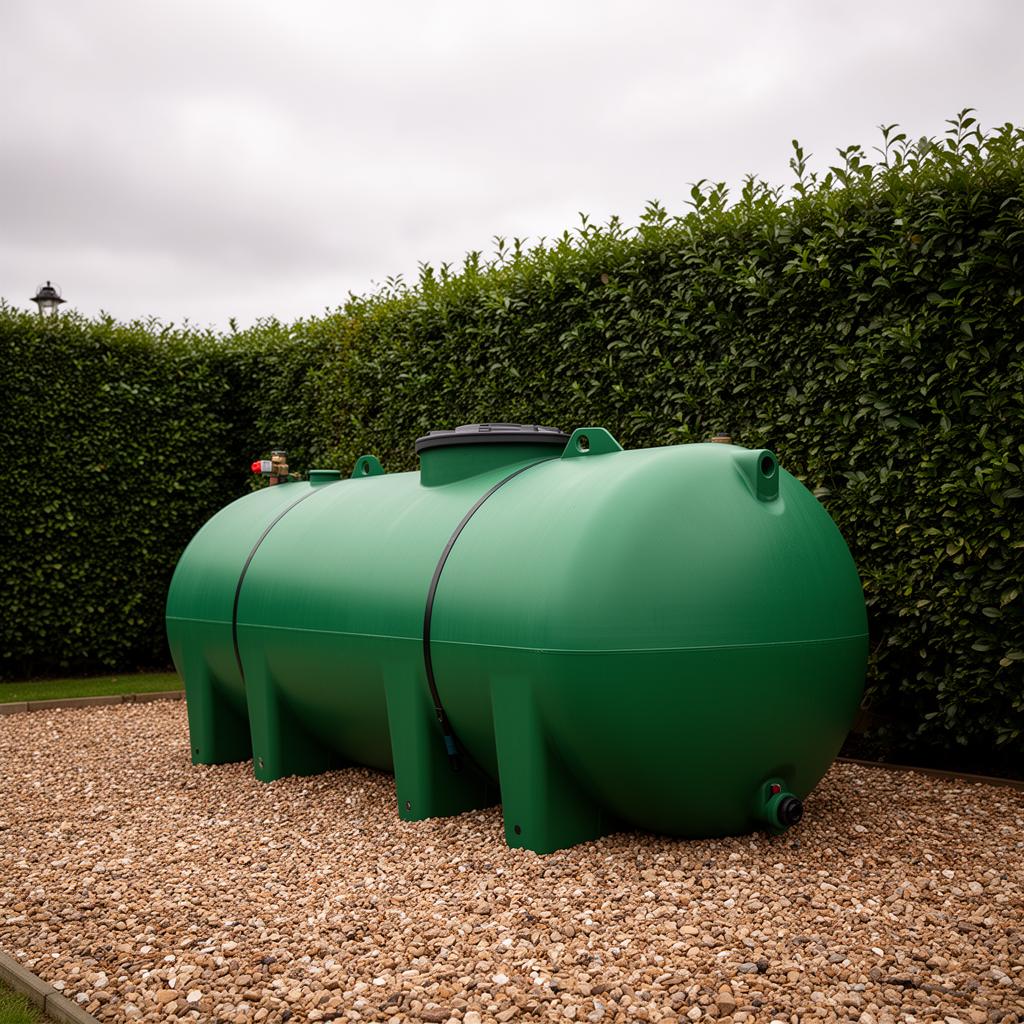
Practical notes on an oil tank replacement
- A bunded tank contains the full inner capacity if the inner skin fails
- Remaining fuel is used down or transferred before disconnection
- The new tank is sited to current OFTEC distances regardless of the old position
- Supply line, fire valve and any Tigerloop are reconnected and re-bled
- The old tank is removed for recycling once the new one is commissioned
Relevant registrations
- Gas Safe registered for domestic gas boiler work
- OFTEC registered for oil boiler work
- Worcester Bosch Accredited Installer
How we read an oil tank replacement on site
The job starts with assessing the remaining fuel, which is either used down or safely transferred before the old tank is disconnected. The new tank is sited to current OFTEC distances, on a fresh or inspected base, and is almost always bunded, meaning it has an integral outer skin designed to contain the full tank capacity if the inner one ever fails. Supply pipework, the fire valve and any Tigerloop are then reconnected and the system is bled and commissioned before the old tank is removed for recycling.
Where we deal with this
Need help with an oil tank replacement?
Our advice: Tank replacement is a planned job with a clear sequence, and doing it before a failure avoids the far bigger problem of a fuel spill to deal with.
Use the enquiry form to describe the appliance, fault code and what changed before the problem started.
Questions we get asked
- How do I know my tank needs replacing rather than repairing?
- Staining, sweating, a soft or bulging wall, or visible corrosion are all signs a tank is nearing the end of its safe life rather than something to patch.
- Do all new tanks have to be bunded?
- Most installations now use bunded tanks as standard practice, particularly where the single-skin tank would sit close to a watercourse or drain.
- What happens to the oil left in the old tank?
- It is either run down through normal use beforehand or safely transferred into the new tank as part of the changeover.
Related help pages
- Older pipeworkMicrobore pipework: why older small-bore systems behave differently
- Cycling faultsShort cycling explained: turning on and off far more than it should
- Vessel maintenanceExpansion vessel recharging: a routine job often mistaken for a big one
- Circulation faultsAirlocks in heating systems: how trapped air actually stops flow
- Property typeLoft-sited boilers: access, safety platform and condensate falls
- Void period managementHeating compliance during a void period between tenancies
Services that cover this
New Worcester boiler with a 10 year guarantee*
Free no-obligation quotes for installation, servicing & repairs across BA & BS postcodes.