
Melksham Boiler Installation
Properties in conservation areas or with listed status add an extra layer to boiler installation, particularly around flue positions and anything visible from the street. We factor planning sensitivity into the survey rather than leaving it to be discovered after the quote. Gas Safe registered, OFTEC registered and a Worcester Bosch Accredited Installer, working from 24 Bristol Road, Radstock BA3 3EE, we'll flag where sign-off or a discreet routing is likely to matter. Planning constraints are usually light here, so external work is checked first. Our van runs the A350 to reach you, 12 miles out from the Radstock workshop. In Melksham itself (SN12, Wiltshire) that usually means victorian terraces and modern estates, roughly 12 miles from the workshop.
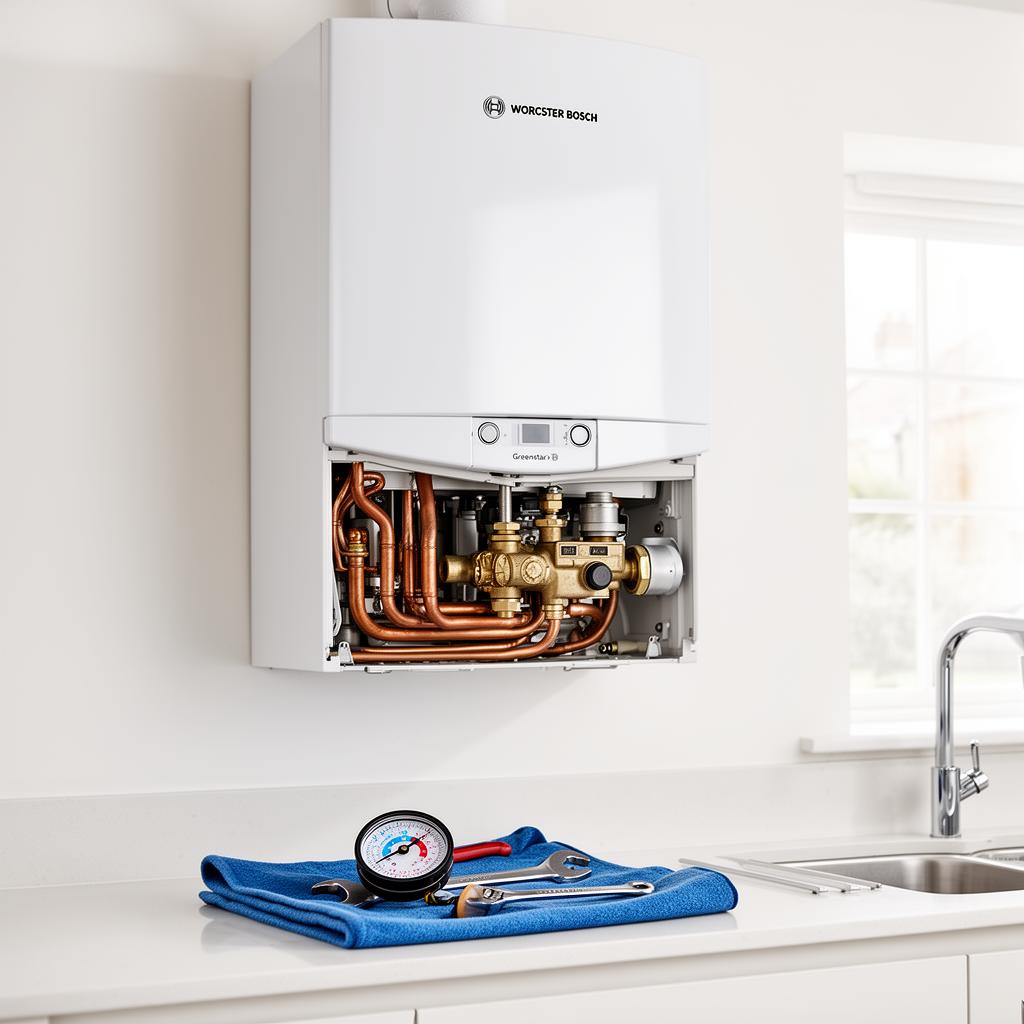
What the buildings in Melksham change about the job
Most properties in this settlement sit on the mains gas network, which keeps the fuel choice straightforward and generally opens up the widest range of boiler options. That doesn't remove every complication — flue routing, existing pipework diameter and how the property currently distributes heat still need checking — but it does mean the conversation usually starts from a simpler baseline than in the off-grid villages further out. We're Gas Safe registered for exactly this kind of work. Mains gas is available across most streets, which changes the appliance shortlist. a mix of owner-occupied and rented homes make up most enquiries from this postcode. Melksham is roughly 12 miles from our Radstock base via the A350. Typical property stock here: Victorian terraces and modern estates. Mains gas covers most of Melksham, so the usual choice is between a modern combi or a system boiler with a cylinder — we'll size it correctly for the home, not just swap like-for-like. When we quote boiler installation here we factor in flue routing, condensate fall and gas-supply pipe sizing before the price is fixed.
The work, step by step
- Combi, system & regular boilers
- Like-for-like swaps in a single day
- Worcester, Vaillant, Ideal, Grant & more
- Up to 10-year manufacturer warranties
- Free written quote, no obligation
- Local aftercare from a 12-mile base
Neighbouring Wiltshire areas we serve
Beyond Melksham we're frequently on jobs in Holt (BA14), Staverton (BA14), Trowbridge (BA14) and Bromham (SN15) — so spares, follow-ups and annual services are straightforward.
Why Melksham households use us
Oil boilers, oil tanks and pipework — fully certified for off-grid installs and replacements.
Reg. 549918 — every gas job notified to Building Control and a CP12 issued where required.
Qualifies your install for the full 10-year manufacturer guarantee* on supported models.
Based at 24 Bristol Rd, Radstock — every job is run by the team that quoted it.
Questions before you book
- Who actually carries out the work?
- A Gas Safe and, where relevant, OFTEC registered engineer from our own small team carries out the job — we don't sub the install out to a third party after quoting. You deal with the same people from survey through to commissioning and any aftercare calls.
- How do you decide whether to repair or replace a boiler?
- We weigh the age of the boiler, whether parts are still made for it, how many faults it's had recently, and its running efficiency against a like-for-like or upgraded replacement. If a straightforward part fixes it and the boiler's otherwise sound, we'll say so rather than push a new install you don't need.
- What does "commissioning" a boiler actually involve?
- Commissioning is setting the boiler up correctly for the property rather than just switching it on: checking gas or oil pressure and flow rates, setting flow temperatures, testing safety devices, balancing the system, and completing the manufacturer's Benchmark checklist. Skipping this properly is one of the most common reasons warranty claims get refused later.
- Do I need to do anything to activate my boiler's warranty?
- As a Worcester Bosch Accredited Installer we register qualifying Worcester installs on your behalf, which is what unlocks the extended guarantee (up to 10 years* on qualifying installs) rather than the standard shorter term. For other brands we still register the installation; keep the confirmation with your other paperwork in case you need it.
- What is condensate and why does its routing matter?
- Condensate is the mildly acidic water produced by a modern condensing boiler as it extracts extra heat from the flue gases, and it needs a route to an internal drain or, less ideally, an external soakaway. In colder or more exposed locations an external condensate pipe can freeze and shut the boiler down, so internal routing is worth prioritising where the layout allows it.
- What's the warranty on a new boiler installed in Melksham?
- Up to 10 years on qualifying Worcester Bosch installs registered through us as Accredited Installers. Other manufacturers typically offer 5–7 years.
How to get this priced
Once we've seen the property, you'll get a written quote for boiler installation that sets out exactly what's included — the equipment, the work, and what happens if anything unexpected turns up once we're on site. That gives you something concrete to compare against any other quotes you're getting. Photos of the existing setup speed up pricing for town properties like these. Typical era of build is victorian, which affects existing pipework and system cleanliness. Mains gas is available across most streets, which changes the appliance shortlist.
Coverage detail for SN12
- County
- Wiltshire
- Postcode district
- SN12
- Settlement type
- town
- Nearest classified road
- A350
- Distance from our base
- 12 miles (Radstock, BA3)
- Typical building stock
- Victorian terraces and modern estates
- Water hardness
- moderately hard water
- Fuel availability
- mains gas across most of the area
- Customer mix
- a mix of owner-occupied and rented homes
- Nearby areas covered
- Holt, Staverton, Trowbridge, Bromham
The parts of the job people rarely mention
Radiator sizing after lowering the flow temperature
Running a boiler at a lower flow temperature — typically 55°C or below rather than the old default of 70-80°C — improves condensing efficiency measurably, but it also reduces the heat output of every radiator in the house, because a radiator's output falls roughly with the square of the temperature difference to the room. Radiators sized correctly for a 75°C flow can end up unable to heat the room properly at 55°C unless they're upsized or supplemented. We check each radiator against the lower design flow temperature before recommending it, and where a room falls short we look at whether a larger single panel, a double panel, or an additional radiator on that circuit closes the gap, rather than pushing the flow temperature back up and giving away the efficiency gain.
Commissioning checklist and the Benchmark record
Every new boiler installation comes with a Benchmark commissioning checklist that has to be completed and signed at the point of installation — recording gas or oil pressure readings, flue gas analysis results, system flush confirmation and control settings. It's not paperwork for its own sake: manufacturers require a fully completed Benchmark record as a condition of the boiler's guarantee, and an incomplete or missing record is one of the most common reasons a warranty claim gets refused later. We complete and hand over the Benchmark log, along with the Gas Safe or OFTEC notification, on the day of installation rather than promising to send it on, specifically so the paperwork exists from day one if it's ever needed.
How a condensing boiler recovers extra heat
A condensing boiler passes flue gases through a secondary heat exchanger before they leave the flue, extracting additional heat by condensing water vapour in the exhaust back into liquid, which is expelled as the mildly acidic condensate water down the drain. This is why every condensing boiler needs a condensate drainage route as part of its installation, unlike older non-condensing boilers, which simply vented hot dry gas straight out. The efficiency benefit only fully materialises when the boiler is actually condensing regularly, which needs a return water temperature low enough — generally below 55°C — for water vapour to condense in the first place. A condensing boiler run permanently at a high flow temperature can spend much of its time not actually condensing, which is one of the main reasons flow temperature settings matter as much as the boiler model chosen.
Combi, system or regular: which suits the property?
A combi boiler heats water directly from the mains on demand with no cylinder or tank, which suits smaller households with modest simultaneous hot water demand and properties with no loft or airing cupboard space to spare. A system boiler heats a stored cylinder, giving stronger and more consistent flow to multiple outlets at once — better suited to larger households or properties with more than one bathroom — while a regular (open-vent) boiler additionally needs a cold feed and expansion tank, usually only chosen now where an existing system layout makes it the simpler swap. On stock like victorian terraces and modern estates the right answer depends on bathroom count and existing pipework layout as much as household size, which is why we ask about actual usage patterns rather than defaulting to whatever's currently fitted.
Melksham's A350 corridor and what it means for scheduling
Properties along or near the A350 corridor around Melksham are generally straightforward to reach without the access constraints of side lanes or unclassified roads further off the main network, which helps with scheduling deliveries of boilers, cylinders or oil tanks to a fixed slot. It doesn't change the technical requirements of the job itself, but predictable access does mean less contingency time needs building into a visit, and it makes coordinating a delivery with an installation date more reliable than on a property with a difficult final approach. We still confirm any specific parking or loading restriction on the immediate street before a job, since a fast main road doesn't guarantee easy stopping right outside the property.
Pumped-oil versus gravity feed: does it matter?
Older oil systems sometimes still rely on gravity feed, where the tank sits higher than the burner and oil flows down to it under its own weight; a pumped system uses the burner's internal pump to draw oil up from a tank at any level, including below the boiler. Gravity feed limits where a tank can be sited and is more prone to airlocks if the line runs dry, while a pumped system is more flexible on tank position but needs the pipe run and lift height kept within the burner pump's rated capacity — usually no more than a few metres of lift and a set maximum run length. When we replace an oil boiler we check which type the existing tank and pipework support before assuming a straight swap, because a tank sited for gravity feed may need repositioning or a different pump to suit a modern burner.
Weather compensation: matching flow temperature to outdoor conditions
Weather compensation uses an external sensor to adjust the boiler's flow temperature automatically as outdoor temperature changes, running a lower flow temperature on a mild day and a higher one on a cold one, rather than the fixed flow temperature most boilers are left on permanently. Because condensing boiler efficiency is highest at lower flow and return temperatures, weather compensation keeps the system closer to peak efficiency across the heating season instead of only on the coldest days it was set up for. It needs a compensation curve set to suit the specific building's heat loss characteristics — the same curve on a well-insulated modern semi and a solid-wall Victorian terrace won't give the same comfort result. We set the curve empirically over the first heating season rather than leaving factory defaults in place.
Heating challenges specific to Victorian terraces
Victorian terraces around Melksham typically have solid brick external walls with no cavity to insulate, higher ceilings than modern housing, and original suspended timber ground floors that can be draughty if the underfloor void isn't sealed properly — all of which push heat loss calculations higher than floor area alone suggests. Radiators original to these houses, or fitted decades ago to replace them, are frequently undersized for a lower modern flow temperature even if they coped adequately at the older, higher flow temperature the system used to run at. Chimney breasts, where retained, offer a route for a flue or liner as covered elsewhere, but where they've been removed, alternative flue routes need more careful planning on a terrace's narrow rear elevation. We treat Victorian terrace heat loss calculations as their own case rather than applying modern housing assumptions.
Other boiler services in Melksham
- Gas Boiler Installation in MelkshamGas Safe registered installations and upgrades for mains gas homes across Bath, Radstock and Wells.
- Oil Boiler Installation in MelkshamOFTEC-trained oil boiler specialist for rural homes off the gas grid — tank and boiler replacements.
- Boiler Servicing in MelkshamAnnual boiler services to keep your warranty valid and your home safe, efficient and warm.
- Maintenance & Repair in MelkshamDiagnostics, repairs and breakdown call-outs for gas and oil boilers across BA and BS postcodes.
- Landlord Gas Safety Certificates in MelkshamAnnual CP12 landlord gas safety records issued on the day, for single lets, HMOs, holiday lets and whole portfolios.
- Oil Boiler Servicing in MelkshamOFTEC registered annual servicing for oil boilers, including nozzle, electrode, filter and smoke test work on off grid homes.
- Oil Boiler Repairs in MelkshamOil boiler breakdown repairs across rural Somerset, from lockouts and sooting to pump, photocell and control faults.
- Oil Tank Replacement in MelkshamBunded oil tank replacement and relocation with base preparation, new supply line and OFTEC paperwork on completion.
New Worcester boiler with a 10 year guarantee*
Free no-obligation quotes for installation, servicing & repairs across BA & BS postcodes.